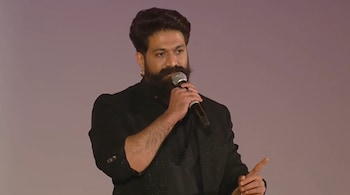
West Bengal’s state government has granted tax exemption to Ramayana, the high budget cinematic adaptation of the Hindu epic directed by Nitesh Tiwari, the chief minister announced during Vijayadashami celebrations in Kolkata. The declaration was made by Chief Minister Suvendu Adhikari as members of the film’s cast joined the Dussehra event, a high profile public appearance that drew widespread media attention.
What the announcement says
Speaking at Central Park in Salt Lake, Kolkata, Adhikari said the film will be made tax free in West Bengal. He framed the decision alongside earlier state exemptions for films his administration has supported, and indicated the move reflects the government’s desire to encourage large scale mythological cinema. The chief minister also suggested more films on Indian epics and figures could receive similar backing in future.
Immediate effects on bookings and box office prospects
The announcement comes as advance ticket sales for Ramayana have already begun to register significant numbers nationwide. Industry tracking data cited in contemporary reporting show strong early sales, particularly for premium formats and in major urban centres, and producers have highlighted advance bookings as an early sign of audience interest. Making the film tax free in a populous state like West Bengal reduces ticket prices there and is widely expected to boost footfall during the opening weekend, which coincides with the Diwali period when local box office returns typically spike.
Why states make films tax free
Indian state governments periodically exempt films from state entertainment taxes for cultural, literary or perceived social value. The immediate effect is lower net ticket prices for viewers within the state, which producers and distributors hope will increase occupancy. Local administrations sometimes use tax exemptions to promote films they consider to support regional sentiment or national heritage, and to attract footfall to public festivals and events in which cast and crews participate.
Political dimensions and cultural framing
Announcements of tax exemptions for films that deal with religious or national narratives frequently generate political and cultural conversation. Making a high profile mythological film tax free during a major festival positions the production as a communal cultural event as much as commercial entertainment. Observers note such decisions can be popular with audiences primed by festival activity. Critics and commentators sometimes question whether fiscal incentives for specific films should be handled by neutral processes, and some analysts caution about the precedent of selective tax exemptions for politically resonant movies.
What we know about the production and release plan
Ramayana is being produced as a two part cinematic project. The first instalment is scheduled for theatrical release on November 5, timed to the Diwali holiday window, with the second part planned for the following year. The cast features Ranbir Kapoor as Lord Rama, Sai Pallavi as Sita and Yash in a major role. The production has emphasised large scale visual effects and premium format screenings, and producers have worked with several post production houses to deliver a big budget spectacle aimed at both domestic and international markets.
Why this matters to audiences and the film industry
Tax exemptions ahead of a big festival release can materially affect a film’s opening weekend and early word of mouth. For distributors and exhibitors, a lower effective ticket price in a large state increases potential attendance and can improve occupancy rates in the first crucial days. For audiences, the exemption lowers the cost barrier for premium format screenings, which the film is promoting. On a broader level, the decision underscores how state-level cultural policy can intersect with film marketing and release strategy for tentpole projects.
What to watch next
Key developments to monitor in the coming days include whether other Indian states follow West Bengal’s lead, which would amplify the financial impact for the film’s domestic run. Box office tracking from the opening weekend will show whether the tax exemption and festival timing translate into the expected boost in admissions. Separately, continuing public commentary around the cultural framing of large scale mythological cinema could influence how states and industry stakeholders approach similar films going forward.
For now, Ramayana arrives at a moment when festivals, premium format exhibition and regional policy choices are converging. The West Bengal decision adds a notable variable to the film’s pre release momentum and will shape how exhibitors and audiences in the state experience the film when it opens on November 5, 2026.