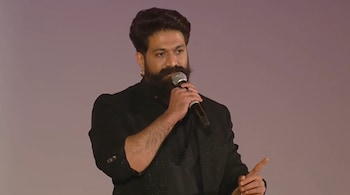
At a high profile pre release event in Hyderabad on October 19, actor Yash made an emotional appeal to audiences ahead of the November 5 release of Ramayana: Part 1. Speaking on a stage attended by cast and crew, Yash asked fans not to search for or amplify minor visual effects faults in the film, and to support producer Namit Malhotra and the wider team behind the two part epic.
What Yash said and why it matters
Yash, who appears in the film and is listed as one of its producers, told the audience that the Ramayana project represents a rare, high risk investment in large scale Indian filmmaking. He warned that excessive focus on small VFX imperfections could discourage future producers from backing ambitious projects, and he urged viewers to judge the film as a whole rather than by isolated technical points. The comments were reported widely in Indian entertainment media on October 20.
The plea is notable because it came before the film has reached general audiences. Pre release events typically showcase major set pieces, songs and promotional footage, but they rarely generate requests from an actor to tamp down early criticism. Yash framed his request as a protective appeal for the creative and financial stakeholders who have committed large budgets and reputations to the project.
Context: why visual effects are under scrutiny
Ramayana has been promoted as an effects heavy, pan Indian spectacle with significant investment in visual effects and international post production partners. Trailers and teasers released ahead of the pre release event prompted an active online conversation about the film's visuals. Some viewers praised the scope and ambition, while others highlighted moments they considered less polished.
That mixed reaction appears to have informed Yash’s message. In public remarks at the Hyderabad event, he asked fans to adopt an open mind when the film releases, and to recognise the commercial and reputational risks taken by producers seeking to place Indian mythic storytelling on a global stage.
Producer ambitions and franchise planning
According to statements made at the event and subsequent reporting, producer Namit Malhotra has positioned the Ramayana project as more than a single movie. The production team has signalled plans for extensive marketing and potential spin offs tied to major characters such as Hanuman. Organisers described the film as the first instalment of a two part saga, with Part 1 opening November 5 and Part 2 slated for the following Diwali season.
The scale of the project, and its positioning as a tentpole that could open new windows for big budget Indian films, is central to the debate Yash addressed. Supporters argue that such investments create long term industry capacity in areas like VFX and global distribution. Critics say expectations should match delivery, especially when a film sells itself on technical spectacle.
How the industry and audiences are reacting
Coverage of the Hyderabad event shows an immediate split in reaction. Several mainstream entertainment outlets reported Yash’s plea and relayed his concern that harsh pre release criticism could deter future investment. Social chat and fan communities echoed both sympathy for the risks producers take and scepticism that promotional statements should preempt audience judgement.
Industry stakeholders often see pre release events as promotional milestones that allow producers to shape the narrative. Yash’s comments can be read as an attempt to shape expectations and to foreground the film’s broader ambitions. At the same time, vocal segments of the online audience argued that asking fans to overlook technical shortcomings risks appearing defensive and may intensify scrutiny once the film opens.
What to watch for next
Ramayana’s nationwide release on November 5 will provide the definitive measure of how audiences and critics respond. Box office performance will show whether the film’s commercial positioning and pre release campaigning translated into mass interest. Equally important will be the critical conversation about the film’s storytelling, production values and whether its visual effects meet the expectations set by its promotional campaign.
If Yash’s appeal succeeds, industry observers say it could help preserve momentum for big budget Indian epics and encourage further investment in large scale VFX work. If the film receives heavy criticism focused on effects or other technical areas, it will likely prompt a reassessment of how such projects are budgeted, marketed and executed in the future.
For now, the message from the Hyderabad event is clear: the Ramayana team is asking audiences to consider the project in full, and to recognise the commercial and cultural stakes involved in mounting a production designed to compete on a global scale.