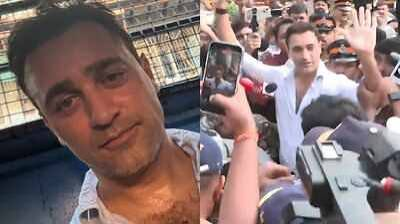
Actor Imran Khan on Saturday filed a writ petition in the Bombay High Court seeking to quash a "Leave India Notice" issued by the Foreigners Regional Registration Office in Mumbai that directed him to leave the country by October 28. The petition asks the court for an urgent stay on the notice and for protection against coercive steps including deportation, a look out circular, blacklisting, or cancellation of his Overseas Citizen of India registration.
What the notice says and why Khan is contesting it
The FRRO issued the notice on October 14, pointing to an alleged violation of the Immigration and Foreigners Act, 2025 after Khan participated in a protest near August Kranti Maidan in Mumbai on October 10. Mumbai Police had detained Khan briefly at the demonstration, and a complaint led to an FIR being forwarded to the FRRO, which in turn issued the directive ordering him to leave India within two weeks.
In his Bombay High Court petition, Khan described the LIN as arbitrary and unconstitutional. He contends that the notice was issued without giving him a chance to be heard, and that it relies on an unproven FIR still under investigation. The petition argues the FRRO applied immigration powers in a manner that amounts to an excessive penalty for mere presence at a protest, and that the authority failed to consider less drastic measures before ordering removal.
OCI status and the show cause notice
Alongside the writ petition, the FRRO issued a show cause notice saying Khan’s registration as an OCI cardholder may be liable to cancellation under Section 7D(e) of the Citizenship Act, 1955. That provision permits cancellation where the central government considers it necessary in the interests of India’s sovereignty, security or friendly relations with other countries, subject to a reasonable opportunity to be heard.
Khan’s petition stresses the practical and symbolic consequences of any cancellation. It notes he has lived and worked in India for decades and says a removal order would undermine confidence among foreign nationals and the Indian diaspora in the certainty of the OCI regime. The plea also warned that removing a US national without due process could create diplomatic sensitivities.
Legal and factual issues the court will consider
The High Court will need to weigh several issues. First, whether the FRRO had jurisdiction to issue a LIN in the circumstances described, particularly where local police actions and court-ordered restrictions on protest spaces are involved. Second, whether the statutory tests for removal under the 2025 immigration law and the Citizenship Act were properly applied, including whether any security report or adverse intelligence supported such a drastic step.
The petition also raises constitutional challenges, asserting violations of Article 14, which guarantees equality before the law, and Article 21, the right to life and personal liberty. Counsel for Khan is expected to press that administrative action of this severity requires a more detailed contemporaneous record and procedural fairness before resorting to expulsion.
Why the case matters beyond one actor
This dispute touches on broader themes at the intersection of immigration control, civil liberties and the role of public figures in political protest. Khan argues the order has consequences beyond his personal situation, warning it could chill participation by foreign nationals and OCI holders in public life and activism in India. That claim raises policy and diplomatic considerations because OCI status carries a long term right of residence and has been promoted as a way to maintain ties with the diaspora.
For the Bollywood industry the episode highlights tensions that can arise when film personalities participate in public demonstrations, particularly where citizenship or nationality complicates their legal standing. The case may prompt producers and platforms to reassess contracts and public relations strategies for artists with transnational ties.
What could happen next
Khan has sought an immediate stay on the FRRO notice and on any steps that could lead to deportation or cancellation of his OCI registration. The matter is likely to be placed before a division bench for urgent hearing, where the court could either grant interim relief pending a fuller hearing or ask parties to file detailed affidavits and list the case for a short cause hearing.
If the court allows the FRRO action to stand, Khan would face a tight window to comply or to pursue further appeals, including before the Supreme Court. If the court grants a stay, the FRRO would still have the statutory power to continue its proceedings but would be constrained from implementing removals or cancellation until the dispute is resolved.
Context and chronology
- October 10, 2026: Khan is detained briefly by Mumbai Police during a protest near August Kranti Maidan.
- October 14, 2026: FRRO issues a Leave India Notice directing Khan to leave by October 28 citing alleged IFA violations.
- October 17-18, 2026: Khan files a writ petition in the Bombay High Court and the FRRO issues a show cause notice concerning his OCI registration.
The Bombay High Court hearing will determine whether administrative immigration powers were lawfully exercised in this instance, and the judgment will be watched for its implications for other noncitizen public figures who engage in political activity in India.
For now Khan’s petition frames the dispute as a question of process and proportionality, asking the courts to review what he describes as an abrupt and disproportionate use of immigration law against a long term resident with cultural and professional ties to India.