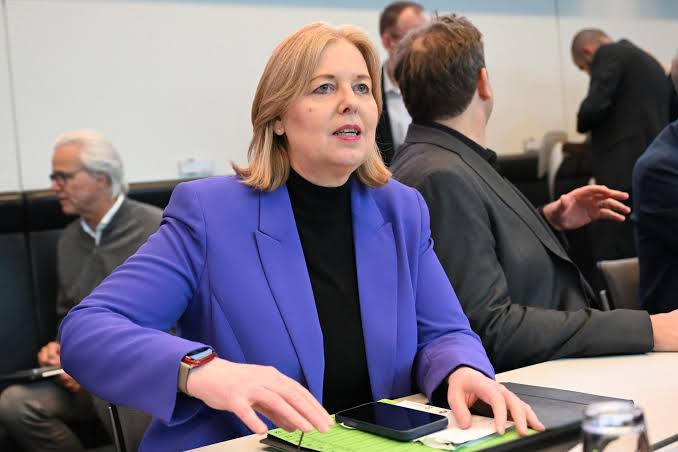
Bärbel Bas, who served as Germany’s federal minister for labour and social affairs and as one of two co‑leaders of the Social Democratic Party, resigned from both posts with immediate effect on Monday, October 12, 2026. She told party officials and the public that the death of her stepdaughter, combined with what she described as open political attacks within the coalition, meant she could not continue in office.
What Bas announced and why it matters
The resignation was made public early on October 12. Bas cited the personal bereavement of her stepdaughter and said the political environment around her role had become untenable. German public broadcasters and national outlets reported her decision within hours, describing it as sudden and unexpected.
Bas’s departure removes a senior Social Democratic figure from the federal cabinet at a moment when the coalition government led by Chancellor Friedrich Merz faces pressure over planned labour market and pension reforms. As federal labour minister, Bas was responsible for policies that affect millions of workers and pensioners. Her exit therefore creates immediate administrative and political questions about who will oversee that portfolio and who will represent the SPD at the highest party level in talks with coalition partners.
Immediate political consequences
The SPD currently shares party leadership between Bas and Lars Klingbeil. Bas stepping down from the co‑chair role hands the party a sudden leadership gap at a delicate time for the coalition. Media coverage noted that the resignation could complicate negotiations inside the coalition on contentious reforms that the Christian Democratic Union led by Chancellor Merz is pressing to advance.
Observers told national outlets that a senior figure leaving the cabinet and party leadership simultaneously could sharpen tensions within the governing alliance, and complicate the SPD’s ability to present unified positions in forthcoming legislative debates. The ministry itself will require an interim arrangement while the government and the SPD identify a successor or assign caretaking responsibilities.
Context: Bas’s role and recent pressures
Bärbel Bas has been a prominent SPD figure for years, holding high parliamentary office prior to joining the cabinet. She had been federal labour minister since the government formed following the 2025 election cycle and had served as one of the SPD’s two national co‑chairs since mid 2025. Her remit included major and politically sensitive files such as pension policy, labour market regulation and measures aimed at easing cost pressures on lower and middle income households.
In recent months, the coalition has encountered difficulties agreeing on the scope and timing of reforms. Coverage from national newsrooms linked intra‑coalition disputes and sharper political contestation to a more hostile climate for ministers from both coalition parties. Several outlets emphasised that Bas referenced both the personal tragedy and mounting public attacks by opponents as reasons for stepping down.
Unanswered questions and next steps
At the time of publication, neither the SPD nor the federal government had announced a successor for Bas’s cabinet post or for her party role. That will be an immediate priority for party leadership, and the choice could reshape internal SPD dynamics depending on whether the party selects a figure from its parliamentary ranks, a state premier or an outside candidate.
For the federal government, a replacement will also need to be agreed with coalition partners because the labour ministry is central to policy packages that the coalition has discussed in public and behind closed doors. How quickly the SPD moves to fill both roles, and who it chooses, will influence the government’s ability to pursue its legislative agenda on labour and social policy.
Reaction and wider significance
News organisations covering the story described the resignation as a blow to the SPD and as a potential stress point for Chancellor Merz’s administration. Politicians across the spectrum offered condolences for Bas’s personal loss while also noting the political implications of her departure. Analysts pointed out that a midterm change in leadership and a cabinet reshuffle would divert time and attention from the government’s policy priorities and could reopen debates inside the SPD about strategy and direction ahead of key parliamentary sessions.
Beyond party politics, Bas’s resignation highlights the interplay of personal and political pressures that can precipitate sudden changes in government make up. The labour ministry’s ongoing dossiers, including pension reform options and employment measures intended to address living costs, will now be subject to renewed scrutiny as new leadership takes responsibility.
Readers should expect prompt announcements about interim management of the labour ministry and about the SPD’s internal process to replace Bas as co‑chair. Those developments will determine whether the coalition can hold to its current legislative timetable or will need to recalibrate negotiations.