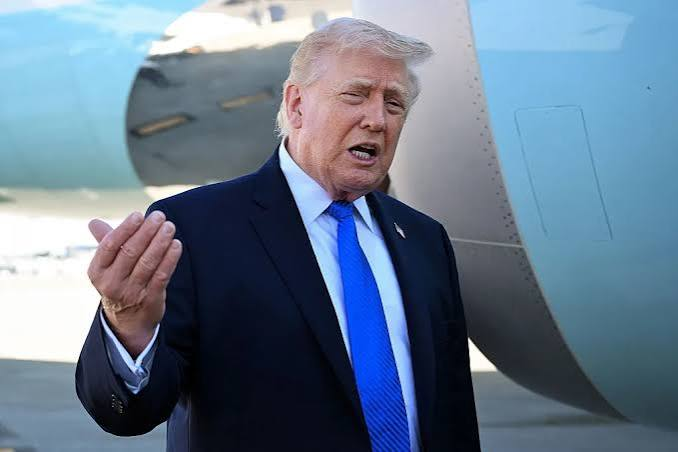
President Donald Trump said this week that the United States will not carry out new military strikes against Iran before the November 3 midterm congressional elections, and that Washington and Tehran are engaged in "productive discussions" about ending the war that began in February. The announcement, delivered publicly by the president and amplified on his social media account, represents a highly visible calibration of U.S. military posture timed to the political calendar.
What the president said and how officials framed it
Mr. Trump told reporters that talks with Iran were under way and that he had decided against launching fresh attacks before the midterms. He made the comment alongside other public remarks about foreign policy and the ongoing conflict. U.S. national security and defense officials have for weeks described a continuing military buildup in the Middle East, including the movement of additional naval assets and personnel, even as they have repeatedly said options remain under review.
Military movements and the broader security picture
Despite the president's public assurance, defense officials have continued to move forces and logistics into the region. The deployment of carriers and strike groups earlier this year followed a series of U.S. and allied strikes last winter that expanded the conflict. Military planners have told congressional and executive branch audiences that a range of contingencies remains under consideration, from stepped up air and maritime operations to targeted strikes if U.S. commanders judge them necessary.
The apparent pause signaled by the president does not represent a formal change to campaign or contingency planning documented by the Pentagon. Instead, it is a public commitment intended to reduce immediate escalation risks ahead of nationwide U.S. elections while leaving U.S. instruments of military power available should circumstances change.
Economic and diplomatic ripple effects
Financial markets reacted quickly to the president's comments. Oil prices, which had jumped earlier amid fears of escalation and supply disruptions, eased after the statement that a near term attack would not occur. Energy market volatility has been a persistent channel through which the Iran conflict has affected global economies, raising gasoline and diesel costs that have political consequences for leaders in Washington.
Diplomatically, the statement is notable because it publicly acknowledges direct or indirect communications with Tehran, at a time when Washington has led an international campaign of sanctions and military pressure. While the president described discussions as productive, he stopped short of describing any concrete steps toward a ceasefire or a deal on nuclear or regional security issues.
Political calculus and domestic implications
With control of the U.S. Congress at stake in the November midterms, the president and his political advisers face competing imperatives. A limited show of restraint may blunt voters concerns about war and rising fuel costs. At the same time, hawkish voices in and outside the administration have argued for more forceful action to degrade Tehran's capabilities. The president's public pledge not to escalate before the election appears aimed at managing both the immediate battlefield risk and the domestic political fallout.
Lawmakers in both parties have been pressing the White House for clarity on strategy, force posture, and the criteria that would trigger further U.S. military action. Some members of Congress have called for classified briefings on intelligence and military options, while others have criticized what they describe as an opaque policy that leaves allies and partners uncertain about long term U.S. aims.
Why this matters now
The president's statement is consequential for three reasons. First, it establishes an explicitly political constraint on U.S. military action, tying operational decisions to the domestic electoral calendar. Second, it signals that channels of communication between Washington and Tehran are open in some form, creating the possibility of negotiation even as hostilities continue. Third, it moderates near term escalation risk, with immediate benefits for global oil markets and for allied planning around conflict management.
That said, the underlying drivers of the conflict remain. Iran continues to face intense pressure from Western sanctions and military strikes have not fully diminished Tehran's capabilities or regional influence. U.S. officials continue to emphasize that pressures on Iran will remain unless Tehran takes steps Washington considers meaningful on nuclear activities and regional behavior. The president's temporary pause therefore does not resolve the deep strategic questions that propelled the confrontation earlier this year.
What to watch next
Observers should look for follow up signals in three areas. First, U.S. diplomatic channels, including statements from the State Department and allied capitals, will indicate whether the president's description of discussions with Iran translates into a formal negotiating track. Second, military movements and public statements from Pentagon officials will show whether the pause is limited to rhetoric or matched by operational deescalation on the ground. Third, congressional activity, including hearings and requests for briefings, will reveal how lawmakers press the administration for oversight and for clearer criteria that would trigger a return to strikes.
In short, the president's announcement reduced the immediate risk of a fresh round of U.S. strikes before the midterms, and it highlighted an unusual intersection of foreign policy and electoral timing. Whether that pause becomes the start of a negotiated deescalation or a temporary lull before renewed confrontation will depend on developments in the weeks ahead.