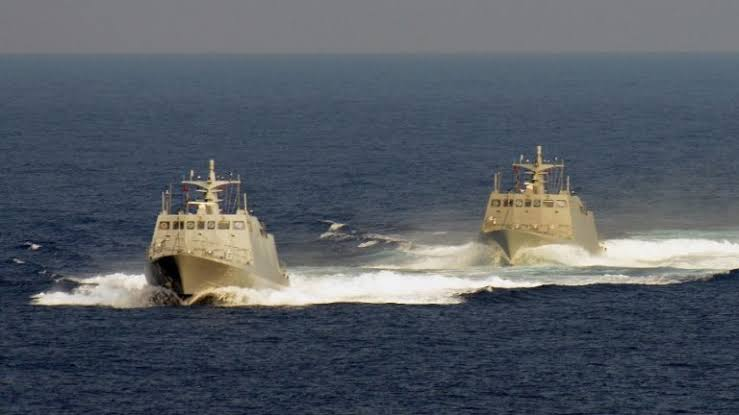
Washington criticised Beijing on October 10, 2026, saying China’s growing maritime presence east of Taiwan risked destabilising regional security, after independent surveillance data reviewed by reporters indicated the first known sighting of a vessel believed to be part of China’s maritime militia operating in those waters.
What the reports found
Security analysts and private aviation patrols observed a group of three vessels operating more than 30 nautical miles off Taiwan’s east coast in mid August. The surveillance report reviewed by Reuters identified one vessel, named Minfudingyu 07902, as a fishing boat that can double as a maritime militia asset. It said the boat was operating alongside a China Coast Guard cutter and a research ship.
Taiwanese authorities and independent trackers have for months documented an increase in Chinese coast guard and naval sorties east of the island, a shift from the more familiar pattern of activity concentrated in the Taiwan Strait. Analysts say the presence of paramilitary fishing vessels, research ships and coast guard cutters together can complicate the response of Taipei and its partners, because these mixed formations blur the line between civilian and military operations.
U.S. diplomatic response
A U.S. State Department spokesperson told reporters the United States was concerned by China’s activity east of Taiwan and described the pattern as "deeply destabilising." The comment came in direct response to questions about the surveillance findings and underscores Washington’s unease at what officials characterise as Beijing’s expanding use of gray zone tactics, including the greater employment of maritime militia and coast guard patrols.
The State Department statement did not announce new policy measures, but it framed the activity as a matter of regional stability and reiterated U.S. concern for freedom of navigation and the safety of maritime traffic in international waters near Taiwan.
Why analysts see the east coast activity as significant
Beijing’s use of maritime militia vessels has been documented in the South China Sea and in areas around disputed features for years. What makes the recent pattern noteworthy is the extension of similar activity into the Pacific side of Taiwan, a corridor that is important for external reinforcement and resupply routes to the island.
Experts warn that exercising a mix of civilian, paramilitary and law enforcement assets in this area could be used to practice encirclement or blockade techniques without resorting to overt military confrontation. Because militia boats are civilian in appearance but can undertake state-directed missions, they present a deniable and ambiguous tool for pressuring opponents while increasing the risk of miscalculation.
Responses from Taipei and regional partners
Taiwanese officials have publicly stressed they are monitoring maritime activity closely and have stated that the specific group of vessels identified were operating outside Taiwan’s restricted waters, according to local coast guard statements. Taipei has long warned that Beijing’s expanded operations could be rehearsals for coercive measures, including potential interdiction of supply routes in a crisis scenario.
Allied and regional capitals have in recent months expressed concern about Beijing’s broader pattern of operations, with Britain, France and Germany previously issuing a joint warning about novel Chinese activity east of Taiwan. The United States, separately, has continued to voice concerns privately and publicly, balancing warnings with diplomatic engagement to avoid rapid escalation.
What this means for regional security
The public spotlight on a maritime militia sighting and the State Department rebuke are likely to intensify scrutiny of China’s tactics and may prompt closer tracking by private surveillance firms, regional coast guards and foreign navies. For Taipei, the development reinforces the argument that Taiwan needs to prepare for a spectrum of threats that fall below the threshold of open war but could nonetheless sever critical lifelines in a crisis.
For Beijing, the use of maritime militia and law enforcement assets offers a low cost, politically deniable method of applying pressure while testing responses by Taipei and external supporters. That same ambiguity increases the risk that encounters at sea could spiral into incidents that require fast diplomatic and military deconfliction to prevent escalation.
What to watch next
Officials and independent monitors will be watching for three things: whether China increases the frequency and scale of combined coast guard, research and militia formations on Taiwan’s Pacific side; whether Taipei or its partners change patrol or surveillance patterns in response; and whether Beijing offers an official explanation or further pushes back diplomatically against the characterisation of the activity as destabilising.
As the situation evolves, transparent tracking from multiple sources and careful diplomatic signalling will determine whether these maritime moves remain a persistent element of Beijing’s tactics or develop into a more acute security challenge for the region.