Shock lines at a charity event reverberate beyond Hollywood
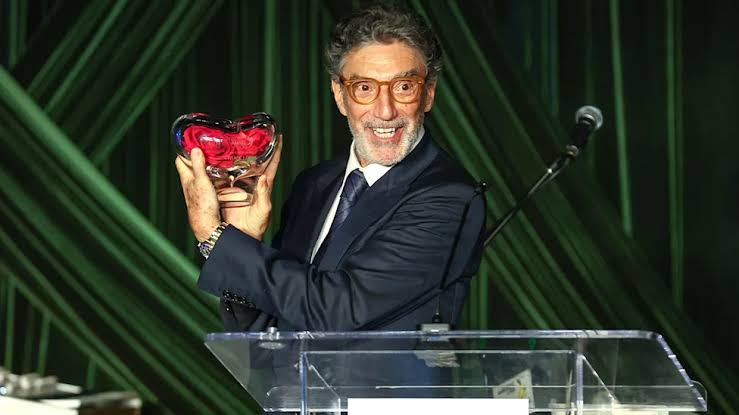
Chuck Lorre, the veteran television producer known for creating The Big Bang Theory and Two and a Half Men, turned an awards acceptance speech at a Los Angeles charity gala into a pointed political takedown that has drawn a rare and hostile response from the White House. Lorre used the microphone at Project Angel Food’s Angel Awards to deliver a stream of profane jokes aimed at President Donald Trump, the first lady, and other political figures. Within days, the administration publicly condemned his remarks as inappropriate and personal.
What Lorre said and where he said it
Lorre accepted a Founders Angel Award at Project Angel Food’s Angel Awards, an annual Los Angeles fundraiser that raises money to provide medically tailored meals to people living with serious illness. According to contemporaneous reporting and video excerpts circulating online, Lorre mixed gratitude for the charity with a string of political barbs and explicit jokes. He criticized the president’s conduct, made a crude reference to the president’s health and used derogatory language about the first lady. He also targeted public figures who have taken skeptical positions on vaccines.
White House reply escalates the story
The administration responded with unusually personal language. A White House spokesperson issued a statement that called the remarks symptomatic of what they described as an extreme hostility toward the president and recommended Lorre seek psychiatric help. The statement framed the comments as an example of unacceptable public behavior, especially when delivered at a philanthropic event meant to spotlight a nonprofit’s work.
Why the presidential response matters
It is not unusual for entertainers to voice political opinions at awards and fundraisers. What makes this episode notable is the tone and the rapidity with which the White House moved from criticizing the substance of Lorre’s remarks to a personalized rebuke aimed at the entertainer’s mental state. That escalation is significant because it converts a local fundraising speech into a national culture conflict, thrusting a Los Angeles charity gala into a broader debate over the limits of political satire, the role of celebrities in public life, and the norms governing attacks on unelected public figures.
Impact on the charity and Hollywood reaction
Project Angel Food, which honored Lorre for his philanthropic support and say they provide meals to people facing critical illness, has sought to keep attention on its mission. The nonprofit posted highlights from its Angel Awards and acknowledged that Lorre’s onstage remarks were being widely discussed. Fundraisers frequently rely on celebrity attention to drive donations. But when headlines shift from charitable mission to political controversy, organizations face the risk of overshadowed messaging and donor distraction.
Within Hollywood the response has been mixed. Many entertainment figures and commentators defended Lorre’s right to free speech and framed the remarks as part of a long tradition of comedians and writers using public platforms to satirize powerful figures. Others criticized the personal nature of some of his lines, arguing that attacks on the spouse of a president, who is not an elected official, cross a customary line of restraint at philanthropic gatherings.
Context: celebrity politics in an election year
The exchange arrives with the country in the middle of an intense political period. Celebrity interventions in politics have become more common, and social media amplifies quick, polarizing reactions. The White House rebuke adds fuel to an already charged environment where comments from high profile entertainers can produce immediate and forceful governmental pushback.
What to watch next
Three developments will determine how this episode evolves. First, whether Lorre or his representatives issue a response that clarifies intent or expresses regret. Second, whether the White House follows up or treats the statement as a one-off reprimand. Third, how media coverage and social media discussion influence donation and public support for Project Angel Food in the days after the gala. Each will shape whether the story remains a short cultural skirmish or becomes a sustained example of the wider debate about celebrity speech and political civility.
For Project Angel Food, the immediate concern is preserving attention for its work delivering medically tailored meals to people facing severe illness. For Hollywood, the episode underscores the tightrope that public figures walk when they mix philanthropic platforms with overtly partisan commentary. For the White House, the bluntness of its rebuke signals a willingness to respond sharply when prominent cultural figures cross rhetorical boundaries.
The donations and conversations prompted by the Angel Awards are likely to extend beyond the gala itself. The controversy will test how quickly public attention returns to the charity’s work or instead remains fixed on the clash between a comedian-producer and the commander in chief.