Wave of coordinated attacks in Dhaka raises questions about policing and political violence in Bangladesh
Three episodes of vandalism, looting and occupation across Dhaka over 48 hours have exposed gaps in police response and renewed concerns about politically linked mob violence, prompting a formal inquiry and pledges of action from authorities.
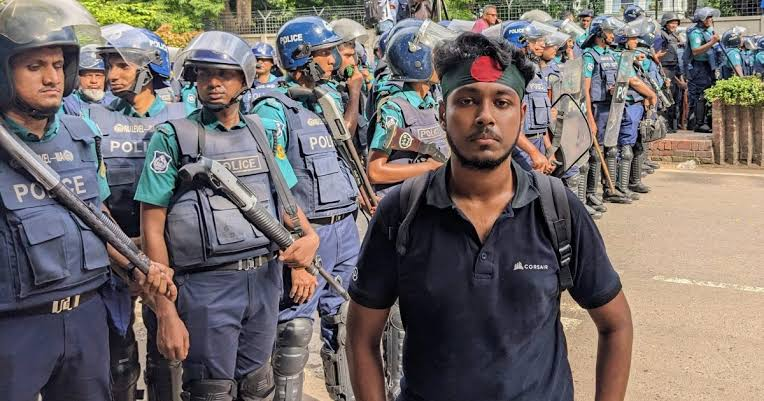
Three incidents of organised vandalism and looting in Dhaka over the past 48 hours have thrust questions about public security and political violence back into the national conversation. The attacks, which targeted a long standing low cost health centre in Mirpur, a residential property in Mohammadpur, and a content creator's studio near ECB Chattar, have sparked criticism of police conduct and raised fears that criminal methods are being used to seize property and intimidate opponents. Officials say hundreds of people took part in the most serious episode at the Radda MCH-FP Centre in Mirpur-1, where attackers arrived with heavy machinery, vandalised buildings, seized medical supplies and removed equipment and records. Witnesses and subsequent reporting describe a chaotic scene in which police vehicles were present but failed to stop the looting as assailants loaded goods onto trucks and left the site. Authorities have since arrested multiple suspects and recovered some of the stolen items, while administrative steps have been taken against the local police officer on duty. In another episode, social media footage showed a large group forcefully entering and ransacking an office in the Chand Udyan Housing area of Mohammadpur, and a separate mob described by victims and residents attacked and looted a studio belonging to a well known content creator near ECB Chattar. Local police say several people have been detained in connection with these incidents. A government response and an independent panel Facing public outcry and media scrutiny, the home minister acknowledged lapses in policing and said action would be taken against officials found negligent. Dhaka Metropolitan Police announced a three member committee to investigate the Mirpur attack and ordered the withdrawal of at least one officer from the local police station pending that inquiry. Police chiefs told reporters they would pursue those responsible and stressed that investigations were under way. Critics say the official steps do not fully answer wider concerns. Civil society groups and analysts point to a pattern of similar attacks since mid 2024, arguing that organised occupation, extortion and lawless seizures have reappeared in multiple parts of the city. Transparency and timely accountability remain the central demands from opposition figures and rights advocates, who say selective enforcement or delayed investigations risk normalising violence as a means to acquire property or intimidate dissent. Political context and allegations of patronage While police and some officials insist the perpetrators are ordinary criminals, several accounts and local reports have named political actors and activists as alleged organisers or instigators. Opposition and ruling party narratives have both sought to shape public perception since the events emerged, with each side blaming the other for fomenting unrest. Analysts warn that even if individual criminals carry out these operations for profit or personal influence, the larger political environment matters. When political parties or their local networks tolerate or tacitly endorse violent tactics to settle disputes or extract economic rents, ordinary law enforcement becomes harder to sustain. The result is a widening gap between legal order on paper and what people experience in neighborhoods across Dhaka. Impact on public services and vulnerable residents The attack on the Mirpur health centre has immediate human consequences. The Radda facility has served low income communities for decades, offering maternal and child health services and vaccination drives. Staff who remained are reported to be trying to continue basic services, but the loss of equipment, medicines and records will disrupt care and could reduce vaccination outreach in the area. Health sector observers cautioned that when community clinics and small NGO run centres become targets, disruptions hit the most vulnerable first. Repairing trust in local services will require more than recovered equipment; it will require sustained guarantees of safety for staff and patients and clearer, credible investigations into how the assault occurred. What this means for Bangladesh politics The incidents come at a time when Bangladesh remains sensitive to questions of governance and public order. Since 2024, episodes of mass protest and contentious law enforcement have shaped domestic politics, leaving both citizens and international observers attentive to signs of backsliding on security, rule of law and political pluralism. Renewed episodes of occupation and mob violence risk fuelling fear and polarisation when political confidence is fragile. For the incumbent authorities, swift, transparent investigations and visible corrective action are the most direct way to reassure citizens that the state can protect public services and maintain law and order. For opposition forces and civil society, documenting links between political actors and organised violence will shape pressure for reforms to policing, accountability and local governance. Looking ahead Officials have given the investigative committee a short timeline to report findings, and police say more arrests are possible as enquiries continue. If the probe shows negligence or collusion, the government will face a choice between narrow personnel changes and deeper reforms in how public security is managed at the metropolitan level. Whatever the immediate outcome, the incidents in Mirpur, Mohammadpur and ECB Chattar have underscored an unresolved question in Bangladesh politics: how to prevent the recurrent use of crowd based violence to settle grievances or advance private interests. The answer will shape not only the security of public services but also wider perceptions about the state capacity to protect ordinary citizens in an era of heightened political competition.
Topics
LocationMirpur, Mohammadpur, ECB Chattar