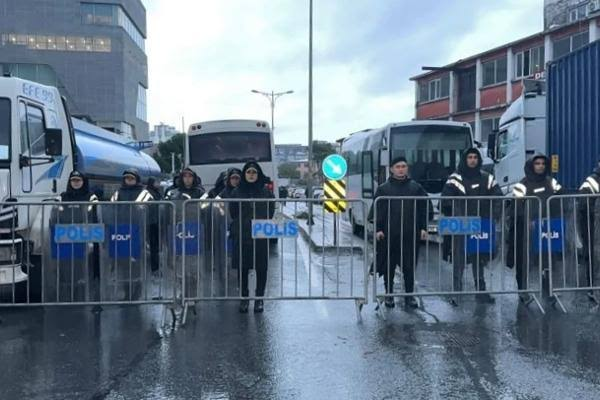
Turkish police entered the Istanbul headquarters of Halk TV at dawn on October 14 and prosecutors announced the appointment of a government trustee to run the station, halting its live broadcasts and prompting immediate criticism from opposition figures and press freedom groups.
What happened
The operation began in the early hours when teams from financial crimes and organized crime units searched Halk TV offices. Prosecutors later said a trustee had been assigned to take control of the broadcaster as part of an ongoing investigation into alleged financial and administrative irregularities. Station staff posted on social media that employees were blocked from entering the building and that transmissions had been stopped.
Local reporting and statements from the channel indicated that arrest warrants were issued for multiple people connected to the broadcaster and affiliated companies. Independent news outlets reported a number of detentions following the raid, while Halk TV said the trustee appointment suspended its editorial control and forced it off the air.
Legal rationale and the state action
Turkish prosecutors framed the intervention as a law enforcement measure, citing probes into financial wrongdoing and corporate governance. The move used a legal mechanism that allows public authorities to appoint trustees to run private entities when criminal or financial irregularities are alleged, or when courts or prosecutors request temporary administration during a probe.
Authorities have for years used trustee appointments in a range of contexts, most prominently in removing locally elected mayors and placing municipalities under state trusteeship, a practice widely criticized by domestic and international rights groups. Observers note the same legal powers have increasingly been applied to media outlets and nongovernmental organizations in recent years.
Political and media freedom context
Halk TV is one of the most-watched broadcasters associated with Turkey’s opposition, and the raid marks the latest high profile intervention into the country’s media landscape. Press freedom advocates and opposition politicians immediately described the action as part of a broader pattern of pressure on dissenting voices.
Opposition figures condemned the operation publicly and claimed the takeover was politically motivated. Rights groups warned that appointing a trustee to a major opposition broadcaster and suspending its broadcasts would further narrow the space for independent journalism and public debate ahead of future political cycles.
Domestic reactions and international concern
Domestic opposition leaders and several prominent journalists condemned the raid. Social media carried swift criticism from opposition politicians who linked the operation to a trend of state interventions that critics say have eroded checks on executive power.
International observers and press freedom organisations called for transparent legal process and for authorities to respect editorial independence pending any investigation. The measures came amid an already tense climate for independent media, which has seen other outlets and journalists face fines, regulatory sanctions, or legal probes in recent years.
Why this matters
The Halk TV intervention matters for several reasons. First, taking operational control of a high profile opposition broadcaster directly affects what millions of viewers can see and hear. Second, the use of financial or administrative investigations to justify trustee appointments risks becoming a common tool to reshape the media landscape without criminal convictions or lengthy judicial processes. Third, the step has domestic political consequences: it changes the information environment in which parties and voters operate and may influence public debate.
Legal experts warn that if trustee appointments become routine for critical outlets, the immediate legal aim of disrupting alleged wrongdoing can produce a broader chilling effect on journalism, including self censorship and the closure or sale of opposition media properties. For civil society groups, the raid also underscores the challenges of safeguarding independent institutions in an environment where administrative powers can be applied swiftly.
How the story may develop
Key follow up elements to watch include whether prosecutors will file formal charges, whether detained figures are formally indicted, and whether the trustee moves to change on air staff or programming. Legal proceedings filed in the coming days should clarify the precise allegations and the scope of the administration ordered by the court or prosecutor. Observers will also monitor whether other independent outlets face parallel measures.
For audiences in Turkey and abroad, the immediate effect is tangible: a major opposition broadcaster is temporarily out of independent control. The intervention intensifies already heated debates about the state of pluralism and the rule of law in Turkey, and it will be scrutinised by domestic opponents and international watchdogs as events unfold.