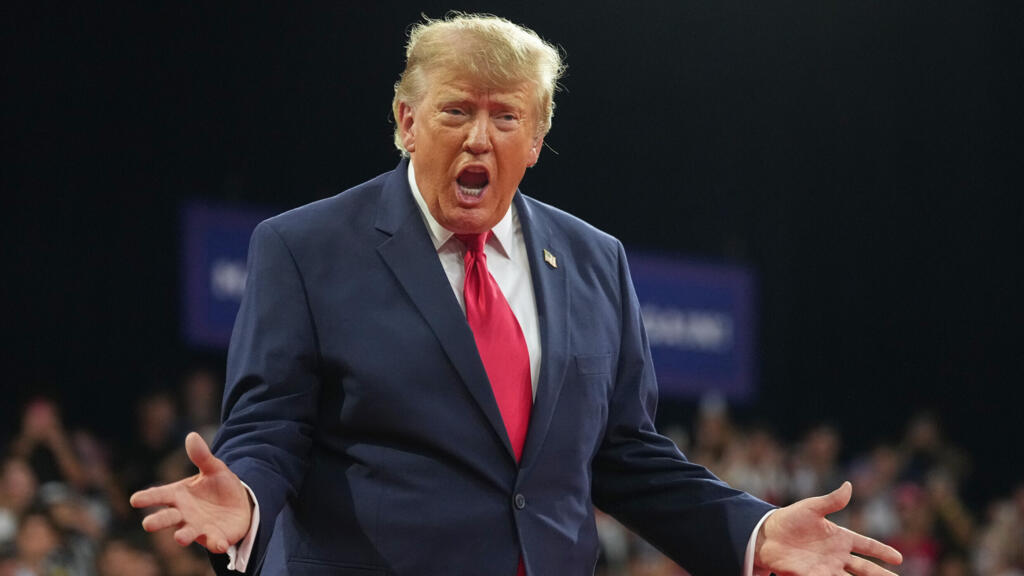
President Donald Trump told supporters on Oct. 24 that the United States could carry out further military strikes against Iran if Tehran does not satisfy U.S. demands, saying the U.S. "may do another little Epic Fury." The comment, delivered during a campaign appearance, revived concerns about the possibility of renewed U.S. attacks in the Middle East at a sensitive moment for regional stability.
What the president said and where
Speaking to a crowd on Oct. 24, President Trump used the phrase "may do another little Epic Fury" when referring to the option of conducting additional strikes against Iran. The remark was reported by multiple contemporary news outlets on Oct. 24. The president framed the possible action as contingent on Iran's behavior and suggested that the United States retained the option of limited, targeted force.
Immediate reaction and why it matters
Trump's comment was widely circulated in same-day news coverage and social-media summaries. The explicit reference to a previous operation name, "Epic Fury", and the suggestion of doing "another" such action signal to regional actors and U.S. allies that the administration is publicly keeping military options open. That public posture can affect deterrence calculations in Tehran, Israeli and Gulf capitals, and among U.S. partners and adversaries.
Analysts and diplomats typically treat public presidential remarks about military action as consequential because they can alter adversaries' risk assessments, influence market reactions (notably oil and shipping insurance in the Gulf), and trigger diplomatic efforts to de-escalate. The comments come during a period of heightened tensions between the United States and Iran and amid a politically charged U.S. domestic environment, increasing the potential for miscalculation.
Context: previous operations, regional tensions
"Epic Fury" was referenced by the president as the name of an earlier U.S. or U.S.-linked operation; whether the administration intends the phrase to denote a formal campaign name or a shorthand for targeted strikes was not clarified in the same-day coverage. Regardless, the invocation ties current rhetoric to earlier military activity and underscores the administration's willingness to publicly link past actions and future threats.
Tensions between Washington and Tehran have been elevated in recent weeks and months, with competing statements, maritime incidents and strikes in the region prompting concern among U.S. allies and international observers. Public talk of further operations could complicate ongoing diplomatic channels seeking to reduce immediate risks of escalation.
What to watch next
- Official clarifications: Watch for statements from the White House, the Pentagon, and the State Department clarifying whether the president's words reflect an updated policy position or a rhetorical flourish.
- Allied responses: Reactions from key U.S. partners in the Middle East and Europe will be important; partners often issue public responses or seek private consultations after such remarks.
- Iran's response: Tehran's diplomatic and military messaging in the hours and days following the comment will be critical to determining escalation risk.
- Markets and shipping: Oil prices and shipping insurance rates for Gulf transit routes can move on rising perceived risk of conflict.
Bottom line
President Trump's Oct. 24 comments keeping open the possibility of "another little Epic Fury" represent a fresh, publicly stated willingness to use military force against Iran if conditions do not change. The remark, reported the same day, elevates the near-term geopolitical risk picture: allies, adversaries and markets will watch for official follow-up, clarifying language, or immediate operational signals that confirm or contradict the president's words.