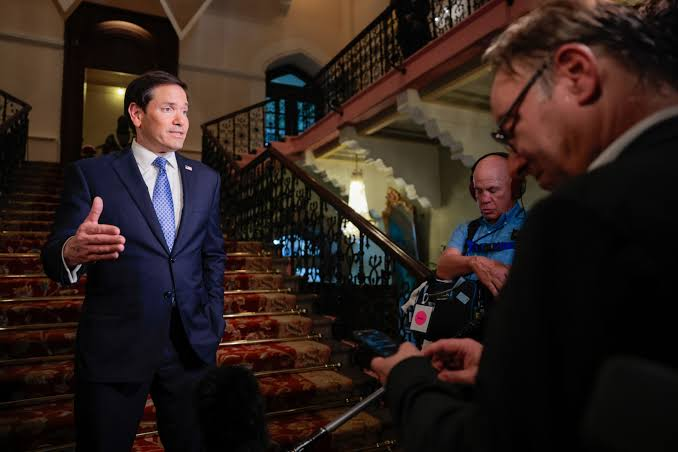
Israeli and Lebanese military delegations convened at the U.S. Central Command headquarters in Tampa, Florida on October 20 and 21 for U.S. mediated working level security talks seeking to advance the Trilateral Framework Agreement signed earlier this year. The agreement ties a phased Israeli withdrawal from parts of southern Lebanon to dismantling or neutralizing Hezbollah’s military capabilities in designated pilot zones.
Focused, technical talks but heavy political weight
U.S. officials described the sessions as limited, technical consultations rather than high level diplomacy. Neither country sent ambassadors to Washington for the meetings, a signal that the discussions were meant to address operational and verification issues rather than political reconciliation. Delegates concentrated on the security dimension of the framework, including mechanisms for monitoring, verification and the conditions for incremental Israeli troop withdrawals.
But the technical framing belied the political sensitivity of the exercise. For Israel, Prime Minister Benjamin Netanyahu has presented progress on Hezbollah disarmament as a central national security objective and a domestic political accomplishment. Israeli briefings ahead of the talks stressed that the Lebanese Armed Forces must demonstrate the capacity and will to clear Hezbollah from agreed pilot areas, or risk Israeli unilateral action.
For Lebanon, officials signaled that their delegation would press both for an end to cross border strikes into Lebanese territory and for a security approach that avoids direct military coordination with Israel. Beirut has repeatedly said it prefers international monitoring arrangements rather than bilateral military contact with the Israel Defence Forces, given Israel’s long-standing status as an adversary in Lebanese political discourse.
U.S. role and regional stakes
The United States is acting as mediator and guarantor of the process. Hosting the talks at CENTCOM underlines Washington’s interest in stabilizing the Israel Lebanon border and blunting the chance of a fresh escalation that could draw in regional actors. U.S. officials framed their role as enabling practical, working level problem solving on the security arrangements embedded in the framework.
Regional actors have a stake in any progress. Lebanon’s capacity to control or disarm Hezbollah is widely viewed as limited without significant political changes in Beirut and sustained international support. Israel’s security concerns are compounded by the presence of armed groups in southern Lebanon that retain the ability to launch rockets and precision guided munitions into Israeli population centers. The talks therefore serve both as an attempt to operationalize a previously agreed framework and as a test of whether incremental, verifiable steps can reduce the risk of cross border violence.
Constraints and likely outcomes
Analysts and participants cautioned that the Tampa meetings were unlikely to resolve the most contentious elements of the framework in two days. Key constraints include domestic politics in both capitals, differing interpretations of the framework’s sequencing, and distrust over verification procedures. Lebanon’s insistence on avoiding direct coordination with Israel complicates any plan that relies on joint operational steps to clear weapons and armed cells from pilot zones.
Practical outcomes from the working level talks could include technical agreements on how to monitor pilot zones, a timetable for joint or internationally monitored inspections, and a narrow set of confidence building measures. However, any such gains would still need political sign off in Beirut and Jerusalem, and would be vulnerable to derailment by new incidents along the border.
Why this matters now
The timing of the Tampa talks gives them outsized political relevance. Israel is in the final week before parliamentary elections scheduled for October 27, and Prime Minister Netanyahu has framed national security achievements as central to his campaign. Progress in Tampa, or the lack of it, is likely to be presented by competing political camps as evidence for their respective narratives about Israel’s security strategy.
For Lebanon, the consultations are another demonstration of how security arrangements involving Hezbollah are as much political as military. President Joseph Aoun and other Lebanese actors face internal constraints that make large scale disarmament of Hezbollah difficult without broader changes in Lebanese politics and governance.
Outlook and next steps
U.S. officials have left open the possibility of further working level sessions if the Tampa talks produce actionable technical steps. Observers say sustainable progress will require parallel political engagement, predictable international monitoring capacity, and mechanisms to prevent incidents from escalating into larger confrontations. In the short term, the most realistic expectation is modest, verifiable technical agreements that can be tested on the ground, while the deepest political questions remain unresolved.
The Tampa meetings underscore both the potential and the limits of U.S. mediation on volatile border issues. They also highlight how local military arrangements intersect with domestic politics in Israel and Lebanon, and how modest operational advances can become focal points of political debate in both capitals.