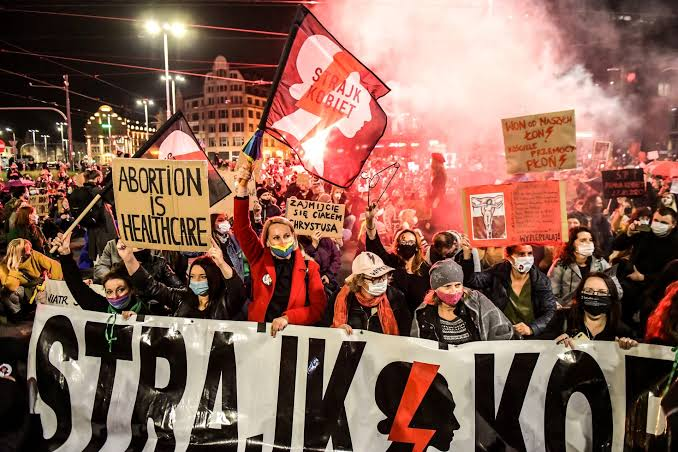
Thousands of people took to the streets in more than 20 Polish cities on Thursday, October 22, to demand greater access to abortion and to protest what campaigners described as inadequate changes from parliament and an uncertain political outlook for reproductive rights.
What happened
Organizers affiliated with the Strajk Kobiet, or Women’s Strike, and other reproductive rights groups said coordinated demonstrations were held in towns and regional centres including Warsaw, Krakow, Poznan and Gdansk. The protests coincided with the sixth anniversary of a Constitutional Tribunal ruling that removed foetal abnormality as a legal ground for termination, a decision that tightened one of Europe’s strictest abortion regimes and triggered mass unrest in 2020.
Who is involved
Protesters included activists who have campaigned for years to restore broader abortion access, medical professionals, and ordinary citizens. Organisers say the events were specifically aimed at pressuring the current government and the president to allow meaningful legal change, rather than piecemeal measures. National advocacy networks such as Abortion Dream Team and local chapters of Women’s Strike helped coordinate the demonstrations.
Why the protests resumed now
The demonstrations followed recent activity in parliament. On October 20, lawmakers in the lower house approved a bill to reinstate abortion in cases of severe foetal abnormality and to decriminalise assistance in accessing abortion care. Backers said those votes were steps toward reversing the effects of the 2020 tribunal ruling, but critics and many activists said the measures were too narrow and would not improve practical access for most people who need abortion care.
Activists also cast doubt on whether the legislation will become law. The bill faces a likely veto or further parliamentary hurdles, and the president’s office has signalled reservations, raising concern among rights groups that the changes could stall. Organisers used October 22 to demand not only the specific legislative changes, but also a broader, guaranteed right to abortion and publicly funded services.
How the facts are known
Reporting on the day of action comes from international wire coverage and Poland’s public broadcaster. An Associated Press dispatch published on October 22 documented protests in more than 20 cities and included statements from campaigners who said recent parliamentary votes amounted to limited reforms. Poland’s public radio provided contemporaneous coverage and context about the parliamentary votes earlier in the week that revived the debate.
Context and consequences
Poland’s abortion law has been one of the most restrictive in the European Union for decades. Since 1993, abortion was permitted in cases of risk to the woman’s life or health, rape or incest, and serious foetal abnormality. The 2020 Constitutional Tribunal judgement removed the foetal abnormality ground, leaving only the other two narrow exceptions. That decision sparked the largest street protests Poland has seen since the fall of communism.
Supporters of stricter rules, including conservative politicians and influential Catholic institutions, frame restrictions as protections for unborn life. Opponents argue the laws endanger women’s health, push abortions underground or out of the country, and criminalize medical professionals who provide or assist in care. Medical associations, human rights groups and some opposition politicians have repeatedly warned that restrictive rules create delays and legal uncertainty for clinicians, damaging care for pregnant people with serious complications.
The parliamentary votes earlier this week, which would restore the foetal abnormality ground and remove criminal penalties for those who help someone obtain an abortion, are significant because they constitute the first major shift by lawmakers since 2020. Yet the limited scope of the proposed changes, the prospect of a presidential veto, and continuing political polarisation mean legal and practical access could remain contested if the measures do not survive further legislative and executive review.
Why it matters internationally
Poland’s abortion rules attract sustained international attention because the country sits at the intersection of European human rights standards, a conservative domestic political landscape, and the influence of the Catholic Church. Changes to Poland’s law have implications for cross border health travel, for international human rights monitoring, and for electoral politics inside the EU’s most populous east central member state.
Outlook
Activists said Thursday that protests will continue until they see broader, binding legal guarantees and improved access to services, and they cast the coming months as crucial because national elections are scheduled for next year. Legal advocates have indicated they will challenge any executive action that obstructs parliamentary efforts to expand rights, and health groups say they will document any cases where women are denied care because of legal ambiguity.
For now the demonstrations signal a persistent and organised movement ready to press the issue at the ballot box and in the courts, while the government and president weigh how far to move on a politically charged and socially divisive topic.