Resident Evil has returned to cinemas with the strongest opening in the movie franchise’s history, giving Sony a major box-office win and providing fresh evidence that video-game adaptations remain capable of drawing large theatrical audiences.
The new film, directed by Zach Cregger, earned an estimated $60 million from 3,684 cinemas across the United States and Canada during its opening weekend, according to studio estimates.
That was enough to place Resident Evil comfortably at No. 1 and establish a new opening-weekend record for a film based on Capcom’s long-running survival-horror series.
The previous North American opening record belonged to 2010’s Resident Evil: Afterlife, which debuted with approximately $26.7 million. The scale of the new film’s launch therefore represents a substantial jump for a franchise that has spent more than two decades moving between different cinematic interpretations.
The performance extended beyond North America. International markets contributed another $48.3 million, taking the film’s worldwide opening to approximately $108.3 million.
A New Box-Office High for Resident Evil
The $60 million domestic opening is significant because the Resident Evil movie series has historically relied heavily on international audiences.
The franchise began on the big screen in 2002 and developed into a long-running series led for many years by Milla Jovovich. While several instalments generated substantial worldwide grosses, their North American openings were considerably smaller than the new film’s debut.
Afterlife, for example, opened with around $26.7 million domestically in 2010. Resident Evil: Retribution followed with approximately $21.1 million in 2012, while The Final Chapter opened with about $13.6 million in 2016.
The franchise's previous attempt at a major live-action theatrical reset, 2021's Resident Evil: Welcome to Raccoon City, opened with roughly $5.3 million and eventually earned around $41.9 million worldwide.
Cregger's version has already exceeded that film's entire worldwide theatrical total during its first weekend.
The new release also delivered the biggest opening of Cregger's directing career, surpassing the $43.5 million domestic debut of Weapons in 2025.
Cregger had already established himself as a prominent contemporary horror filmmaker through Barbarian and Weapons. With Resident Evil, however, he is working on a substantially larger established property.
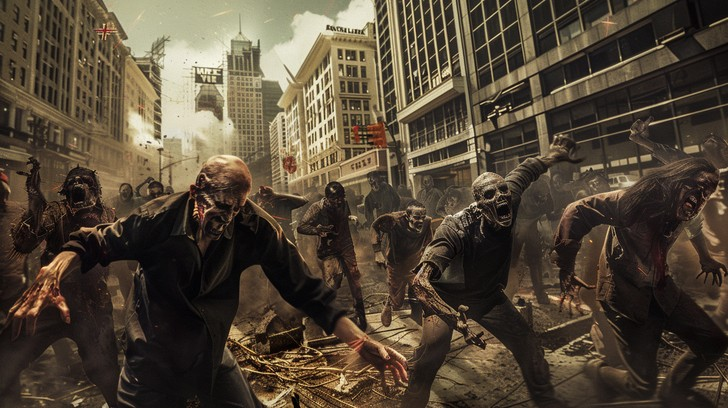
His approach does not simply continue the story of the previous movies. The film follows Bryan, a medical courier played by Austin Abrams, whose journey to deliver an organ to a remote hospital leads him into an outbreak filled with mutated creatures. Cregger has described himself as a longtime fan of the original games even though he had not watched the earlier Resident Evil films before taking on the project.
Strong Reception Helps Push the Reboot Beyond Expectations
The opening also exceeded expectations heading into the weekend.
Industry tracking had placed the film in roughly the $40 million to $50 million range before release, meaning its eventual $60 million start came in noticeably higher.
Early audience and critical reception appears to have helped.
The film received a B+ CinemaScore from opening-weekend audiences, while its critical reception was substantially stronger than many previous cinematic entries in the franchise.
The film also began strongly before the traditional weekend officially started. Thursday previews generated about $8.8 million, providing an early indication that interest was running above previous Resident Evil releases.
Sony and Constantin Film produced the movie on a reported production budget of approximately $75 million before marketing expenses.
A $108.3 million global opening does not mean the film has already become profitable, since studios must account for marketing expenses and cinemas retain a portion of ticket revenue. It does, however, give the release a substantial theatrical base from which to build over the coming weeks.
Horror and Video-Game Adaptations Continue Their Box-Office Run
The success arrives during a particularly strong period for horror.
North American horror releases have generated more than $1.1 billion in 2026, putting the genre on course for one of its strongest theatrical years.
At the same time, Hollywood's relationship with video-game adaptations has changed considerably.
Game properties were once widely associated with disappointing movie adaptations. More recent theatrical and television successes have encouraged studios to treat established gaming franchises as major entertainment properties rather than simply sources of recognisable names and characters.
Resident Evil is particularly interesting in that context because Hollywood has been adapting the franchise since 2002.
The property was therefore already commercially proven, but the new opening demonstrates that audiences were still willing to return for another interpretation after seven previous live-action theatrical films.
Competition during the weekend also worked in the film's favour.
Practical Magic 2 finished in second place with roughly $12.2 million, while Spider-Man: Brand New Day added approximately $6.5 million. The Odyssey and Coyote vs. Acme completed the top five.
The size of the gap between first and second place gave Resident Evil a commanding start.
Its next challenge will be maintaining that momentum.
Opening weekends can be driven by dedicated franchise fans, marketing and curiosity surrounding a major reboot. The longer-term performance will depend on how well the movie holds during its second and third weekends and how strongly international audiences continue to respond.
The franchise still has much larger lifetime benchmarks ahead. Resident Evil: The Final Chapter, for example, ultimately earned more than $300 million worldwide, meaning the new movie's record opening does not yet make it the franchise's highest-grossing film overall.
But after a $60 million North American opening and $108.3 million worldwide start, Cregger's Resident Evil has already achieved something none of its predecessors managed: turning the franchise's first weekend into a major theatrical event.