Final night mixes Bizet, flamenco and pop as festival completes nine city program
Istanbul’s edition of the national Türkiye Kultur Yolu festival concluded on Sunday October 4 with a program that combined staged classics, a flamenco reimagining of Carmen and open air pop concerts that filled Galataport and other public squares. The festival, organised by the Ministry of Culture and Tourism, ran in Istanbul from September 26 through October 4 and brought performances, exhibitions and workshops to historic and contemporary venues across the city.
Carmen closes at AKM as Aida Gomez brings flamenco colour
The cultural marathon reached its theatrical peak at the Ataturk Culture Center, where an interpretation of Georges Bizet’s Carmen, staged with flamenco choreography by Spanish dancer and choreographer Aida Gomez, was scheduled for the evening. The production fused Bizet’s familiar score with flamenco movement vocabulary, aiming to offer a visually intense reworking of the title role and a closing spectacle for the Istanbul program. AKM’s season listings and the festival schedule listed the Carmen staging as the official closing performance for the city.
Galataport and public squares host pop names and large crowds
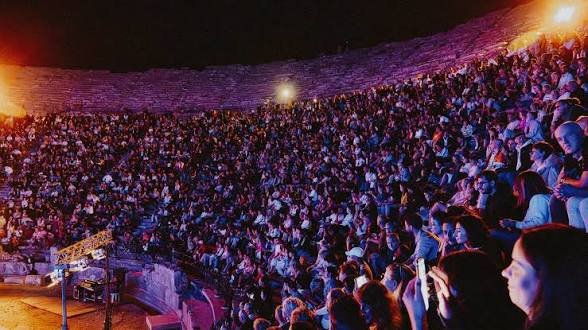
Across the city the festival put a spotlight on mainstream live music as well as classical and stage arts. Free and ticketed concerts at Galataport’s Saat Kulesi square drew thousands to performances by established Turkish pop artists. Reports from the day singled out pop singer Simge for a high energy set that included many of her hits and generated large, participatory crowds in Karakoy. The festival programmers deliberately combined arena draws with smaller, site specific events to stretch audience reach across neighbourhoods.
Program mix and civic intent
The Istanbul chapter of the Kultur Yolu festival emphasised accessibility and a cross section of arts practices. The program included classical concerts by the Istanbul State Symphony and staged opera and ballet presentations, alongside street level programming such as photo marathons, children workshops and open air pop lineups. Festival organisers presented the Istanbul leg as part of a wider national circuit that in 2026 visited 26 cities, with the aim of linking municipal venues, museums and public spaces through a common calendar.
Why this matters for Istanbul’s cultural calendar
The festival’s model matters for two reasons. First, by dispersing events across multiple public and institutional sites it draws audiences who might not otherwise attend theatre or classical concerts. Second, combining international guest artists with domestic pop acts underscores a programming strategy that seeks to balance tourism facing moments with homegrown cultural production. For cultural managers and venue operators, the nine day run acted as a testbed for audience movement between the city’s historic peninsula and waterfront districts.
Attendance, atmosphere and immediate takeaways
Coverage of the final day highlighted both the scale of attendance at open air events and the diversity of spectatorship. Observers noted families at daytime museum programs, students at workshops, and younger crowds at the evening concerts. The Carmen staging at AKM was presented as an elevated closing gesture that aimed to give the festival a theatrical focal point while mass concerts sustained the festival’s popular profile.
Looking ahead
Organisers have framed Kultur Yolu as a continuing national initiative, and the shape of the Istanbul edition suggests similar mixed models will persist in later city programs. For local cultural institutions the festival offers both a ways to experiment with new repertoire and a mechanism to fill off season schedules with cross disciplinary events. For audiences, the immediate result was nine days of concentrated cultural activity across central neighbourhoods, capped by a high profile theatre evening and large public concerts on October 4.
With the festival now concluded in Istanbul, cultural watchers will turn to post festival reports and attendance data to assess how effectively the mix of classical, dance and pop programming reached beyond established audiences and what lessons local venues should carry into the coming season.