From Marvel’s Wolverine to Slow Horses: Why Entertainment Is Becoming a Multi-Screen Experience
Entertainment used to arrive according to relatively predictable schedules.
A new movie opened at the cinema. Television programmes appeared at a specific hour. Albums arrived at record stores. Video games occupied their own separate corner of popular culture.
That separation is increasingly disappearing.
This week's entertainment calendar illustrates how audiences now move constantly between television, streaming platforms, music services, cinemas and gaming consoles.
Among the prominent releases are Marvel's Wolverine on PlayStation 5, the sixth season of Slow Horses, the return of Dancing with the Stars, and new music from artists including Carly Rae Jepsen and Luke Bryan.
Individually, they are entertainment releases.
Together, they demonstrate something larger about modern lifestyle: entertainment is no longer organised around a single screen.
Gaming Has Become Mainstream Entertainment
One of this week's biggest releases comes from gaming rather than cinema or television.
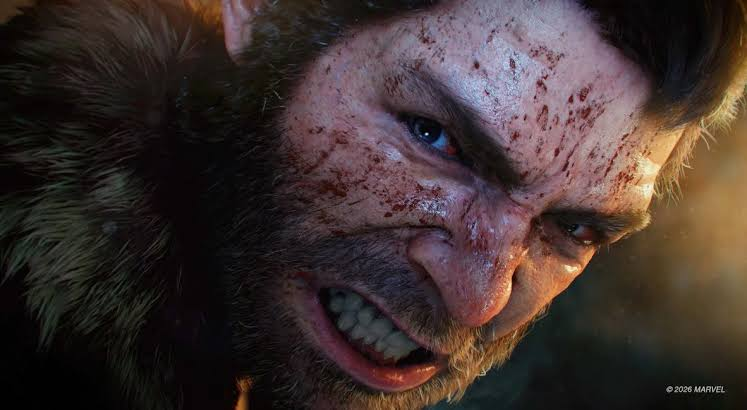
Marvel's Wolverine, developed by Insomniac Games for PlayStation 5, puts the famous Marvel character at the centre of a standalone action adventure.
The game's arrival carries significant expectations because Insomniac previously developed successful Spider-Man titles.
Its release also demonstrates how intellectual property now moves freely between entertainment formats.
Characters that audiences once primarily encountered through comic books can become movie franchises, television properties, merchandise and major video games.
Gaming is particularly significant because audiences do not simply watch.
They participate.
A film may occupy viewers for two hours. A major game can potentially keep players engaged for dozens of hours, making interactive entertainment an increasingly powerful competitor for people's leisure time.
Television Has Become Streaming Television
Traditional television has undergone its own transformation.
Dancing with the Stars has returned for its 35th season with a two-night premiere across ABC and Disney+, followed by next-day availability through Hulu.
Last season delivered the programme's strongest overall ratings since 2019 and its most-watched finale in a decade, according to AP.
The distribution strategy is revealing.
A programme no longer has to choose completely between traditional television and streaming.
It can exist across both.
That allows broadcasters to serve viewers who still watch scheduled television while also reaching audiences accustomed to watching programmes whenever they choose.
Streaming Has Changed the Life of a Series
Meanwhile, Slow Horses has returned for a sixth season.
The spy drama, starring Gary Oldman, has become an example of how streaming services can develop long-running television franchises without following exactly the same model as traditional network television.
Streaming platforms need programmes capable of keeping subscribers engaged.
A successful series therefore has value beyond the audience for an individual episode. It becomes part of the wider library that helps define a service.
This has changed how entertainment companies think about content.
The competition is not simply over who produces the most successful programme tonight.
It is increasingly about which platform gives viewers enough reasons to remain subscribed next month.
Music Never Really Leaves the Audience Anymore
Music has experienced perhaps an even more dramatic change.
New releases from Luke Bryan and Carly Rae Jepsen arrive this week, alongside the first Anthrax studio album in a decade.
But an album release in 2026 exists in a radically different environment from one released several decades ago.
Streaming services make enormous catalogues available instantly.
Social platforms can turn individual songs into viral trends.
Short-form videos can introduce old tracks to entirely new audiences.
Artists therefore compete not only with other new releases but with practically the entire recorded history of popular music.
The listener's relationship with an album has changed as well.
People can jump between artists, genres and decades within minutes rather than making a significant commitment to purchasing one record.
Movies Are Moving Between Cinema and Home Faster
Cinema remains culturally important, but the boundary between theatrical and home viewing continues to blur.
Several recent films are moving onto premium video-on-demand this week, while the autumn calendar combines theatrical releases with titles launching directly through streaming services.
That gives audiences considerably more choice.
Someone may visit a cinema for a major spectacle, stream a series later that evening and purchase a recently released film digitally the following day.
Entertainment companies are therefore competing for the same limited resource:
attention.
The Real Competition Is for Time
This is perhaps the most important change in modern entertainment.
A video game does not compete only against another game.
It competes against Netflix, television, YouTube, TikTok, music, podcasts, sport, cinema and everything else someone could do during their free time.
The same is true in reverse.
A television series launching on Wednesday is competing with a game someone started on Tuesday.
A new album released on Friday competes with millions of older songs already available instantly.
Consumers have access to more entertainment than any individual could realistically experience.
Discovery therefore becomes almost as important as production.
Algorithms Are Becoming Cultural Gatekeepers
That enormous volume of content gives recommendation algorithms substantial influence.
Streaming platforms suggest the next programme.
Music services generate personalised playlists.
Video platforms decide which clips appear in feeds.
Digital storefronts promote particular games.
These systems can help people navigate overwhelming choice, but they also influence what becomes visible.
A brilliant song, programme or independent film cannot attract an audience if people never encounter it.
That means entertainment companies increasingly need to understand not only audiences but also the digital systems through which audiences discover content.
Franchises Can Travel Across Screens
Marvel provides one of the clearest examples.
Wolverine has existed across comics, animation, film and now another major gaming production.
This ability to move intellectual property between formats has become extremely valuable.
A successful fictional universe can generate movies, series, games, merchandise and other experiences without requiring audiences to learn an entirely unfamiliar world each time.
But familiarity alone does not guarantee success.
Consumers still expect each medium to provide something suited to that format.
A game cannot simply behave like a 20-hour movie. Players expect agency and interaction.
A streaming series has different storytelling requirements from a two-hour theatrical release.
The strongest franchises increasingly adapt rather than merely duplicate.
Entertainment Is Becoming More Personal
There is another major shift beneath all of this.
Two people living in the same household can now have completely different entertainment experiences.
One might spend Tuesday playing Marvel's Wolverine.
Another might watch Dancing with the Stars.
Someone else could stream Slow Horses while another listens to a new album.
The shared mass-media experience has not disappeared, but it now exists alongside deeply personalised entertainment habits.
That creates enormous opportunity for creators because niche audiences can be reached globally.
It also makes producing universal cultural moments more difficult.
The Multi-Screen Era Is Here
This week's release schedule might look like a collection of unrelated entertainment products.
It is better understood as a snapshot of a much larger transition.
Gaming has become a mainstream storytelling medium. Television moves between broadcast and streaming. Films travel between theatres and homes. Music libraries are effectively infinite. Algorithms increasingly determine what people discover next.
The entertainment industry is no longer fighting simply for ticket sales, ratings or album purchases.
It is competing for minutes and hours inside people's daily lives.
And audiences are increasingly deciding how those hours are divided across several screens rather than one.
That may ultimately be the defining characteristic of modern entertainment: not simply more content, but more ways than ever to experience it.