Keith Haring’s Tuttomondo Returns to the Big Screen in Lucca, Full Version Premieres at Lucca Film Festival
A previously unseen, complete cut of Tuttomondo, the 1989 documentary that chronicled Keith Haring’s creation of his large mural in Pisa, receives its world premiere on October 1 at the Lucca Film Festival, reconnecting Italian audiences with a pivotal moment in public art and the country’s late 20th century cultural exchange.
H2
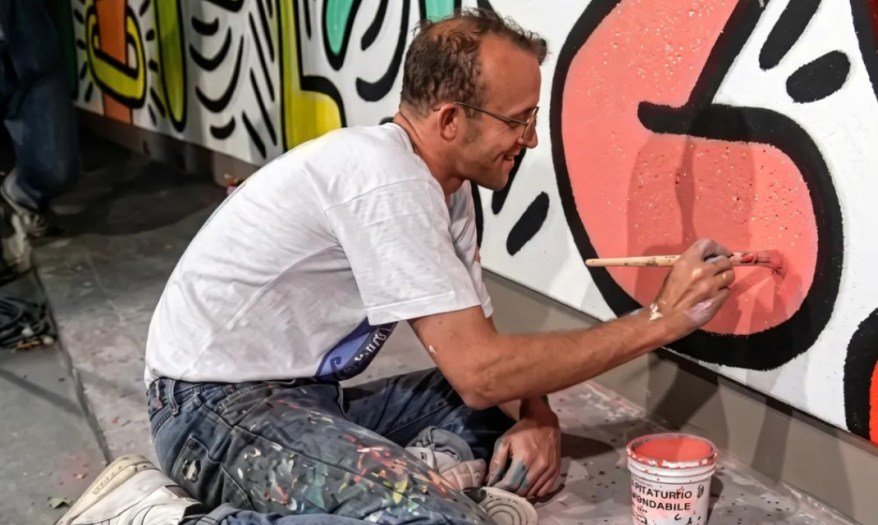
A recovered film and a public art milestone On October 1, 2026, the Lucca Film Festival presented the world premiere of the complete version of Tuttomondo, the long unseen documentary that documents American artist Keith Haring as he painted his large mural on a Pisa wall in 1989. Screened at 18:00 at the Auditorium of the Complesso Monumentale di San Micheletto, the showing brought together local audiences, festival programmers, and the film makers responsible for restoring and producing the new cut. The film was produced by Andrea De Gioia and directed by Andrea Soldani, two Italian film makers who originally followed Haring during the mural project in Pisa. The restored, extended version offers expanded footage and context from the artist’s final major public work in Italy, providing new angles on Haring’s process, the local reception at the time, and the mural’s role in Pisa’s cultural memory. H2
Why the premiere matters now Tuttomondo’s reappearance on a festival screen more than three decades after its initial creation matters for several reasons. First, it reunites a major international artist with the Italian communities that hosted his work, at a moment when public art and urban restoration are central to many Italian cultural agendas. The mural itself, known simply as Tuttomondo, has long been a visible landmark in Pisa, and the documentary functions as both a historical record and a renewed conversation about art in public space. Second, the premiere offers a case study in how archival footage and recovered projects can be refurbished for contemporary audiences. The version shown in Lucca is presented as the integrale, or complete, cut. That framing shifts the film from a brief historical document into a fuller cinematic account, one that curators and audiences can use to reassess the relationships among artists, commissioners, and Italian towns that host high profile international creators. Finally, the screening at Lucca Film Festival connects visual art, music, and cinema in a program strand dedicated to art on the big screen, underlining the festival’s role in spotlighting cross disciplinary projects that matter to both local and international viewers. H2
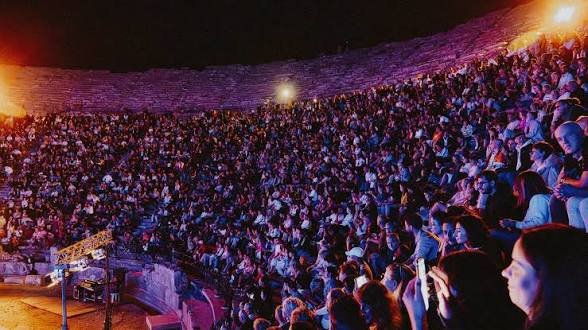
What the film shows and who participated Contemporary reporting and the festival’s program note that Tuttomondo reconstructs the mural’s genesis, featuring on site footage of Haring at work and scenes capturing the interaction between the artist and local residents. The restored cut includes contributions from people who were present during the mural’s creation, and contextual material from the filmmakers who first followed Haring in 1989. A festival session listed attendees including Paolo Bolpagni, the film’s producer Andrea De Gioia, director Andrea Soldani, and Piergiorgio Castellani, with the discussion moderated by festival programmer Alessandro Romanini. The presence of these contributors allowed the screening to combine exhibition with conversation, situating the film historically and critically for the audience. H2
Tuttomondo and the mural in Pisa Keith Haring painted Tuttomondo in 1989, producing a composition of interlocking figures that quickly became one of his most recognizable permanent public works. Located in Pisa, the mural has been both a tourist magnet and a subject of conservation efforts. Over the years, discussions about urban murals, public funding for art, and conservation strategies have made the story of Tuttomondo relevant beyond the local context: it is an intersection of global contemporary art practice and municipal cultural policy. Events around the premiere also coincide with renewed interest in sites where street art and muralism have become official components of city identity, from curated urban routes to restoration programs that treat murals as formal cultural assets. H2
What audiences and scholars can expect For art historians and film scholars, the screening provides rare primary visual material on Haring’s working methods in Italy, recorded by Italian filmmakers who documented the event as it unfolded. For local residents and the general public, the film is a reminder of an unexpected moment in Pisa’s recent past when a major international artist transformed an everyday facade into a permanent artwork. Audience Q and A sessions planned around the screening invited commentary on the film’s archival recovery, technical restoration choices, and how the mural has been perceived and maintained across generations. H2
Broader cultural ripple effects The Lucca premiere underscores a broader trend in Italian cultural programming that values rediscovery, restoration, and exhibition of recovered audiovisual material tied to the nation’s urban and artistic heritage. Festivals that integrate music and visual art with film are increasingly serving as platforms for such recoveries, because their cross disciplinary programming attracts museum professionals, municipal cultural officers, and an engaged public. The screening of Tuttomondo is likely to encourage similar restorations of other locally produced documentation about international artists active in Italy during the late 20th century. H2
Looking ahead After its debut at Lucca, the integrale version of Tuttomondo may travel to other festivals, museums, and cultural institutions, extending the conversation about Haring’s presence in Italy and the role of film as an archival tool. For Pisa and for the many cities that host public murals, the renewed attention could also bring practical results, including funding and expertise for conservation work and interpretive programming that helps residents and visitors understand how such works fit within civic life. The Lucca Film Festival’s decision to premiere the complete version of Tuttomondo emphasizes cinema’s capacity to reconnect communities with visual art, and it places an often overlooked moment of cultural exchange at the center of present day conversations about public art, preservation, and the politics of cultural heritage.
Topics
LocationAuditorium, Complesso Monumentale di San Micheletto