Former state minister Palak protests being made to climb six flights in handcuffs during Dhaka hearing
Zunaid Ahmed Palak told a Dhaka special judge on October 8 that he was forced to climb six flights of stairs with handcuffs behind his back, requesting a humanitarian adjustment as his hearing in a July Uprising murder case was adjourned until October 26.
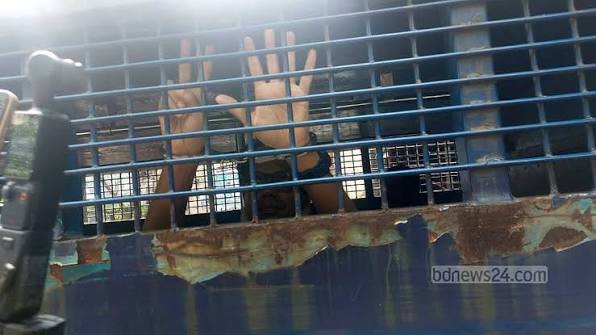
A former state minister, appearing before a special court in Dhaka on October 8, protested after he and several other accused were escorted up multiple flights of stairs while handcuffed behind their backs. The complaint, lodged in open court, prompted an adjournment of the scheduled charge framing hearing until October 26. Hearing interrupted by protest Zunaid Ahmed Palak, a former state minister for information and communication technology, raised the issue while standing in the dock of Dhaka Special Judge Court 4. He told the judge that he had been made to climb six floors on foot despite seeing a working lift, and that his hands had been restrained behind his back. Palak asked the court to direct authorities to place his handcuffs in front for humanitarian reasons. The judge responded by saying the arrangement had been made for their security. State counsel objected to Palak’s statements, calling them unethical and indicating they could undermine counsel morale. Two of the accused named in the same matter were not present in the trial court because they had been produced before the International Crimes Tribunal, leading the judge to postpone the charge framing hearing to October 26. Context of the case The hearing is connected to the killing of a truck driver, Md Hossain, in Mohammadpur during unrest referred to domestically as the July Uprising in 2024. The case was filed by the victim’s family and investigators subsequently submitted a charge sheet listing dozens of accused, including several high profile and former officeholders. According to court records presented during the session, ten of the accused remain in custody, while roughly twenty of the names on the charge sheet are listed as absconding and subject to arrest warrants. Palak appears among the accused produced from detention on the day. He and other defendants have repeatedly protested various aspects of their treatment while in custody at recent court appearances. Earlier matters brought by Palak and other defendants have included allegations of harsh restraints and claims of mistreatment when being moved between lockups and courtrooms. Why the procedural detail matters The dispute over how defendants are restrained and moved in court settings is not merely procedural. It touches on competing priorities in criminal trials, namely security and the humane treatment of those accused. Courts and prison authorities frequently cite safety concerns when ordering restraints, particularly in high profile or politically sensitive cases where tensions outside the courtroom can be elevated. At the same time, legal advocates and human rights observers argue that unnecessarily onerous treatment, especially when it is publicly visible, can undermine a suspect’s rights and the perceived fairness of proceedings. Handcuffing accused persons behind their backs while escorting them on stairways raises questions about both physical safety and dignity, particularly for defendants who must negotiate multiple flights of stairs. Legal teams and court staff will need to reconcile those competing concerns in the days before the next scheduled hearing. On procedural grounds alone, the court adjourned the charge framing exercise, which delays any immediate movement on formally defining the charges that will be tried. Reactions and implications During the proceedings, the state prosecutor said the defendant’s remarks were improper and suggested they were aimed at weakening the morale of legal counsel. Court officials later facilitated Palak’s exit by placing him in a lift for transit away from the courtroom precinct. Beyond the courtroom exchange, the episode is likely to draw fresh attention to conditions for detainees appearing before Dhaka courts, and to how high profile cases are managed. Observers following the wider series of legal actions connected to the July Uprising will note the repeated clashes over courtroom procedure and custodial treatment, which can shape public perceptions of the justice process. What happens next The trial court has fixed October 26 for the next hearing in which charge framing will be taken up. That session will determine the exact charges the prosecution will seek to establish at trial for the defendants who were present. Separately, the two accused who were produced before the International Crimes Tribunal will continue to be dealt with in that forum, which means the cases will proceed on parallel tracks for some of the alleged participants. If court practice changes following the complaint, it is likely to be reflected in how defendants are moved within court complexes and in any directions issued by the judge to prison or police officials. Advocacy groups, defence lawyers and rights monitors will be watching for any administrative or judicial response that alters the treatment of detainees in future appearances. Reporting note This article is based on contemporaneous court reporting from Dhaka on October 8, including verbatim remarks made in the courtroom and court scheduling decisions. The matter remains under active judicial consideration and the next procedural dates were set by the trial court.
Topics
LocationDhaka Special Judge Court-4