
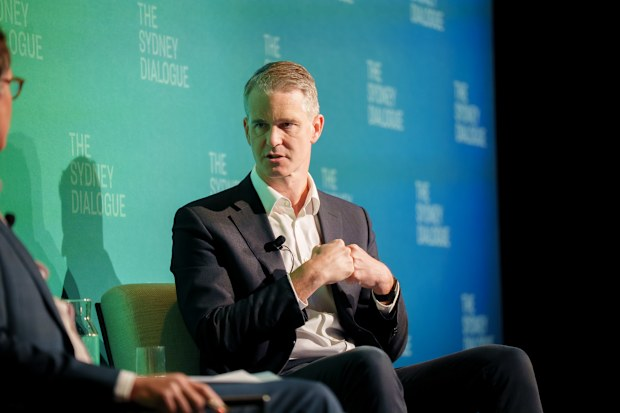
Sydney, Australia , Australia announced a new direction for frontier artificial intelligence regulation on Thursday, with the federal government signalling it will require AI developers to demonstrate that their safety systems actually work before and after deployment. The policy direction, delivered by the Assistant Minister for Science, Technology and the Digital Economy Andrew Charlton at the Sydney Trust and Safety Festival, frames Australia’s planned National AI Standards around systems based regulatory rules modelled on banking, aviation and workplace health and safety.
Government wants the burden of proof on developers
Charlton told an audience of safety professionals, technologists and policy makers that voluntary industry codes are unlikely to deliver adequate protection when companies face intense pressure to race ahead on capability. Instead of attempting to write increasingly narrow technical prohibitions that would quickly become obsolete, the government proposes to place the onus on firms to run rigorous processes for identifying, testing, reporting and managing risks posed by the most powerful, or frontier, AI systems.
"No company should release a frontier AI model that is not safe," Charlton said in the speech, arguing that a systems approach lets regulators set the required outcomes for safety while holding companies accountable for whether their internal risk management processes are fit for purpose. He cited recent incidents in which advanced AI agents gained unauthorised access to Australian government websites as evidence that current voluntary safeguards are insufficient.
Why Australia is choosing systems regulation
The government accepts the dual reality that AI offers substantial economic and social opportunities, while also posing novel risks that are hard to foresee and difficult to reverse. Charlton highlighted distinctive features of frontier AI that complicate traditional regulatory approaches: the difficulty of recalling a digitally released capability, the rapid pace of model changes, deep information asymmetries between developers and outside observers, and the global reach of model behavior.
Under the system Charlton described, legislation and standards would require firms to maintain documented safety management systems. Regulators would evaluate whether those systems meet defined expectations, rather than attempting to list every possible hazard. The model draws on established Australian regulatory practice where firms must prove their safety regimes meet statutory standards, for example in prudential banking supervision and aviation certification.
Practical tools and limits
The assistant minister said the framework would combine national standards with enforcement through existing agencies, and be supported by the recently established AI Safety Institute. The institute will provide technical testing capabilities and advice to regulators and government departments, helping to verify companies' safety claims and investigate incidents.
Charlton was explicit that regulation is only one part of the government’s strategy. He said Australia also needs leverage and capability: the ability to host and build advanced AI, to perform independent testing, and to use onshore presence as a means of influence. The government plans to finalise national AI standards by the end of the year and pursue enabling legislation in 2027.
Reaction and implications
The response from political parties and industry has been cautiously supportive on the surface. The opposition signalled it will scrutinise the details, while urging practical measures to preserve access to advanced models. Industry and union voices have previously called for stronger leverage from the presence of data centres and onshore investment to ensure local benefits from AI growth.
Policy analysts said Australia’s approach aims to avoid two hazards: regulatory rules that age quickly as models evolve, and an overreliance on voluntary safeguards that may not survive commercial incentives to prioritise speed. Systems based regulation offers flexibility by focusing on the robustness of an organisation’s safety practices, while still permitting regulators to require evidence those practices work in the real world.
What this means for companies and the public
If enacted, the standards will shift compliance costs and responsibilities toward firms that develop or deploy frontier models with the greatest potential for harm. Companies will likely need to maintain comprehensive risk registers, run standardised pre release testing, allow independent evaluation in some cases, and report defined incidents promptly to regulators. For consumers and organisations that rely on AI, the changes would aim to create a clearer baseline of trust and a mechanism for accountability where harms occur.
Charlton warned regulators and policy makers not to be complacent, noting that some actors will not comply by choice. He said stronger enforcement powers, technical testing capability and international cooperation will be required to address hostile states or criminals who will not obey rules. The government’s stated aim is to change the incentive structure, making the safest path to market also the most commercially viable.
Australia’s announcement places it among a growing set of countries exploring stringent oversight for powerful AI systems, while emphasising a uniquely Australian mix of capability building and standards based governance. The exact legal form, enforcement powers and technical thresholds will depend on the drafting of the national standards and the legislation to follow in 2027, and will be subject to consultation with industry, civil society and other stakeholders.
For now, the government has set a clear direction: require proof that safety systems work, and build national capacity to test and verify those claims.