Whittier hosts commissioning for a next generation destroyer
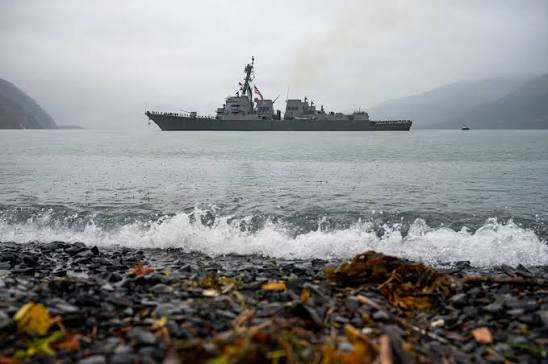
The U.S. Navy will formally commission the Flight III Arleigh Burke class guided missile destroyer USS Ted Stevens, DDG 128, in Whittier, Alaska on October 3, 2026. The ceremony marks the ship entering active service after construction and sea trials, and signals the addition of a vessel equipped with upgraded sensors and weapons designed to strengthen the Navy's air and missile defense capability.
What the ship brings to the fleet
DDG 128 is a Flight III Arleigh Burke design, the newest incremental configuration of the class that has been the backbone of the surface fleet for decades. Flight III ships feature the AN SPY-6 family of radars and upgrades to power and cooling systems that enable modern sensors and weapons to operate together. Those systems increase the destroyer’s ability to detect and track aircraft, ballistic missiles, cruise missiles and other aerial threats at longer ranges than previous variants.
Why Whittier and why it matters
Holding the commissioning in Whittier highlights Alaska’s maritime significance. The port and Prince William Sound offer a distinctive high latitude setting, and the selection of Whittier underscores a broader U.S. military focus on Arctic and near Arctic operations as geopolitical competition and maritime traffic in northern waters evolve.
Local preparations and disruptions
Whittier and state officials prepared for the large influx of visitors and military guests for the ceremony, including adjustments to local transportation. Authorities have scheduled closures of the Anton Anderson Memorial Tunnel and altered shuttle operations to move ceremonial guests between Anchorage and Whittier. The event also drew logistical planning from municipal and state agencies because the town’s infrastructure regularly handles cruise and freight visitors but not events of this scale.
From builder to warship
The Ted Stevens completed construction milestones and acceptance trials before transiting to the Alaskan ceremony site. After commissioning, the ship is scheduled to be homeported in Norfolk, Virginia where it will join the fleet for operational tasking and deployments. The commissioning ceremony is a formal Navy tradition where a ship is declared an active unit of the fleet, its commanding officer assumes command, and its crew begins service under the ship's name.
Namesake and symbolism
The destroyer is named for the late Senator Ted Stevens of Alaska, who served more than four decades in the U.S. Senate and was a veteran of the Second World War. Naming the ship after a long time Alaska representative and then commissioning it in the state underscores a continuity between the Navy’s operational posture and the political, historical and cultural ties that bind the service to the region.
Strategic context
The addition of a Flight III Arleigh Burke to the fleet comes as the Navy modernizes against a backdrop of intensifying great power competition and growing challenges in missile threats and air domain operations. The AN SPY-6 radar suite and other Flight III improvements are described by the service as necessary to maintain detection and engagement superiority in complex threat environments.
Looking ahead
Following the ceremony in Whittier, USS Ted Stevens will complete post commissioning workups and integrate into fleet schedules. As the Navy positions advanced platforms across different theaters, the new destroyer will be available for operations alongside carriers, amphibious forces and allied navies, and will contribute to air and missile defense missions worldwide.
The commissioning of DDG 128 is primarily a national defense event, with local economic and civic implications for the small coastal community hosting the ceremony. For Alaska residents and the broader defense community, the event also serves as a reminder of the strategic importance of northern maritime approaches and of continued investment in modern naval capabilities.