Court issues preliminary injunction; implications ripple through markets and policy circles
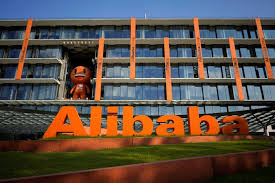
In a development that merges commerce, national security and geopolitics, a U.S. federal judge on Monday granted a preliminary injunction in favor of Alibaba Group Holding, preventing the U.S. Department of Defense from enforcing a rule that would bar companies from receiving Pentagon contracts if they, their parent firms or subsidiaries were found to be doing business with entities that lobbied on Alibaba’s behalf.
The ruling responds to a lawsuit Alibaba filed after the Pentagon added the Chinese e-commerce giant to a list of companies said to have ties to the Chinese military. The company argued that the policy, as written, could be applied in a sweeping manner that would exclude firms from defense contracting on tenuous grounds, and that the rule would inflict serious economic harm without adequate legal justification.
What the injunction does; what it does not
The judge’s order is limited in scope. It is a preliminary injunction, which means it stays enforcement of the Pentagon’s procurement restriction while the case proceeds through the courts. It does not permanently resolve the underlying question of whether the government may adopt such a list or the criteria by which companies are designated. For companies that rely on U.S. defense contracting revenues either directly or as suppliers to prime contractors, the injunction provides a temporary reprieve and legal clarity, at least for now.
Market and corporate fallout
The ruling is likely to reverberate in financial markets and boardrooms. Shares of major Chinese technology companies have been volatile in recent weeks amid heightened regulatory scrutiny at home and a patchwork of restrictions abroad. Investors are watching closely because a broad procurement ban could have had far-reaching supply chain implications for U.S. defense contractors and their subcontractors, some of which buy components or software from global suppliers.
While Alibaba’s core business is e-commerce and cloud computing rather than defense hardware, the case tests the reach of national security-based procurement policy and the legal limits on how broadly it can be applied to firms with commercial ties to China. Analysts say the injunction may give other companies a route to challenge similar designations and slow implementation of aggressive procurement exclusions until courts provide more definitive guidance.
Legal and policy arguments
In court filings, Alibaba contended the Pentagon’s policy was both overbroad and procedurally flawed. The company argued that the rule could be used to block contracts based on indirect or tenuous relationships, such as routine commercial dealings or third-party lobbying, rather than direct material support for military activity. Government lawyers countered that the list serves a legitimate national security interest by reducing the risk that U.S. defense contracts could benefit entities tied to foreign militaries.
Legal scholars note the injunction does not close the door on the government’s ability to regulate procurement for security reasons. Instead, the decision signals that courts will scrutinize how those rules are applied and whether the government followed proper administrative procedures when adopting them.
Broader Sino-U.S. commercial tensions
The case unfolds amid strained U.S.-China relations and a broader global debate about the economic interdependence of supply chains for advanced technology and critical infrastructure. Washington has in recent years taken steps to reduce certain exposures to Chinese suppliers in sensitive sectors, while Beijing has, at times, tightened controls on exports and foreign investment in the name of national security.
Companies caught between these policies face difficult tradeoffs. Multinational firms that operate in both markets may be forced to choose compliance regimes. For U.S. defense contractors, the injunction provides temporary legal clarity, but uncertainty will persist until the litigation is resolved or policy makers rewrite procurement rules with clearer, narrower criteria.
What happens next
The preliminary injunction holds while the court evaluates the merits of Alibaba’s challenge. The litigation is expected to be closely watched by industry groups, trade lawyers and national security officials. If the government appeals, appellate courts could weigh in within months. A final judgment one way or another would set an important precedent about the limits of procurement-related exclusions tied to foreign companies and their broader business networks.
For markets and businesses, the case underscores how legal contests and national security policy can move quickly and create tangible commercial consequences. For policymakers, the decision is a reminder that broad, security-driven economic restrictions must be carefully drafted to survive judicial review.
As this story develops, courts and agencies will shape the balance between protecting sensitive procurement processes and preserving open commercial channels, a balance with stakes that extend well beyond any single company.