Mass mobilization unfolds across France
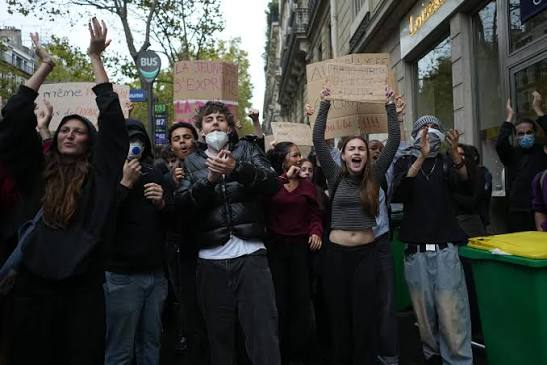
Thousands of people gathered in city centres across France on Saturday October 17, 2026, as a wave of demonstrations originally driven by concern about the rising cost of living drew significant participation from high school students. Rallies, marches and local actions were reported from Paris to Lyon, Rennes and Toulouse, producing a mix of peaceful demonstrations and episodes of heightened tension that led authorities to increase security measures in multiple departments.
Students join wider public anger over prices
What began this month as scattered protests over fuel and basic living expenses gained momentum after a series of viral social media calls for action. High school students, who have staged rolling occupations and walkouts in recent weeks to protest education conditions and future prospects, said they would join the October 17 mobilization. Organizers and participants framed the day as a combined expression of generational frustration and immediate economic distress, including complaints about food, housing and transport costs.
Police activity and early arrests in Paris
Paris authorities reported a number of early-morning arrests as security services moved to prevent planned flash points around central government sites. In the French capital, police detained several dozen people during morning operations aimed at dispersing groups that authorities said were preparing to launch disruptive actions. Local authorities also issued targeted bans on gatherings near the Elysee presidential palace and the Matignon prime ministerial residence to limit the risk of clashes in those sensitive areas.
Transport and schooling disruptions
The demonstrations affected normal life in multiple cities. Several local administrations reported interruptions to suburban commuter services and constrained traffic flows close to demonstration routes. Education officials said that while most schools remained open, a notable number of lycees continued to close or operate with limited staff because of student walkouts and precautionary measures. Universities and vocational centres in several towns also registered increased absences linked to the mobilization.
Government response and security posture
The national government, mindful of both public order and the political implications of widespread protests, urged calm while stressing the right to demonstrate. Interior ministry sources and local prefectures said policing plans were calibrated to protect critical infrastructure and to prevent violence. Prefectures in Paris and other large urban areas issued temporary restrictions and called on protest leaders to avoid property damage and attacks on public services.
Political context and what is at stake
Saturday's demonstrations arrive against a backdrop of sustained political pressure on the executive. Rising living costs remain a dominant grievance among voters ahead of next year s presidential election, and the apparent alliance of student groups with older protest networks complicates the government s task of isolating or containing unrest. Political parties across the spectrum reacted cautiously, with some opposition figures expressing solidarity with demonstrators demanding urgent economic relief, while others condemned any violence and called for dialogue.
Why this matters
The October 17 mobilization is consequential because it brings together distinct constituencies. Student activism raises the prospect of continued school disruptions at a sensitive point in the academic year. At the same time, the integration of cost of living demands increases pressure on policymakers to produce tangible measures to blunt public anger. How the government responds in the coming days could shape public sentiment and influence the tenor of national politics heading into the election season.
Outlook and next steps
Organizers have signaled follow-up actions if demands go unmet, and unions and youth groups are already discussing further dates. Authorities said they would continue to deploy targeted policing where necessary, while also attempting to maintain channels of communication with community leaders and education officials to limit damage and disruption. Analysts say the key metrics to watch are whether protests spread into sustained strike actions, and whether political actors use the unrest to harden or moderate policy proposals on household support and education reform.
For now, the October 17 demonstrations stand as a clear indicator of the depth of social unease in France, and a test of the government s ability to manage simultaneous security and socioeconomic challenges without fuelling further polarisation.