United States and Australia suspend consular services in Brazil amid pre election security probe
With Brazil set to vote on October 4, the United States and Australia temporarily halted consular operations after Brazilian federal police executed warrants probing alleged threats to US diplomatic sites. Authorities say no evidence has yet been found and investigations continue.
Lead paragraph
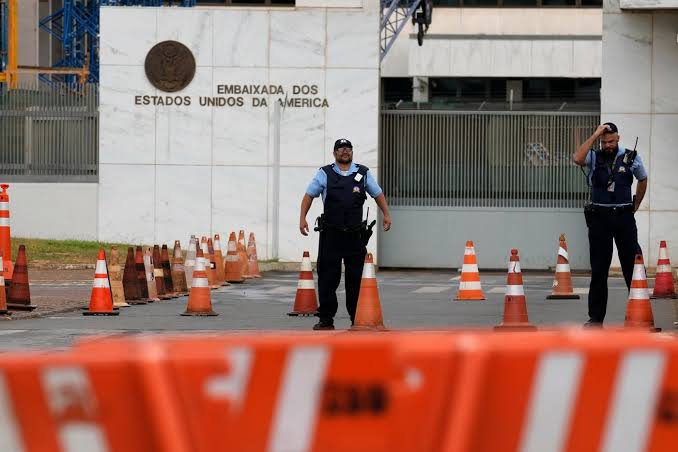
The United States and Australia suspended consular services at their diplomatic missions in Brazil on Friday and into Saturday as the country prepared to hold presidential elections on Sunday, October 4. The moves followed a Federal Police operation that executed search and seizure warrants in and around Brasilia and Sao Paulo as part of an inquiry into alleged plans that could threaten US diplomatic facilities in Brazil. What happened
Brazil’s Federal Police said they had served two warrants on Friday connected to an investigation into “acts that could endanger US diplomatic facilities.” The police described the operation as preventive and said it followed cooperation with foreign intelligence partners. Officials said communication equipment was seized, and that the inquiry remains ongoing. Shortly after the police action, the US embassy in Brasilia announced the suspension of consular services at the embassy and its consulates across Brazil, asking US citizens not to come to diplomatic facilities and to contact the mission by phone only for emergencies. Australia issued a similar suspension and temporarily closed its embassy in Brasilia, citing the same security concerns. Police findings and immediate consequences
Brazilian authorities said investigators had found no evidence, to date, to corroborate the initial risks identified and that no suspects had yet been linked to criminal organizations. The Federal Police characterized the measures they took as part of a proactive security assessment rather than the culmination of an arrest operation. In practical terms, consular suspensions mean routine services such as visa interviews and passport replacements were halted. Diplomats and staff were either directed to work remotely or limited to essential functions. Both sending countries said they were working with Brazilian counterparts while they reviewed the security situation. Political context and timing
The suspensions came two days before a closely contested presidential election, in which incumbent Luiz Inacio Lula da Silva and conservative challenger Flavio Bolsonaro were vying for votes in a polarized environment. The timing amplified public attention and political debate, with campaign officials and party figures quickly responding. Supporters and opponents of both main camps interpreted the moves through partisan lenses, with some criticizing the suspensions as disproportionate and others calling them a responsible precaution. Why the development matters
Diplomatic missions regularly adjust operations in response to threat assessments, but suspensions ahead of major national votes are notable because they can shape international perceptions about stability and safety during a politically sensitive moment. For foreign nationals in Brazil, temporary embassy closures complicate travel and emergency planning, and for the host country they can increase scrutiny of domestic security services and intelligence sharing. Moreover, the episode has immediate implications for crisis communications. Governments must balance transparency about risks with operational security, and mixed messaging or limited detail can fuel speculation at home and abroad. In Brazil’s highly charged electoral atmosphere, even limited security actions risk being interpreted as politically consequential. What to watch next
Authorities in Brazil have said the investigation will continue. Key things to monitor in the coming hours and days include whether Federal Police move from search warrants to arrests, whether the US and Australia modify the scope or duration of their suspensions, and whether Brazilian intelligence or justice ministry officials release further detail about the nature of the alleged threats and the evidence seized. How it affects voters and foreign residents
For Brazilian voters, the suspensions do not directly affect the mechanics of voting, which is managed by electoral authorities. For foreign residents and travelers, the temporary closures mean routine consular services are delayed, emergency assistance will be handled by phone or limited channels, and travelers should check official embassy guidance before visiting diplomatic facilities. Outlook and wider implications
If investigators confirm a credible plot aimed at diplomatic facilities, the case could lead to broader security measures around foreign missions and public events. If no corroborating evidence is found, the episode may prompt debate about the thresholds and communications protocols used when foreign intelligence flags potential threats. Either result is likely to reverberate through diplomatic and political channels during a critical electoral moment for Brazil. Summary
With Brazil preparing to vote on October 4, the United States and Australia suspended consular services after Brazilian Federal Police executed warrants related to an alleged threat to US diplomatic sites. Authorities say no corroborating evidence has yet been found and investigations are ongoing. The situation will be closely watched for further operational changes and any new findings from Brazilian investigators.
Topics
LocationBrazil Federal Police operations in Brasilia and Sao Paulo