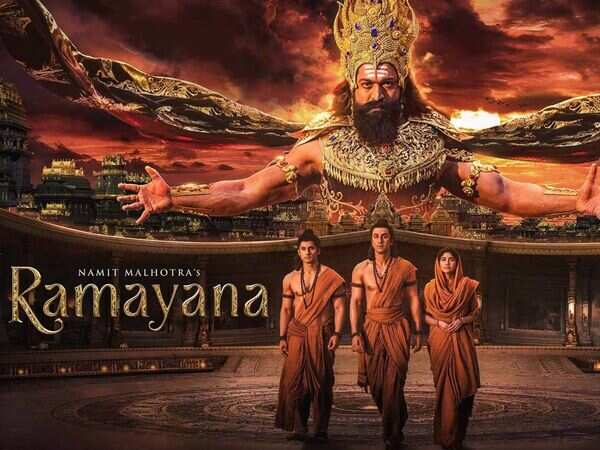
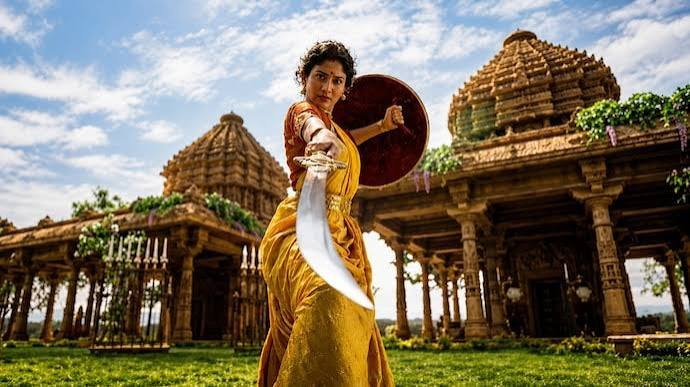
Sai Pallavi's portrayal of Sita as a sword-wielding warrior princess in Namit Malhotra's Ramayana highlights a lesser-known side of the legendary character, whose identity has evolved through centuries of religious texts, regional traditions and modern storytelling.
The upcoming Ramayana, directed by Nitesh Tiwari and produced by Namit Malhotra, has sparked renewed interest in one of Indian mythology's most revered figures: Sita. With Sai Pallavi portraying the character as a warrior princess trained in sword fighting, the adaptation challenges the familiar image of Sita as a symbol of patience, devotion and sacrifice.
For many viewers, the idea of Sita wielding a sword may seem surprising. However, India's rich storytelling traditions reveal that she has long been depicted as much more than a devoted wife. Across different versions of the Ramayana, Sita emerges as a powerful goddess, an independent woman, a spiritual authority and, occasionally, a formidable warrior.
The renewed discussion raises an important question: Is the warrior princess a modern reinterpretation, or does her fierce identity have roots in ancient literature?
Sai Pallavi Explores a Different Side of Sita
Sai Pallavi's interpretation reportedly incorporates martial arts and sword-fighting sequences, presenting Sita as a princess capable of defending herself.
Speaking about her preparation, the actor explained that her background in dance helped her approach the physical demands of the role. However, sword fighting required additional training under experienced stunt directors.
The creative approach reportedly combines graceful movements with combat techniques, allowing Sita's fighting style to reflect both her royal upbringing and her physical abilities.
Indian comedian and screenwriter Zarna Garg, who attended a screening, described the warrior princess portrayal as an unexpected revelation, particularly for younger audiences unfamiliar with this interpretation.
For Sai Pallavi, the opportunity to present a different dimension of Sita carries cultural significance. Generations have grown up watching adaptations that emphasise her compassion, endurance and devotion. A portrayal incorporating physical strength introduces another dimension without necessarily diminishing those established qualities.
The Traditional Image of Sita in Popular Culture
One of the most influential portrayals of Sita appeared in Ramanand Sagar's television series Ramayan, which became a cultural phenomenon in India.
In this adaptation, Sita represents dignity, loyalty, patience and unwavering moral conviction. Her strength is demonstrated through her response to extraordinary circumstances, including exile, captivity in Lanka and the challenges surrounding her return to Ayodhya.
Rather than relying on physical confrontation, this interpretation emphasises emotional resilience and spiritual discipline.
Yet the Ramayana exists in numerous literary, regional and oral traditions. Each version reflects the religious beliefs, cultural values and philosophical perspectives of the communities that preserved it.
Consequently, no single portrayal captures every dimension of Sita's character.
Adbhuta Ramayana: When Sita Becomes Mahakali
Among the most remarkable depictions of Sita's power appears in the Adbhuta Ramayana, a Sanskrit text traditionally attributed to the sage Valmiki.
This version introduces Sahasra Ravana, a thousand-headed adversary whose extraordinary powers exceed those of the more familiar ten-headed Ravana.
During a confrontation, Rama is rendered unconscious, leaving his forces vulnerable.
At this critical moment, Sita reveals her terrifying divine form as Mahakali, the fierce manifestation of feminine cosmic energy.
Armed with powerful weapons, she destroys the formidable enemy and demonstrates that her apparent human vulnerability conceals extraordinary divine strength.
The transformation carries a profound theological meaning. Sita is not simply receiving supernatural assistance; she is revealing her identity as Shakti, the divine feminine power essential to cosmic existence.
When Rama witnesses this manifestation, he recognises her divine nature and offers praise.
This interpretation places Sita at the centre of the narrative's spiritual authority, challenging the assumption that her role must always be secondary to Rama's.
Understanding the Origins of the Adbhuta Ramayana
Although traditionally associated with Valmiki, the historical authorship and dating of the Adbhuta Ramayana remain subjects of scholarly discussion.
Its emphasis on goddess theology and its distinctive narrative structure suggest connections with later religious and devotional developments.
The text should therefore be understood as one important tradition within the broader Ramayana literary heritage rather than as an undisputed part of the earliest surviving epic.
Nevertheless, its portrayal of Sita demonstrates how deeply the idea of feminine divine power has influenced Indian religious storytelling.
The Gond Ramayani Presents an Independent Sita
Beyond Sanskrit literature, indigenous storytelling traditions offer additional perspectives on Sita's identity.
The Gond Ramayani, preserved through oral traditions among Gond communities in central India, presents episodes and character relationships that differ significantly from mainstream adaptations.
Within these traditions, Sita can emerge as a figure possessing independence, supernatural abilities and considerable personal authority.
Her identity is not defined exclusively by her relationship with Rama. Instead, she participates actively in shaping the narrative.
Such interpretations highlight the diversity of Indian epic storytelling and demonstrate how communities have adapted familiar characters to reflect their own cultural experiences.
They also challenge the assumption that independence and personal agency are exclusively modern additions to Sita's character.
Modern Literature Reimagines Sita as a Warrior
Contemporary Indian fiction has further expanded the possibilities of Sita's character.
Amish Tripathi's novel Sita: Warrior of Mithila presents her as a highly trained fighter, administrator and leader.
In this fictional reinterpretation, Sita receives education in military strategy, combat and governance. She develops the confidence and capabilities necessary to protect her kingdom and make independent decisions.
Unlike adaptations that introduce her primarily through her marriage to Rama, the novel establishes her individual journey before exploring their relationship.
This approach reflects a broader trend in modern mythology-inspired literature, where familiar female characters are given greater narrative agency.
However, contemporary fictional interpretations should be distinguished from traditional religious texts, even when they draw inspiration from ancient stories.
Sita's Strength Beyond Physical Combat
Physical fighting is only one expression of strength in the Ramayana tradition.
In Valmiki's Ramayana, Sita repeatedly demonstrates courage through her decisions, arguments and resistance to coercion.
During her captivity, she rejects Ravana's demands despite threats and isolation. Her refusal reflects determination and commitment to her principles.
In other retellings, including Kamban's Tamil Ramavataram, her emotional and spiritual qualities receive considerable attention.
These narratives suggest that Sita's power cannot be measured solely through her ability to use weapons.
Her courage also appears through independent judgment, moral resistance and the willingness to challenge circumstances that threaten her dignity.
The different interpretations are not necessarily contradictory. They reflect distinct ways of understanding heroism, duty and personal strength.
Why Doesn't Sita Fight Ravana?
The portrayal of Sita as a capable warrior naturally raises another question: Why does she not defeat Ravana herself?
Different Ramayana traditions provide different explanations.
Some accounts introduce the concept of Maya Sita, an illusory counterpart who is abducted while the real Sita remains protected by Agni, the fire deity.
Other theological interpretations emphasise Rama's divine purpose of defeating Ravana and restoring dharma.
From this perspective, the conflict follows a larger cosmic narrative rather than simply reflecting the combat abilities of individual characters.
However, these explanations belong to particular religious traditions and should not be treated as universally accepted interpretations.
Modern adaptations may also distinguish between Sita's ability to fight and the narrative circumstances in which she chooses or is able to act.
Why Sai Pallavi's Warrior Sita Matters Today
The significance of Sai Pallavi's portrayal extends beyond the spectacle of sword fighting.
For contemporary audiences, particularly younger viewers, it offers an opportunity to reconsider a character often associated primarily with sacrifice and endurance.
A warrior Sita does not necessarily replace the compassionate, principled and spiritually powerful woman familiar from earlier adaptations.
Instead, the portrayal may bring several dimensions of her identity together.
India's storytelling heritage has never confined Sita to one interpretation. She has appeared as a devoted companion, courageous individual, independent protagonist and manifestation of supreme divine energy.
As Namit Malhotra's Ramayana brings another interpretation to the screen, the discussion surrounding Sita highlights the continuing relevance of these ancient narratives.
The central question is not whether Sita was only a warrior or only a symbol of sacrifice. It is how centuries of storytelling have allowed her to represent courage, compassion, dignity and power in different forms.
Her enduring cultural significance lies precisely in that complexity.