Home / World News / Punjab farmers renew protests over land pooling and India US trade concerns as state talks continue
Punjab farmers renew protests over land pooling and India US trade concerns as state talks continue
Thousands of Punjab farmers staged fresh demonstrations in September, blocking roads and railways to demand written assurances on land pooling, procurement at minimum support prices and a halt to parts of a proposed India US trade deal. State leaders opened talks and gave timebound written commitments, but unions say deeper guarantees are needed before they suspend agitation.
By Nolan Avery · Published September 25, 2026 at 6:37 AM
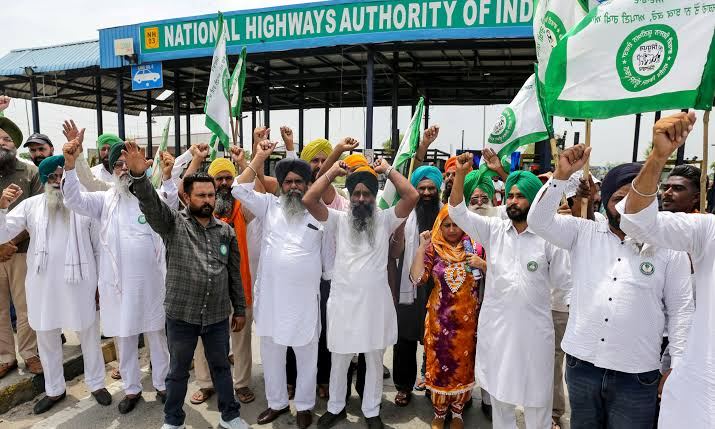
Farmers camp on the Mohali Chandigarh road during a week long protest in September over land rights and trade concerns.
Farmers escalate actions across Punjab, pressuring state for written guarantees
Thousands of farmers in Punjab staged a series of demonstrations in September, including sit in encampments on the Mohali Chandigarh road and intermittent rail blockades, to press officials for written guarantees on longstanding demands. The immediate issues named by union leaders include land pooling policies in the state, assurances about procurement at minimum support prices, relief for indebted cultivators, and resistance to elements of a proposed India United States trade agreement that farmers fear could expose agriculture to unfair import competition. Organised under umbrella groups that include the Samyukt Kisan Morcha and several state level unions, the protests combined traditional features of Punjabi mobilization, such as langar kitchens and tractor processions, with targeted disruptions intended to increase pressure on the Aam Aadmi Party led state government. Farmer leaders said they were prepared to sustain sit ins until they received signed, enforceable assurances from authorities rather than oral commitments.
State response: written assurances and offers for talks
State officials met representatives of the farmers more than once in early September. In one instance, the Punjab government provided a signed letter addressing several demands, including steps on river water agreements, compensation and jobs for families of agricultural suicide victims, and a promise to convene a special session of the state assembly to discuss measures affecting agriculture. After receiving those written assurances, some unions called off a planned seven day morcha at the Mohali Chandigarh border, while other groups continued targeted protests elsewhere in the state. Despite the written commitments to resolve a subset of demands within a defined time frame, several unions told reporters they remained sceptical. They warned that assurances limited to administrative steps were insufficient where the issues would require legislative change or guarantees about procurement and pricing. That scepticism prompted further actions in mid September, including short term rail blockades and dharnas outside district administration offices, to press for stronger, explicit guarantees.
Trade concerns add a national policy layer to regional demands
Beyond state level policies, farmers cited anxiety about a wider India United States trade negotiation that is under discussion in New Delhi and Washington. Union leaders argued that certain provisions, if enacted, could increase import exposure for Indian agriculture and blunt price supports that farmers rely on. These trade related objections have become a recurring national flashpoint since the central government began exploratory talks with the United States earlier in the year. Farmers are not alone in urging caution on the deal. Several state governments and political parties have asked for transparency on negotiating texts and for explicit safeguards for sensitive agricultural products. For Punjab farmers, whose cropping patterns and procurement systems are closely tied to central price supports, the risk of sudden market liberalization is a core concern that helps explain the intensity of the state level demonstrations.
How the protests unfolded and the immediate outcomes
The mobilisation in early September saw unions camped on arterial roads, using community kitchens and makeshift shelters to sustain prolonged presence. Police in some places used barricades to cordon protest sites, while authorities also opened channels for negotiation. Where the state provided written assurances on discrete demands, unions paused or called off specific actions. In other districts, farmers intensified pressure by briefly blocking railway lines and staging dharnas outside district and ministerial offices, underscoring the uneven trajectory of negotiations across Punjab. Local media and police reports indicate that most events remained peaceful, although there were isolated confrontations and use of crowd control measures in a few locations where blockades affected commuter traffic. Union officials said they were conscious of maintaining non violent discipline to keep public sympathy and to avoid escalation.
Why this matters: livelihoods, politics and the timing of reforms
Punjab is one of India most visible agricultural states, with a large share of households directly dependent on farming and allied work. Actions in the state therefore carry political weight well beyond its borders. The protesters frame their demands around livelihood security, debt relief and legal clarity on policies such as land pooling that can change who benefits from development projects. The timing is sensitive. Domestic debates about farm laws, procurement and state versus central powers remain unresolved in many quarters, while broader trade negotiations with the United States are being watched by farmers across India. Any perceived erosion of procurement or pricing protections would feed into electoral politics and could prompt wider mobilization in other farming regions.
What to watch next
Key indicators to follow include the concrete language of the state written assurances, the Punjab assembly response to any promised special session, and whether New Delhi provides clearer public commitments on safeguarding agricultural products in trade talks with the United States. Observers will also watch whether unions accept the government timeline for meeting demands, or whether they escalate actions toward larger statewide shut downs or a march to the national capital. For now the equation remains fragile. The state government has bought temporary breathing room by offering written commitments and opening negotiation channels. Farmer leaders accept partial wins cautiously until they see durable, enforceable measures on procurement, debt relief and land rights. How that balance resolves will influence both the immediate peace in Punjab and the shape of national policy debates on agriculture and trade.
Nolan Avery is a journalist and contributor at QuantumNova covering a broad range of topics and current events. His reporting focuses on presenting reliable information clearly while providing relevant background and context.
Swiss President Guy Parmelin arrived in New Delhi on October 5 for a three day state visit focused on deepening economic ties, pushing an investment protection agreement and exploring cooperation on critical technologies amid growing engagement between Switzerland and India.
The Philippine weather bureau says a trough associated with Super Typhoon Choi-Wan will deliver scattered to at times heavy rains across the Visayas and Mindanao on October 5, raising risks of flash floods and landslides and prompting local advisories.
Pakistan’s opposition Pakistan Tehreek-e-Insaf launched a multi day march from Khyber Pakhtunkhwa toward the capital on October 4, escalating a political standoff after negotiations with the federal government failed. Authorities have tightened security along the routes and imposed restrictions in several districts.
Police and ambulance crews responded to an overnight disorder on Kirby Street in Glendene, where three people were found with injuries consistent with knife wounds. Two remain in critical condition and police say the investigation is in its early stages.