Negotiations resume amid high stakes and security warnings
Islamabad, October 2, 2026 , Representatives of Pakistan’s ruling coalition and opposition parties met on Friday in the National Assembly Speaker’s chamber for the first in a series of talks aimed at averting a mass protest scheduled by the Pakistan Tehreek-e-Insaf for October 4. The meeting, chaired by National Assembly Speaker Ayaz Sadiq, concluded with both sides agreeing to continue discussions on Saturday, October 3.
Officials said delegations exchanged detailed views on the country’s political situation and agreed that dialogue should continue. The talks followed an earlier meeting at the President House during which President Asif Ali Zardari and Prime Minister Shehbaz Sharif discussed the security and political environment, and decided that a joint government and Pakistan Peoples Party delegation would engage the PTI over its planned long march to Islamabad.
Who took part and what was discussed
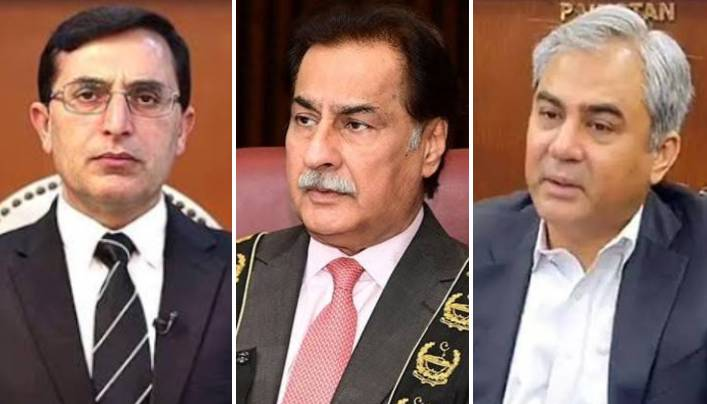
The government side included Interior Minister Mohsin Naqvi, Adviser on Political Affairs Rana Sanaullah, and other senior officials. The PPP was represented by Senator Sherry Rehman and other party leaders. The PTI delegation was led by the party chairman Barrister Gohar Khan and included senior PTI figures who described the talks as a mechanism to present their demands and seek a negotiated outcome.
Statements after the meeting emphasized that the discussions were constructive and cordial. Officials said participants stressed the need to resolve national issues through constitutional and parliamentary processes. The Speaker said his office would remain open for dialogue and framed his role as a mediator seeking to defuse the crisis without recourse to street action.
Tensions over the march and possible government responses
The PTI has insisted the long march will go ahead until its core demand, the release of party founder Imran Khan, is addressed. The party’s leadership has warned that the protest will continue unless concrete steps are taken. At the same time, federal ministers and other government voices warned that if the protest threatens public order, constitutional measures including the imposition of governor’s rule in the province of Khyber Pakhtunkhwa could be considered, a step that would require parliamentary procedures.
Government officials framed the options as measures to preserve security, citing the possibility of unrest and the need to protect critical installations and infrastructure. PTI leaders countered that the threat of emergency measures would be dangerous and inflammatory, and insisted that political grievances must be addressed through talks rather than coercion.
Political context and why the talks matter
The negotiations arrive against a backdrop of heightened political polarization that has repeatedly produced large street mobilizations in Pakistan. The current crisis centers on the fate of Imran Khan, whose incarceration has been a rallying point for the PTI. Pakistan’s fragile economic recovery and ongoing security challenges, including attacks in parts of Khyber Pakhtunkhwa, add urgency to efforts to avoid a destabilizing showdown in the capital.
Analysts say the talks will be judged on two tests: whether the PTI is willing to postpone or call off the October 4 march in exchange for credible concessions, and whether the government is prepared to offer a process that addresses PTI demands without eroding constitutional norms or empowering emergency responses that could deepen political fractures.
What to expect next
Both sides agreed to reconvene on Saturday, October 3. Observers will watch whether that session yields concrete agreements, such as a procedural timetable for addressing PTI demands or clear security and assembly arrangements that would allow a protest without major disruption. If talks do not deliver a settlement, Islamabad could face a mass demonstration that the government warns it may attempt to limit for security reasons.
Local media reporting and statements by party leaders indicate that off the record consultations remain active alongside public negotiations. The coming 48 hours will therefore be pivotal: either a negotiated deescalation is reached, or Pakistan moves into a period of intensified confrontation in the capital, with political and economic consequences that could extend beyond the immediate protest.
Implications for stability and institutions
The talks test the capacity of Pakistan’s political institutions to manage crisis through parliamentary channels, rather than through extra institutional measures. A negotiated outcome would reduce immediate risks to public order and could open space for addressing longer term political grievances. Conversely, a breakdown of talks and a large scale protest followed by heavy handed responses would risk deepening distrust between major parties and complicating governance at a time when economic management and security operations demand national focus.
For now, the immediate development is that the first round of talks concluded without a breakthrough but with a commitment to meet again, keeping open a narrow window to avoid a confrontation scheduled for October 4.