France to discontinue bilateral 'one in, one out' migrant returns pilot, seeks EUwide solution
Paris has told London it will not extend the bilateral returns pilot that let the United Kingdom send some Channel small boat arrivals back to France. French officials say the scheme was never intended as a long term fix and must be embedded in a broader European arrangement.
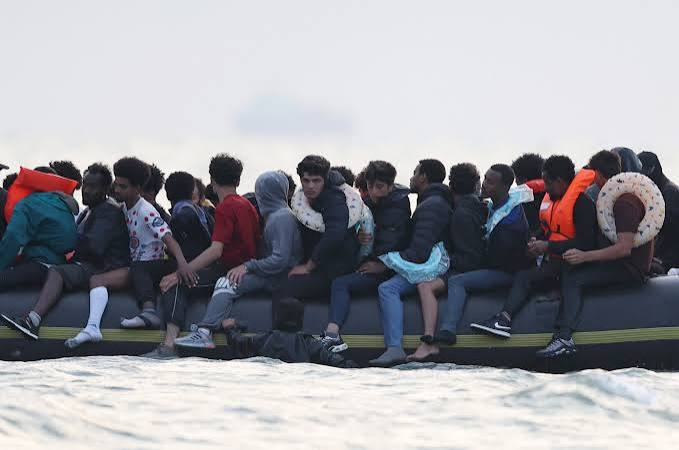
PARIS France has informed the United Kingdom that it will not renew the bilateral pilot known as the "one in, one out" returns scheme when it expires on October 1, 2026. The announcement signals a shift in Paris toward pushing for a migration arrangement that spreads responsibility across the European Union rather than leaving the burden on two countries alone. The pilot, agreed between London and Paris in mid 2025, allowed the United Kingdom to return a limited number of people who crossed the Channel in small boats and were judged not to have a right to remain, in exchange for an equivalent number of asylum seekers with UK family ties being transferred lawfully from France to the United Kingdom. The scheme was designed as a pragmatic, bilateral response to rising irregular crossings, but French officials have grown increasingly critical of its scope and impact. French ministers argue the pilot produced only modest returns and placed disproportionate pressure on France by effectively concentrating operational and political costs on one partner. Paris says the results underline the limits of a purely bilateral approach to what it describes as an essentially European problem. French officials are now urging discussions to fold any future UK returns arrangement into a wider EU level framework that would involve burden sharing across member states. Why Paris wants an EU solution French officials point to several shortcomings of the bilateral pilot. First, returns under the scheme were limited in scale relative to the overall flow of small boat crossings, and operational hurdles made large scale returns difficult. Second, French border and asylum authorities have faced strains in processing people returned from the United Kingdom, and in managing reception and removal procedures. Third, Paris has argued that returning people to France without parallel commitments from other European states risks creating secondary flows and does not address the underlying drivers of irregular movements. By seeking an EUwide mechanism, France is asking for commitments from other member states to accept responsibility, whether through relocation of recognised asylum seekers, new legal pathways, or shared financing for reception and returns. Paris frames that shift as a demand for systemic fairness, so that the practical and political burdens of channel crossings are not borne by a small number of frontline states. Implications for the United Kingdom For London, the French decision presents an immediate challenge. The British government has made reducing small boat crossings a high priority, and the pilot was one element of a wider strategy that also includes deterrence measures, faster removals where legally possible, and expanded legal routes. With the pilot scheduled to lapse at the start of October, UK ministers must decide whether to negotiate a replacement bilateral arrangement, pursue a broader deal involving the EU, or accelerate domestic measures to manage arrivals independently. British policymakers and commentators reacted with concern to Paris asking for an EUlevel swap. Some officials warn that an EUwide solution could take months to negotiate and would likely require London to concede concessions that are politically difficult, including greater admissions or financial contributions to a European mechanism. A failure to agree a successor could increase pressure at the Channel, and complicate bilateral relations between Paris and London at a moment when migration is a prominent and politically charged issue in both countries. Legal and human rights considerations Independent observers and rights groups have repeatedly cautioned that returns must respect legal safeguards, including access to legal counsel, translation services, and proper procedures to establish whether people are eligible for protection. Inspections and reporting on earlier returns schemes have highlighted gaps in translation and advice for those removed. Any broader European framework would need to incorporate rigorous procedural protections to meet legal obligations under international asylum and human rights law. Political context in France The timing of the announcement comes as migration is a salient issue ahead of the 2027 French presidential election. Parties across the political spectrum see migration policy as an important platform. By advocating for an EUlevel solution, Paris seeks to relocate the politics of responsibility beyond a simple bilateral bargaining dynamic and to press European partners to accept a collective approach. What happens next Negotiations are likely to follow quickly. Paris will press EU institutions and member states to consider mechanisms that make returns and admissions reciprocal across a wider set of countries. London must decide whether it is prepared to engage in that broader forum or to seek a fresh bilateral arrangement with Paris for a limited renewal period. Analysts say the most probable near term outcome is an intensive diplomatic push to bridge positions, because both Paris and London have a shared interest in reducing dangerous Channel crossings. However, the shape and speed of a successor arrangement remain uncertain. A durable solution would require compromises on both sides and clear operational commitments from multiple European capitals. Why this matters The end of the pilot would mark a recalibration in how two of Europe’s major powers manage irregular migration across the Channel. If Paris succeeds in moving the issue to an EU level, it would reshape the policy terrain for the United Kingdom and could open a path toward a multilateral mechanism that shares responsibilities more evenly. Conversely, a breakdown in talks could increase short term tensions and force either country to pursue unilateral measures with political and humanitarian consequences.
Topics
LocationParis