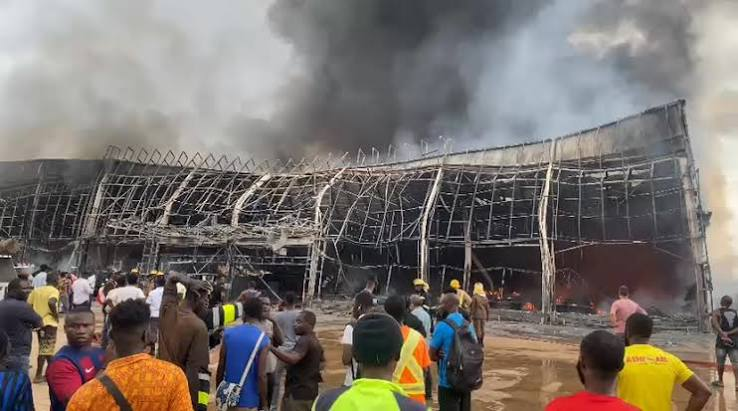
Emergency crews from multiple Ghana National Fire Service stations battled a significant blaze behind the China Mall in Amasaman on Sunday, October 4, 2026. Firefighters from the Amasaman unit were joined by teams from the GNFS national headquarters, Madina and Abelemkpe as they worked to stop the flames spreading into the busy retail complex and nearby structures.
Firefighters mobilise from four stations, onlookers evacuated
Local journalists and eyewitnesses reported a dense column of smoke rising from the area in the afternoon, prompting an immediate response from the GNFS. Four fire tenders were dispatched to the scene, where crews carried out hose and ventilation operations and worked to protect adjacent buildings, traders and market stalls. Municipal and emergency personnel set up a perimeter and cleared the immediate area to allow fire teams to operate and to keep bystanders at a safe distance.
No official casualty toll as containment continues
At the time of reporting there was no confirmed information about fatalities or serious injuries. Officials on site said firefighters were focusing on containment and preventing the fire from reaching the heart of the China Mall, which draws heavy foot traffic and houses numerous small traders. Rescue and medical teams were placed on standby while municipal authorities prepared to conduct a damage assessment once the situation was fully stabilised.
Context: a string of commercial fires raises safety concerns
The Amasaman blaze arrives amid a spate of high profile market and factory fires across Accra and other Ghanaian cities in recent months. Authorities and fire safety experts have repeatedly warned about the risks created by combustible stockpiles, narrow access for fire appliances, and gaps in regulatory compliance at some commercial hubs. Local officials have in recent months ordered closures and inspections at shopping complexes where structural or safety shortfalls were found.
Traders and market associations say the economic impact of such incidents can be severe, destroying goods and livelihoods. Emergency managers caution that quick response times and properly resourced fire stations are vital to reducing damage and preventing loss of life when fires occur in dense commercial areas.
What happens next
The Ghana National Fire Service will continue extinguishing hotspots, ventilating smoke and cooling affected structures. Municipal authorities are expected to coordinate a formal inspection once the fire is out to determine the extent of property damage, whether any businesses will require temporary relocation, and to begin an inquiry into the cause. If any traders or residents require assistance, the municipal office and national disaster management authorities are likely to be engaged for relief and recovery support.
Why this matters
Fires in market hubs and retail clusters carry both human and economic consequences beyond the immediate destruction. They can highlight systemic problems in building safety, emergency access, and regulatory enforcement. For a city like Accra where informal and formal commerce are tightly interwoven, preventing future episodes will require coordinated enforcement of building codes, investments in fire service capacity, and trader education on safe storage and housekeeping practices.
Authorities and emergency services have urged anyone with relevant information about the cause or who may have been affected to make themselves known to municipal offices or the GNFS. Further updates will be provided once emergency responders complete their on-site work and authorities publish a formal assessment.