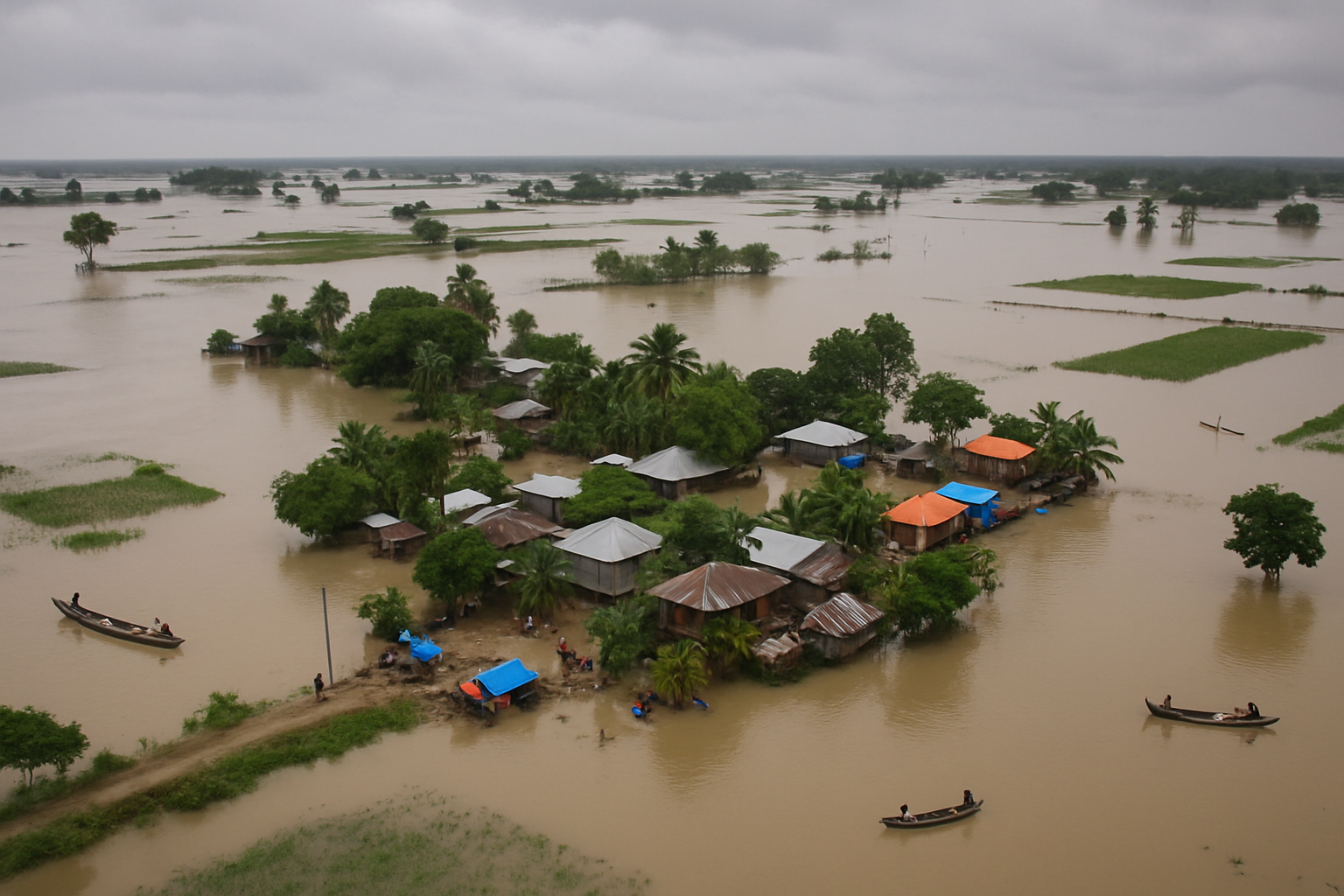
Assam, India , Heavy monsoon rains that began in July and continued into August have triggered one of the worst flood emergencies in Assam in recent memory, authorities and aid agencies say. Rivers including the Brahmaputra overflowed their banks, sweeping away homes, inundating farmland and forcing more than 700,000 people from their houses into temporary relief camps, government sites and makeshift shelters.
Human toll and disruption
State officials and multiple news agencies reported that the death toll rose through July and into August, reaching at least 100 as rescue teams recovered more bodies and hospitals continued to treat the injured. Entire villages were left under water or coated in silt, roads and bridges were damaged or cut off, and thousands of hectares of crops were submerged at a critical moment for the agricultural season.
Relief operations have been large in scale but uneven in reach. State and central disaster response forces carried out helicopter airdrops and boat rescues in isolated pockets, while district administrations set up relief camps and distributed food, drinking water and medicines. Local officials described logistic bottlenecks, with many affected communities still awaiting regular supplies several days after being cut off by water.
Why Assam floods so badly each year
Assam sits on a vast floodplain fed by the Brahmaputra and dozens of tributaries that descend from the eastern Himalayas. Flooding is a recurrent feature of the state, but experts say the severity this season was amplified by a combination of heavy, concentrated rainfall and the river basin characteristics that deposit silt and reduce channel capacity over time.
Researchers and relief groups point to human factors that make floods more destructive: riverbank erosion, expanding settlements on low-lying land, and inadequate maintenance of embankments. Farmers and villagers who have built homes and livelihoods close to river channels remain highly exposed when the monsoon intensifies.
Climate, infrastructure and preparedness
Scientists monitoring South Asian weather say that climate change is increasing the intensity and unpredictability of monsoon rains across the region, raising the risk of extreme flooding. For Assam, this means more frequent episodes where rivers rise rapidly and inundate large areas before communities can move to safety.
Infrastructure shortcomings are also evident. Many embankments meant to contain seasonal high water failed in places, and early warning systems did not reach every vulnerable village with actionable lead time. Local leaders and civil society organizations are urging faster investment in resilient drainage, river management, and community-based evacuation planning.
Economic impact and longer term recovery
The floods have damaged crops across large swathes of Assam farmland, threatening food security and the incomes of smallholder farmers at a time when markets are sensitive to supply shocks. Road and bridge damage has disrupted transport and commerce linking rural areas to markets and services, potentially delaying recovery for weeks to months.
Beyond immediate losses, the inflow of silt and standing water increases the risk of disease outbreaks, including waterborne illness, and will complicate rehabilitation of homes and agricultural land. Experts warn that without sustained assistance and targeted rebuilding, many displaced families could face prolonged displacement or be forced into precarious jobs in urban centers.
Government response and calls for reform
State officials have defended relief efforts while acknowledging gaps in reach. Government statements describe rapid deployment of national and state disaster response teams and the setting up of thousands of relief shelters. At the same time, opposition politicians, activists and local journalists have demanded clearer plans for long term river management, better early warning systems and stronger social safety nets for those who lose land and crops.
Policy analysts say Assam needs a two track approach: immediate investment in early warning communications, resilient shelters and fast repair of key transport links, combined with a longer term program to address erosion, channel management and land use planning. They emphasize that relying primarily on reactive relief will leave communities vulnerable to the next extreme event.
Why this matters beyond Assam
Assam is one of India’s most flood prone states, but what happens there is a forewarning for other parts of South Asia. Increasingly volatile monsoon patterns driven by global warming, together with growing populations and coastal and riparian development, mean that flood risk management is now central to regional stability and food security. How India adapts in regions such as Assam will determine how often these disasters become humanitarian crises with lasting economic damage.
As waters slowly recede in some districts, the immediate focus is on repairing lifelines, delivering medicine and food, and preventing disease. Longer term, affected communities and planners face difficult choices about rebuilding in place, improving river management, and finding sustainable livelihoods for families whose fields and homes have been repeatedly washed away.
For now, tens of thousands remain in relief shelters, waiting for clear plans and steady aid to return to a semblance of normal life.