Court curbs protests as arrests raise tensions ahead of PTI’s Islamabad march
The Islamabad High Court has placed legal limits on political demonstrations while police detain relatives and activists linked to Imran Khan, sharpening tensions ahead of a planned PTI long march on Sept. 27.
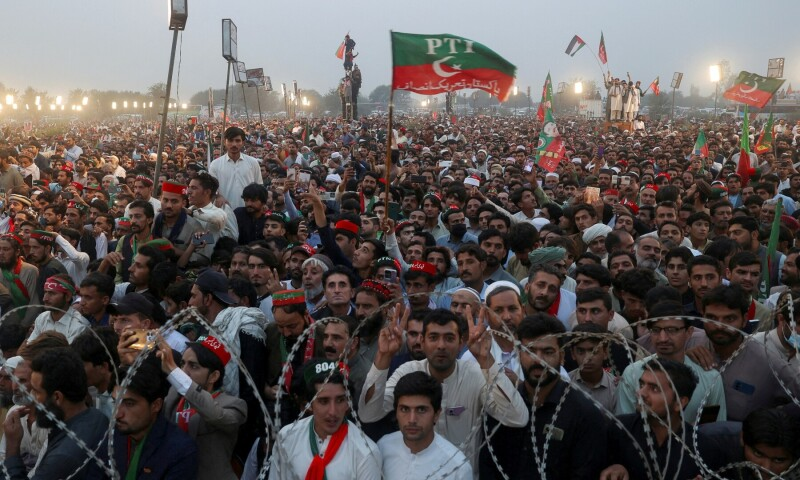
ISLAMABAD — Pakistan’s top regional court and security authorities moved this week to tighten controls ahead of a planned nationwide protest by the Pakistan Tehreek-e-Insaf (PTI) party, warning that citizens’ rights and public order must be balanced as political tensions mount.
The Islamabad High Court (IHC) issued a detailed judgment in mid-September that set limits on how and where political parties may stage large demonstrations in the federal capital. The decision, released after a petition by private citizens worried about disruption, directed provincial governments and security agencies to ensure that state resources are not used for political mobilisation and ordered authorities to prevent occupations of public roads, highways and critical infrastructure.
The IHC said the constitutional right to peaceful assembly must be exercised without infringing the fundamental rights of other residents — including access to hospitals, schools and essential services — and referenced previous PTI rallies that had led to large-scale disruption. The bench’s written order underscored the court’s role in protecting public order while safeguarding citizens’ basic freedoms.
The ruling arrives as PTI supporters, still a major political force despite the long incarceration of founder Imran Khan, prepare for a “long march” toward Islamabad set for Sept. 27. Party leaders have framed the protest as a demand for Khan’s release and a broader critique of the government; officials have repeatedly warned that mass demonstrations could pose security and logistical challenges in the capital.
In parallel with the court’s directions, police and law-enforcement agencies have carried out targeted arrests of party figures and family members of jailed leaders. Over the weekend, several relatives of Imran Khan were detained amid what authorities described as pre-emptive measures to head off potential unrest. PTI supporters and international rights advocates have criticised the detentions as heavy-handed and politically motivated, saying they amount to an effort to stifle legitimate dissent.
Taken together, the court’s judgment and the wave of detentions illustrate a widening standoff between Pakistan’s mainstream opposition movement and state institutions over the limits of protest and the treatment of political detainees. Analysts say the confrontation is testing Pakistan’s institutions — courts, police and the government — to manage both political expression and public safety.
Security planners face a difficult balancing act. On one hand, Pakistani authorities cite prior instances in which protests turned into prolonged blockades, damaging public infrastructure and disrupting daily life; on the other, political organisers insist that peaceful mass demonstration is a core democratic right and that curbs or arrests amount to political suppression.
The IHC’s order also instructed federal and provincial officials to coordinate closely to prevent official resources — such as government transport or personnel — from being diverted for political mobilisation. Courts noted evidence from earlier protests indicating that promises of peaceful conduct were not always honoured, and the written judgment called for strict adherence to assurances given to judicial benches.
Political fallout is uncertain. PTI’s fall from government and the prosecution of its central leadership have left the party with a robust grassroots organisation and a capacity to mobilise large crowds. Government officials have expressed concern that a massive turnout could overwhelm the capital’s security infrastructure and lead to clashes.
Civil-society organisations and human-rights observers have urged restraint on all sides. They warn that criminalising political dissent or detaining relatives of opposition figures risks deepening polarisation and eroding public trust in democratic processes. Independent commentators also underline the importance of transparent, rule-based policing that protects both the right to protest and the safety of ordinary residents.
For Islamabad residents, the immediate impact is practical: authorities have signalled preparations to restrict movement around key arteries in the capital during the period of the planned march. Schools, hospitals and businesses have been notified in some districts about contingencies, and transport agencies are studying traffic-diversion measures.
International observers are watching closely. Pakistan’s internal stability matters to regional diplomacy, cross-border security and multilateral lenders that have been engaging Islamabad on economic and disaster-response reforms. Any escalation that jeopardises civic freedoms or triggers widespread unrest could complicate those engagements.
As Sept. 27 approaches, much will depend on whether PTI leadership and state authorities can find ways to lower the temperature: clear, enforceable assurances of peaceful conduct from protest organisers, paired with a restrained, proportionate security response by police, could allow demonstrations without severe disruption. Absent such confidence-building measures, judges and security officials say they feel compelled to use legal and policing tools to protect the public realm.
For now, Islamabad remains on edge. The IHC’s ruling framed the debate in legal terms — affirming both the right to assemble and the court’s duty to protect other citizens’ rights — while the arrests and detentions have sharpened political divisions, leaving Pakistan’s democratic institutions and civic life under strain as the long march date nears.
Topics
LocationIslamabad