Beijing signals countermeasures as EU considers new trade instrument
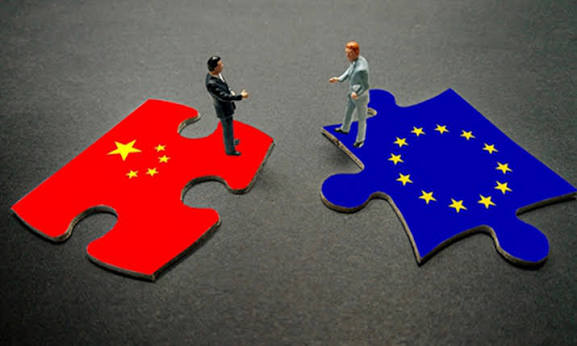
China issued a sharp warning on September 30 after reports that several European Union member states are preparing a joint paper to press the European Commission to develop a trade tool aimed at tackling unfair practices by third countries. The commerce ministry said the measure, as reported in international media, amounts to a typical protectionist and unilateralist step, and that it would disrupt the stability of China EU trade relations.
In a statement released late on September 29 by China’s commerce ministry and picked up by international wire services early on September 30, Beijing said it would take a resolute response to protect its industries if the bloc adopts restrictive measures targeted at Chinese companies or products. The ministry cautioned that pressing China while simultaneously engaging in consultation risks undermining mutual trust and the overall negotiation process.
What Beijing says it might do
Beijing did not list concrete retaliatory measures in the ministry statement. However, state backed Chinese media and analysts cited by international outlets outlined a range of options that Chinese authorities might deploy if the EU moves forward. Those options include anti discrimination probes into foreign practices, security investigations into industrial and supply chains, and assessments of the impact of foreign subsidies on Chinese firms. The language signals Beijing is prepared to use both trade remedies and national security oriented reviews as leverage.
The commerce ministry positioned the warning as defensive, framing China as the target of an emergent protectionist push by some EU capitals. Chinese officials have repeatedly objected to recent European initiatives that would limit market access, impose tariffs, or otherwise constrain Chinese exports, especially in strategic sectors such as electric vehicles and advanced manufacturing.
Why the EU is considering new measures
The reported EU initiative is a response to growing concern among member states over market distortions the bloc attributes to state subsidies, industrial policy and the rapid expansion of Chinese exports in sectors deemed sensitive by European producers. According to reporting that prompted Beijing’s reaction, Germany and France have been among the countries pushing for an instrument that would give the EU faster and broader powers to address what they regard as unfair competition from outside the bloc.
Proponents argue the measure is meant to protect European industry and jobs while preserving open markets for goods that are traded fairly. Critics of the proposed tool say that poorly calibrated restrictions could themselves become protectionist and invite reciprocal measures, deepening a cycle of trade containment that would hurt European consumers and producers while increasing geopolitical risk.
Potential implications for China EU ties
The dispute comes at a delicate moment. China remains the EU’s second largest trading partner by goods, and the economic relationship is deeply intertwined, from supply chains to investment flows. A formal EU instrument that singles out non EU suppliers for special restrictions risks elevating trade tensions and could prompt Beijing to apply reciprocal pressure on sectors where the EU is vulnerable.
Even short of formal retaliation, tougher oversight, security reviews, or anti discrimination probes could slow trade in targeted industries, disrupt supply chains and increase compliance costs for multinational companies. That would matter for European manufacturers that rely on components or intermediate goods from China, and for Chinese exporters that have been diversifying to European markets in recent years.
Where this fits in a broader pattern
The exchange reflects a broader trend of trade policy entering the realm of geopolitics. Since 2024 and 2025, a number of major economies have sought new tools to manage perceived vulnerabilities tied to strategic supply chains, subsidies and state owned enterprises. Washington has updated tariffs and controls, and Brussels has already moved ahead with tariffs and procurement exclusions in select areas. Beijing’s rebuttal underlines that such measures are likely to trigger diplomatic pushback and possibly targeted countermeasures.
Analysts say the timing is significant because the EU is trying to balance industrial protection with broader climate and competitiveness goals. Measures that are seen as blunt instruments could complicate cooperation on issues where EU and Chinese interests still align, including climate related technology and certain forms of investment cooperation.
Outlook and next steps
For now the situation is at the stage of rhetoric and signalling. The EU must still decide whether to formalize any new instrument and if so what scope, legal basis, and safeguards it would include. Brussels also faces internal divisions among member states about how strictly to pursue trade containment versus seeking negotiated, rules based responses to subsidy driven competition.
If the EU proceeds, expect a careful dance of diplomacy, technical consultations and public signalling from both sides. China’s statement makes clear Beijing intends to defend its economic interests. How far either side escalates will depend on legal design of any new EU tool, the sectors it would reach, and whether bilateral consultations yield a compromise that avoids a cycle of restrictive measures.
Why this matters
The development matters because China EU trade flows are large and globally consequential. Any move by a major polity to create a new mechanism for restricting foreign suppliers on grounds of unfair practices raises the risk of fragmentation in global trade governance. That could slow the global diffusion of clean technologies, raise costs for manufacturers, and harden political divisions between blocs. Observers will watch whether Brussels can craft a calibrated, rules based response or whether the episode becomes another flashpoint in an era of strategic economic competition.