Merkel era politics replaced by a more assertive Germany on display in Münster
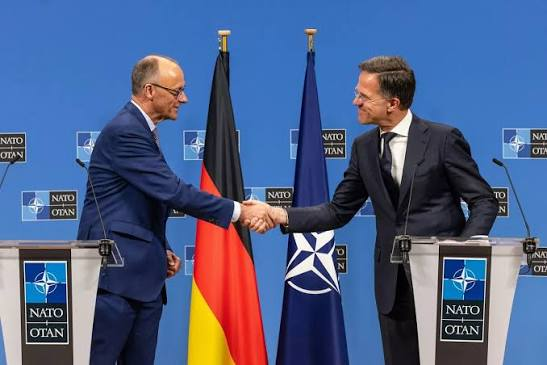
On October 1, 2026, German Chancellor Friedrich Merz hosted NATO Secretary General Mark Rutte in Münster where the two leaders, joined by Dutch Prime Minister Rob Jetten, visited the 1st German-Netherlands Corps and took part in a joint press encounter. The visit culminated in a ceremony at Münster's historic town hall where the International Westphalian Peace Prize was presented to NATO, an award that has generated public controversy in Germany and beyond.
Visit underlines security ties and Germany's defence posture
The programme in Münster brought together national and alliance leadership amid an intensified public debate over Germany's defence policy. The visit included a briefing with troops from the binational corps, signalling Berlin's emphasis on operational cooperation with NATO partners on land. Chancellor Merz used the platform to underline Germany's commitment to collective defence and to praise the transatlantic partnership as central to European security.
For NATO, Secretary General Mark Rutte accepted the Westphalian Peace Prize in a ceremony that the German government and the prize committee framed as a recognition of NATO's stabilising role in a period of geopolitical strain. Organisers said the prize acknowledged the deterrent and defence functions the alliance provides for Europe and North America.
Prize prompts sharp public and political reactions
The decision to award the Westphalian Peace Prize to a military alliance prompted immediate debate across Germany. Critics argue that the prize, historically associated with diplomatic and civilian contributions to peace, sits uneasily with a military organisation. Voices from peace movements and parts of the political left characterised the award as a problematic symbolic endorsement of militarised responses to conflict.
Supporters in Berlin and several state governments defended the decision, saying NATO has preserved stability in Europe since the end of the Cold War and that recognising the alliance highlights cooperative security at a time of renewed great power competition. Local organisers and national officials noted that the ceremony and Chancellor Merz's laudatio were intended to emphasise diplomacy and deterrence as complementary, not contradictory.
Why the Münster event matters
The visit is consequential for several reasons. First, it highlights the German government placing defence and NATO engagement at the centre of its foreign policy messaging in the run up to major domestic dates for the federal government. Second, the ceremony in Münster underscores the broader European conversation about how to balance military deterrence, diplomacy, and civil society concerns about escalation. Third, the public debate around the prize illustrates persistent tensions within German politics over remilitarisation, a debate that has intensified since policy changes earlier in 2026 that expanded compulsory medical screening for youth as a step toward enlarging armed forces recruitment.
Finally, the on‑the‑ground presence of the binational corps reflects NATO's practical reliance on multinational force packages for deterrence on the alliance's eastern flank, a point Berlin has repeatedly emphasised in recent months while arguing for sustained, coordinated European burden sharing within the alliance.
What comes next
Merz and Rutte are expected to continue bilateral and NATO consultations following the ceremony. In Germany, the Merkel successor government faces the task of managing domestic unease while delivering on commitments to NATO partners, both in equipment and in broader political support. Observers will watch for any concrete announcements about future deployments, training cooperation, or additional support packages that might be timed to follow the Münster engagements.
Locally, Münster authorities prepared elevated security measures for the day and municipal authorities said access around the historic town hall was restricted during the ceremony. That planning reflected the sensitivity of hosting high level political and military figures where the symbolism of the award intersects with active public debate over militarisation.
Bottom line
The visit to Münster put Germany and NATO in a common spotlight. For Chancellor Merz, the day offered an opportunity to demonstrate Berlin's centrality to European defence policy and to frame NATO as a stabilising force. For critics and skeptics, the award and the ceremony crystallised longstanding questions about the relationship between military alliances and the language of peace. As the domestic debate continues, the Münster events are likely to be referenced in German political discussions about defence policy, alliance commitments and how Germany balances its historical caution with the demands of contemporary security.