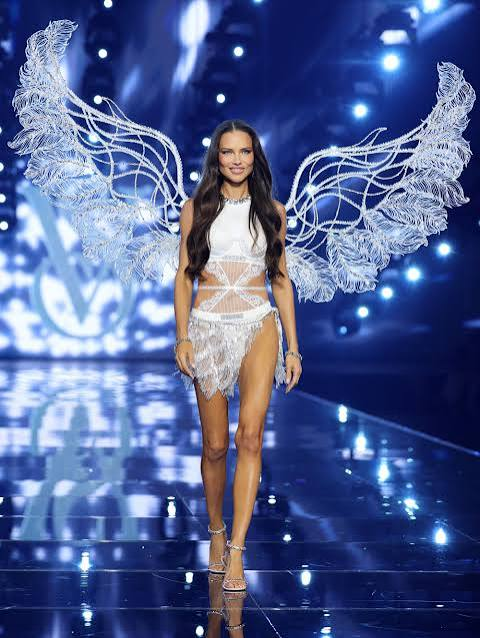
The Victoria’s Secret Fashion Show returned to the spotlight on October 18, 2026, in Los Angeles, and Brazilian talent played a prominent role in the production that reasserted runway spectacle as mainstream entertainment. Former Victoria’s Secret Angels and newer Brazilian faces appeared throughout the program, with Adriana Lima, a defining presence from the brand’s earlier era, chosen to close the show to enthusiastic applause.
Brazilian stars framed the evening
Longtime Latin American icons were visible onstage and backstage, reminding viewers that Brazil remains a major talent pool for global fashion spectacle. Adriana Lima, Alessandra Ambrosio and several other models of Brazilian origin or descent walked segments that mixed established names with a wider roster of diverse body types and ages. Media coverage and livestream highlights emphasized the crowd reaction when Lima, now 45, took the final walk, a moment framed by commentators as a symbolic bridge between Victoria’s Secret’s past and its current revival.
The program also acknowledged the legacy of other Brazilian supermodels who built their careers walking for the brand, noting how the country has continued to produce runway talent that migrates into international fashion and entertainment circuits. Coverage across Brazilian and international outlets singled out the emotional resonance of seeing veteran Angels return, and the way producers staged them alongside newer models and performers to balance nostalgia with present day pop culture appeal.
What the show’s programming choices mean for Brazil’s fashion industry
The prominence of Brazilian models at a high profile entertainment event serves multiple functions for Brazil’s fashion ecosystem. First, it provides direct visibility for Brazil’s modeling talent on a platform that reaches global streaming audiences and social channels. Second, it reinforces established career pipelines from Brazilian agencies into global representation deals and commercial work. Finally, the return of legacy names like Adriana Lima to major televised shows can boost bookings, brand collaborations and editorial features across Latin American markets.
For young Brazilian models and local agencies, the show is also a commercial indicator. Casting decisions by major international brands remain a signal of what casting directors and creative teams value, whether that is experience, diversity, or social media reach. The producers of the Victoria’s Secret show, aiming to attract broad viewership, balanced veteran appeal with an inclusive approach to body type and background, a strategy that Brazilian outlets highlighted in their coverage.
Reception in Brazil and internationally
Brazilian media framed the event as a point of pride, emphasizing national representation in a high profile entertainment format. Coverage within Brazil focused on the models themselves, their individual careers and the cultural moment of seeing former Angels return to a major televised runway. International reporting underscored the show as a staged entertainment product, noting performance segments, the reintroduction of the Fantasy Bra, and star musical appearances that aimed to broaden mainstream interest.
Reactions varied across social platforms. Some viewers praised the return to a celebratory runway spectacle and applauded the show for featuring seasoned professionals like Lima, while critics used the moment to debate whether Victoria’s Secret has meaningfully changed from its previous era and whether nostalgia casting is the best route to long term relevance. For Brazil the immediate effect is tangible: renewed global exposure for models and ancillary business opportunities for stylists, makeup artists and Brazilian photographers whose work circulates in international press and social media after the event.
Why this matters now
The 2026 Victoria’s Secret Fashion Show marks an entertainment moment where mainstream spectacle, celebrity, and the commercial fashion circuit intersect. Brazil’s cultural export of modeling talent is a longstanding phenomenon, and the event is a reminder that entertainment programming remains an important channel for national soft power in fashion and celebrity culture. For industry observers in Brazil, the show is a near term commercial opportunity and a cultural signal of how Brazilian professionals continue to shape global fashion narratives.
Looking ahead, the show may influence casting and promotional strategies for brands seeking engagement in Latin American markets. For audience members and fashion industry participants in Brazil, the event offered both nostalgia and a practical reminder that global entertainment platforms can quickly translate individual appearances into bookings, partnerships and renewed public interest in veteran talent as well as newer representatives of Brazilian style.
As international producers continue to assemble large scale entertainment runway presentations, Brazil will remain a key talent source, and events like the Victoria’s Secret Fashion Show will continue to serve as a useful barometer for the position of Brazilian talent in global fashion and entertainment.