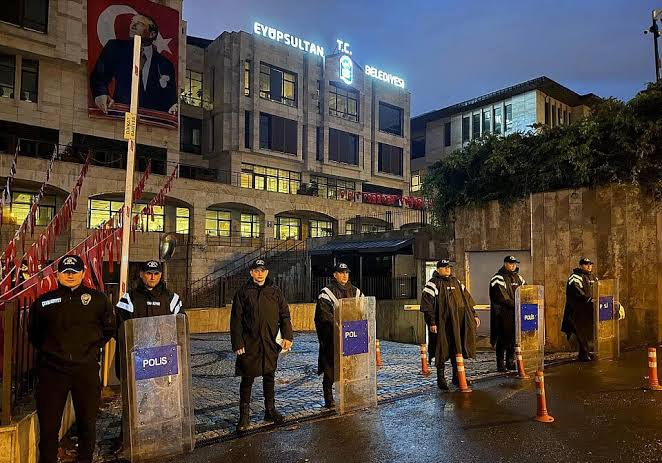
Ankara authorities have moved the Eyüpsultan municipality investigation into a new phase after police detained 28 people, including the district mayor Mithat Bülent Özmen, and sent them to the capital for further processing, officials and media reports said. The transfers followed a large coordinated operation that prosecutors say targets an alleged criminal organization involved in public procurement, bribery and tender manipulation at the Istanbul district municipality.
What happened
The operation, carried out at dawn, resulted in the detention of 28 suspects. According to statements from the offices coordinating the inquiry, the arrests and searches were executed under orders from the Ankara Chief Public Prosecutor. The suspects underwent health checks in Istanbul before being transferred by security teams to Ankara, where the investigation is being led.
Prosecutors have said the measures were taken on suspicion of membership in a criminal organization, accepting and paying bribes, and tampering with procurement procedures. The exact details of the alleged irregularities and which contracts are under scrutiny have not been released by investigators so far, citing the confidentiality of an ongoing probe.
Who is at the center
Mithat Bülent Özmen, the mayor of Eyüpsultan, won office in the 2024 local elections as a candidate of the main opposition Republican People’s Party, and his detention drew immediate attention because of the political sensitivities surrounding police and prosecutor operations against opposition officials in recent years.
Local reporting and footage circulated on social media showed law enforcement teams at municipal offices and at addresses linked to some of the suspects. Municipal sources and several Turkish outlets reported that searches were also conducted at the mayor’s residence and at parties of interest related to municipal procurement departments.
Political and legal context
The arrests come against a backdrop of an extended series of corruption investigations and prosecutions that have involved a number of opposition mayors and municipal officials across Turkey. In many of the higher profile cases earlier this year and last year, detention and legal proceedings of opposition figures have sparked criticism from opposition parties and human rights groups, who argue the actions are politically motivated. The government and prosecutors have insisted their actions are lawful and necessary to root out corruption.
Officials coordinating the Eyüpsultan probe say the investigation is being handled by Ankara prosecutors because of the involvement of actors or contracts that fall under their remit. That procedural choice has become common in politically sensitive or wide ranging cases, where the seat of the supervising prosecutor is in the capital.
Reactions
Opposition figures swiftly condemned the detentions. Local political leaders and municipal colleagues accused prosecutors of weaponizing the justice system to weaken opposition-run local governments. Demonstrations of support at the municipal building and statements from opposition party spokespeople emphasized that elected officials are entitled to due process and that politically motivated prosecutions would further polarize Turkish politics.
Government-aligned outlets and officials framed the operation as a law enforcement action against alleged corrupt networks. State-aligned reporting emphasized the gravity of the charges listed in the prosecutor orders, framing them as part of routine, independent investigative work to safeguard public resources.
Why this matters
The transfers and the character of the charges escalate a local administrative matter into a national legal and political issue. Turkey’s domestic politics have been marked in recent years by tensions between the central state and opposition municipalities, with arrests and legal actions against local leaders fueling domestic and international scrutiny. Developments in this case will be watched for signs of whether prosecutors will seek pretrial detention, indictments or other measures that could keep elected officials from office while cases proceed.
For voters and municipal employees in Eyüpsultan, the immediate questions are operational: who will manage municipal services while the detainees are processed, and how quickly evidence and charges will be disclosed to allow legal defense. For national politics, the case will be another test of public confidence in the impartiality of Turkey’s judicial institutions and whether reforms to strengthen procedural transparency will be demanded by political rivals and civil society.
What to expect next
In the coming days, Ankara prosecutors are expected to complete initial questioning and decide whether to seek pretrial detention or to file indictments. Court filings and official prosecutor bulletins will be the primary source for verified details about charges, evidence and the identities of all named suspects. Both opposition and progovernment media will likely frame subsequent developments through political lenses, so primary legal documents and formal court schedules will be the most reliable indicators of the probe’s legal trajectory.
The case adds to a pattern of high profile municipal investigations and will be scrutinized by international observers concerned with rule of law and political pluralism in Turkey. How prosecutors proceed, and whether the courts impose restrictive measures, could influence domestic political dynamics ahead of future national electoral cycles.
Reporting will continue as court documents and official statements become available.