Meta applies per message charges to WhatsApp Business traffic in India
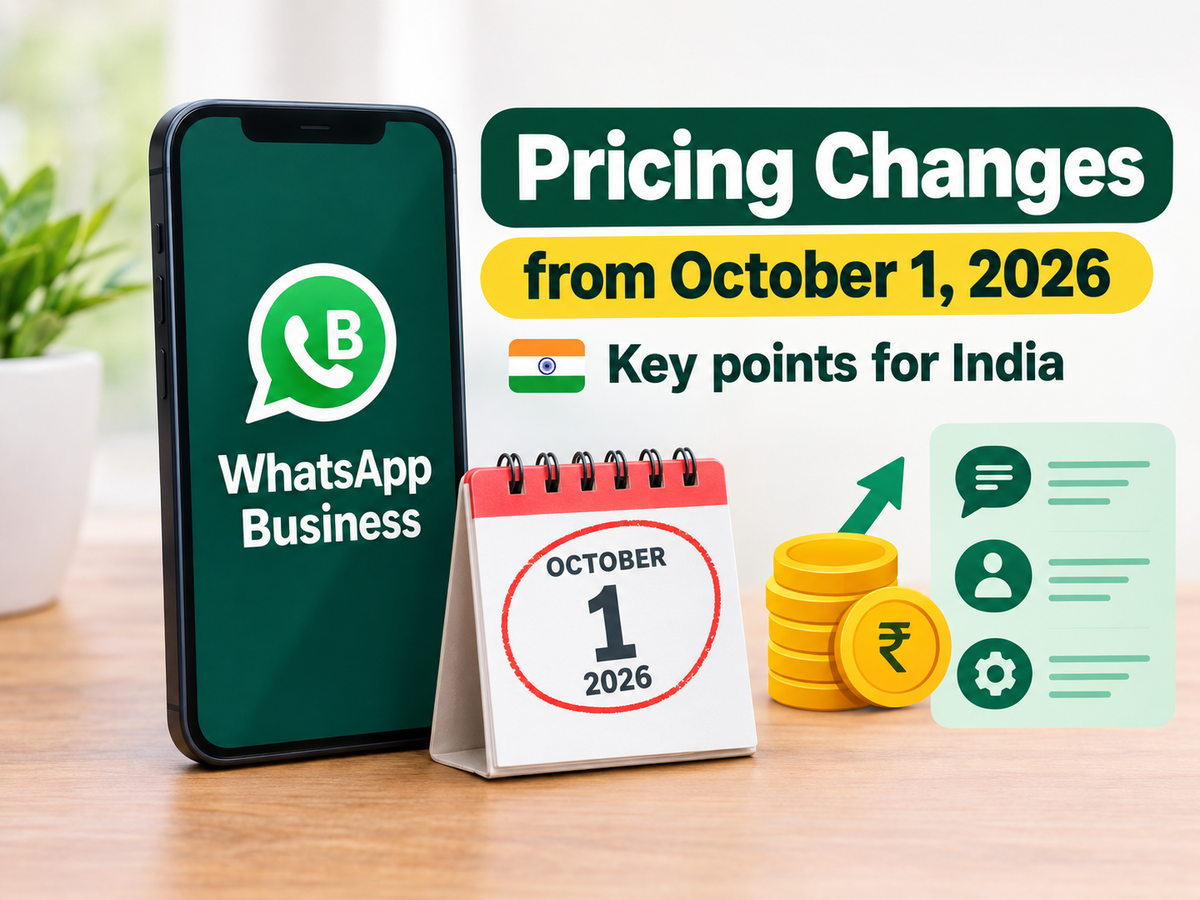
Meta has put new pricing into effect on October 1, 2026 for businesses that use the WhatsApp Business Platform in India. The company is ending the blanket free treatment for certain customer messages inside the 24 hour customer service window and has introduced a monthly allowance together with per message rates that apply once that allowance is exhausted or where no allowance exists.
What changed on October 1
Under the revised rules effective today, each business phone number registered on the WhatsApp Business Platform receives 1,000 free service messages every month. After that monthly allowance is used up, service replies will be billed at Rs 0.115 per delivered message. The same Rs 0.115 rate now applies to utility messages, which include order confirmations, delivery notifications and other transactional updates, even when those messages are sent within the 24 hour service window.
Authentication messages such as one time passwords will also be charged at Rs 0.115 per delivered message. Marketing messages remain the most expensive, at Rs 0.8631 per delivered message in India.
Billing and payment requirements
Meta warned businesses that they must have a valid payment method on file to continue sending service messages after the pricing change. Businesses that do not add a payment method by the deadline risk interruption of message delivery through the Business Platform. The published rates do not include applicable taxes and any fees charged by third party solution providers or channel partners, which may raise the total cost for companies that route messages through those services.
Who will feel the impact
WhatsApp is widely used across India by banks, airlines, e commerce merchants, logistics operators, food delivery services and retail firms for customer service and transaction updates. For organisations that send high volumes of transactional or service messages, even a small per message fee can add up quickly. For example, a merchant sending thousands of order updates each month could see monthly messaging bills rise from a token amount to several thousand rupees, depending on message volume and tax treatment.
Smaller businesses that rely on the free WhatsApp Business app are not directly affected by the Business Platform pricing. The change targets the Business Platform, commonly used by larger firms and by solution providers that integrate WhatsApp into CRMs, call centres and automated systems.
What businesses can do
Companies that rely heavily on WhatsApp for customer engagement should review message volumes and categories, identify messages that are essential, and decide whether to consolidate or reduce non essential notifications. Firms should verify that they have a valid payment method added to their WhatsApp Business account and double check contracts with business solution providers to understand how Meta rates will be passed through.
Some organisations may rework notification strategies, move low value updates to email or SMS where appropriate, or restrict certain messages to customers who opt in. Others will weigh the cost of migrating higher volume flows to alternative messaging platforms or to multi channel approaches that include SMS, RCS where available, or app based notifications.
Why the change matters
WhatsApp has long been a dominant customer communications channel in India because of its ubiquity and low perceived cost relative to SMS. By introducing per message pricing and an explicit monthly allowance, Meta is signalling continued monetisation of business messaging, and it is tying revenues to higher volume interactions and to the rollout of paid AI services and Business Agent tools that the company is introducing across markets in 2026.
The change has a practical effect for digital commerce and customer service in India. Businesses that did not budget for per message costs now face a new line item in operating expenses. At the same time, the move may encourage firms and platform vendors to rethink message design, reduce unnecessary messages, and accelerate investment in alternative notification channels.
Looking ahead
Meta has positioned this pricing as a global shift with country specific rates. For Indian businesses the immediate concern is managing the October billing cycle and ensuring uninterrupted delivery. Over the medium term, the new charges could change how companies architect customer communications, how solution providers price their services, and how regulators and industry groups discuss costs and access to essential communications channels.
Published: October 1, 2026