Toshiba ramps up Laguna production to double nearline HDD output as AI data centre demand surges
Toshiba has brought new nearline hard disk drive lines online at its Laguna, Philippines campus and is investing roughly JPY 60 billion to nearly double its storage output by fiscal 2027, a move aimed at meeting rapid growth in AI and cloud data centre storage needs.
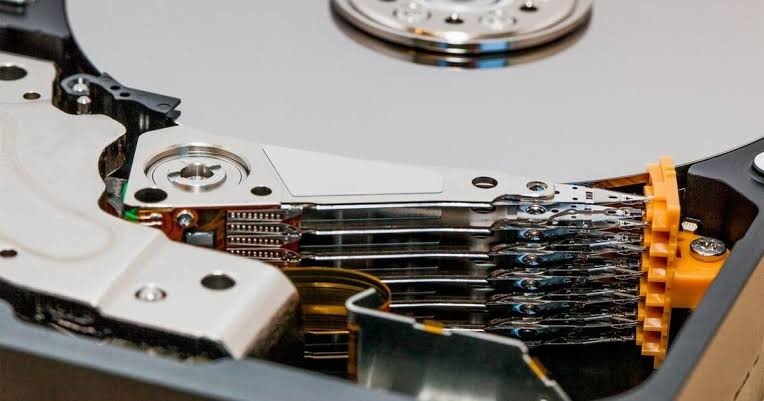
Toshiba has started production from newly expanded manufacturing lines at its Laguna, Philippines facilities and is moving to nearly double its nearline hard disk drive output by fiscal 2027. The investment, reported across industry and corporate channels this week, responds to rising demand from cloud providers and artificial intelligence infrastructure for high capacity, lower cost archival storage. Why the expansion matters AI workloads are driving an unusual combination of storage demand. Training and inference operations produce and consume huge volumes of cold and warm data that do not always need the performance of flash storage, but do require massive capacity at competitive cost. Nearline hard disk drives remain the most economical option for exabyte scale capacity. Toshiba is positioning its Philippine operations to supply that market, while also readying production for higher capacity drive technologies that raise storage per unit. The company has begun shipment from the new nearline lines at Toshiba Information Equipment Philippines, which marks a material change for the Laguna site. Toshiba says the expansion will substantially increase the facility's annual shipped capacity on a storage basis compared with fiscal 2025, as the plant transitions some lines from client and PC drives toward larger, data centre oriented products. Scale, timing and investment Multiple industry reports cite a roughly JPY 60 billion investment, about US 380 million, targeted at the Laguna manufacturing campus and related production upgrades. Toshiba plans to reach the nearline capacity target in fiscal 2027, effectively doubling storage output on a capacity basis versus fiscal 2025. The expansion includes new assembly lines capable of handling higher density nearline drives and is accompanied by the company beginning initial shipments from those lines. Toshiba's announcement and the industry reaction underline a broader market signal. Hard drive makers have kept supply tight for several years to preserve pricing and margins, but the sudden growth in AI and hyperscale cloud deployments is reshaping that calculus. Public market responses to the disclosed expansion showed immediate reassessment of supply expectations for other HDD suppliers, reflecting how a single large capacity increase can ripple across hardware markets. What Toshiba will produce and where this fits in the stack The new facility output is focused on nearline HDDs for enterprise and cloud storage, drives that trade latency and IOPS for larger raw capacity and lower cost per terabyte. Toshiba has also indicated roadmaps that include higher capacity classes over the coming years, with engineering roadmaps pointing toward drives that significantly raise bits per platter through density improvements. Nearline HDDs are typically used for backup, archival, cold and warm storage tiers, and for data sets that are large but infrequently accessed. For many generative AI pipelines, these tiers are vital: training pipelines may draw heavily from massive historical datasets and retain snapshots and checkpoints for reproducibility and compliance, while analytics and retraining cycles create persistent storage pressure that scales quickly. Implications for the Philippines For the Philippines, the expansion reaffirms the country’s role in the regional electronics and components supply chain. Toshiba's Laguna operations have been a long standing manufacturing site, and the new investment signals continued industrial commitments to the region. The move can support local employment, supplier activity and downstream services related to manufacturing exports. It also places the Philippines deeper into the material supply chain for AI infrastructure. While chip manufacturing remains concentrated in a few locations globally, storage assembly and system integration facilities in Southeast Asia are essential to meeting global demand, and investments such as this help ensure the geography plays a role in that production footprint. Market and strategic context The decision to expand HDD capacity comes amid mixed signals in the storage market. Flash continues to gain share for hot storage and low latency workloads, but the economics of exabyte scale cold storage keep spinning media relevant. AI deployments intensify that duality, requiring both ultra fast flash for model training and cost efficient spinning storage for massive datasets. Analysts note the expansion may not immediately erase global shortages or pricing pressure for other suppliers, but it does increase supply options for cloud and hyperscale buyers. For incumbent HDD manufacturers, Toshiba’s ramp is a reminder that supply discipline remains a competitive lever, and that sudden capacity additions can influence pricing, customer negotiations and margin outlooks across the sector. What to watch next Look for confirmation from Toshiba on the precise production capacity gain and a schedule of incremental output through fiscal 2027. Customer commitments from hyperscalers or cloud storage providers, should they be announced, would show demand elasticity and how quickly new capacity is absorbed. Locally, expect investor and government updates on employment, exports and any supporting incentives tied to the Laguna expansion. Bottom line Toshiba’s nearline HDD expansion in Laguna is a direct industrial response to the storage requirements of a maturing AI infrastructure market. By boosting capacity and preparing to ship higher density drives, the company aims to capture a larger share of the data centre storage market while reinforcing the Philippines’ position in the hardware supply chain that underpins much of the cloud and AI economy.
Topics
LocationLaguna Technopark, Biñan