In a bold public statement that has reverberated through Southeast Asia’s technology community, Malaysia’s prime minister said today that SoftBank founder Masayoshi Son has chosen the country for a potential US$50 billion investment aimed at AI, data centers, and related technology infrastructure. The announcement places Malaysia in the spotlight as it pursues its national target of becoming an “AI nation” by 2030, while also prompting fresh scrutiny over execution, energy needs, and local economic impact.
What was announced; the basics
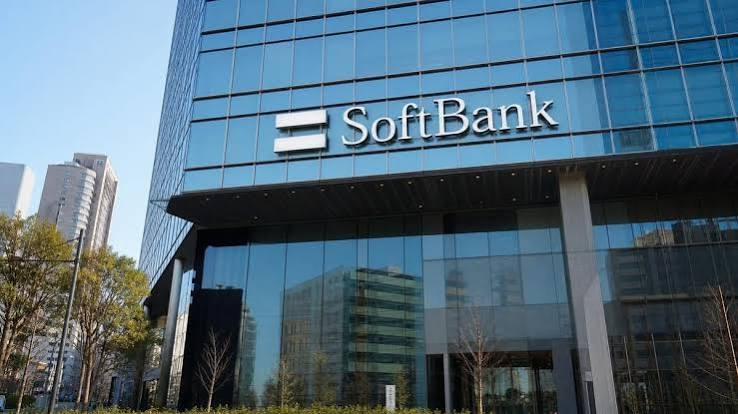
Prime Minister Anwar Ibrahim told an audience in Melaka that a global investor, identified in local reporting and follow-up coverage as SoftBank’s Masayoshi Son, has identified Kuching in Sarawak and parts of peninsular Malaysia as candidate locations for a roughly US$50 billion outlay focused on AI and data center projects. The comment was first carried by Malaysia’s Bernama news agency and has since been reported by regional and international outlets, including The Japan Times and local business press. The plan follows earlier framework agreements SoftBank signed in October to explore AI infrastructure and ecosystem development in Sarawak with partners including Grab and state-linked energy players.
Why this matters; strategic and economic stakes
A single investment of this scale would be among the largest technology capital commitments ever announced for Malaysia and would reshape the national conversation about digital strategy and industrial policy. Data centers and AI infrastructure are capital intensive and energy hungry, but they can also catalyze local service industries, software development clusters, and jobs in operations, networking, and machine learning.
Malaysia already set an explicit target to be an AI nation by 2030, and the government has been courting large-scale investments to accelerate that transition. SoftBank’s involvement, if it materializes at scale, would be a major vote of confidence for Malaysia’s talent pipeline, regulatory environment, and capacity to host significant computing infrastructure.
Precedent and existing arrangements; the SoftBank connection
The reported pledge builds on a formal October framework between SoftBank Group, regional ride-hailer Grab, and Sarawak’s PETROS to explore AI and data center projects, a deal SoftBank publicly described as a collaborative step to attract strategic investment, develop local tech talent, and catalyze the state’s digital economy. Observers note that formal framework agreements do not equal final investment commitments, but they do indicate a working relationship and an intent to explore practical, on-the-ground deployment options.
Practical hurdles; power, land, and timelines
Large data center clusters require reliable, low-cost power and abundant land with suitable fiber and cooling infrastructure. Malaysia’s coastal states and island grids will need major upgrades to handle sustained AI compute loads. That technical reality raises immediate questions about whether the $50 billion figure is a headline allocation that includes prospective partner spending, financing vehicles, and multi-year rollouts, or a near-term capital schedule.
Local officials have highlighted Sarawak and Kuching as potential anchors, citing available land and an interest in balancing development across the federation. Still, experts caution that translating an announced intent into physical data halls, trained workforces, and commercial cloud or AI campuses takes years and careful permitting, environmental assessment, and community engagement.
Jobs, skills, and local industry; who benefits
Proponents say an investment of this size would create construction jobs, technical-camp operations roles, and longer-term positions in cloud operations, data engineering, and AI research applications. Critics warn that heavy hardware and specialist services are often imported, with limited domestic manufacturing benefit unless the government clearly ties incentives to local supply chains, training, and knowledge transfer.
Malaysia’s government has been building programs to upskill engineers, data scientists, and technicians as part of a national AI strategy. If SoftBank’s plans include commitments to training and ecosystem-building, those measures would be central to ensuring a broad-based economic payoff rather than a narrow infrastructure play that primarily benefits external vendors.
Regional ripple effects; competition and cooperation
Southeast Asia is already a competitive battleground for cloud and AI infrastructure, with regional hubs in Singapore, Indonesia, and Thailand receiving major investments from hyperscalers and financial vehicles. A large SoftBank-led program in Malaysia would shape investment flows, talent mobility, and regional policy alignment, potentially encouraging other investors to consider Malaysia as an alternative or complementary hub.
At the same time, regional planners will watch for how the project aligns with cross-border subsea connectivity, renewable energy sourcing, and regional cybersecurity standards that affect multinational cloud contracts.
What to watch next; verification and details
Today’s media reports and the prime minister’s statement provide a strong signal, but key implementation details remain unconfirmed publicly. Observers will seek a direct SoftBank statement detailing the timeline, the financing vehicle, the split between data centers and other AI investments, and specific national or state-level guarantees. Equally important will be information about power sourcing, local hiring targets, and environmental impact assessments.
For now, the announcement is a high-stakes headline: it signals ambition, attracts attention, and sets a clock for the next round of negotiations. Malaysian officials and SoftBank will need to move from rhetoric to contracts to make the vision of an AI nation by 2030 a tangible, inclusive reality.
Context and sources; how we verified this report
This article synthesizes the prime minister’s public remarks and contemporary coverage from Malaysia’s Bernama news agency, The Japan Times, SoftBank’s own October framework announcement, and regional business reporting that appeared today. Additional local reporting and statements from SoftBank or its partners may provide further clarification in the coming days.
Key sources used for verification include The Japan Times, Bernama, SoftBank Group’s press materials, The Star Malaysia, and regional news outlets covering the announcement.