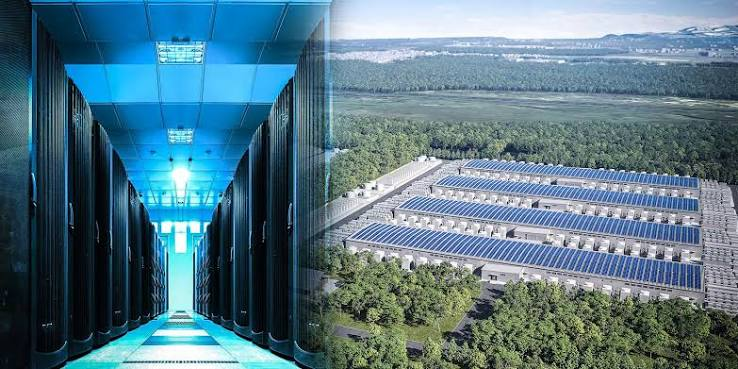
Small city sets out big ambitions
Satsumasendai, a coastal city in Kagoshima Prefecture, has formally published a basic development concept that places a planned large scale AI data center at the center of a wider regional growth strategy. The blueprint, prepared under the banner of Japan’s GX, or Green Transformation, effort, maps industrial land preparation, utility upgrades and local partnerships designed to host high performance data center capacity on the Sendai Port waterfront.
What the plan contains
The Satsumasendai GX Strategic Region Basic Development Concept lays out the municipal government’s vision for a concentrated industrial cluster anchored by an AI data center project at Circular Park Kyushu. The plan describes site development works, expansion of utility infrastructure and steps to coordinate with private developers and academic partners to capture economic and workforce benefits from a major digital infrastructure investment.
Local officials note the development sits on the former site of the Sendai Thermal Power Plant and covers several dozen hectares of industrial waterfront land. Earlier agreements signed this year with private partners identified the location as a candidate for one of Japan’s largest AI-focused data center campuses, a move that reflects a broader industry shift toward large, power-hungry facilities for generative AI workloads.
Economic and energy implications
The municipal blueprint links the data center project to planned investments in grid capacity, cooling and port-side logistics, and describes coordinated work with regional utilities and companies. Investor presentation materials and regional power company filings referenced in local planning documents show officials are factoring in steep increases in electricity demand associated with AI data centers and are positioning the site within Kyushu’s emerging data center cluster.
City leaders frame the project as a response to local demographic and economic challenges. Satsumasendai, like many regional areas in Japan, faces population decline and limited industry diversity. Municipal planners say the data center hub could bring large capital investment, ancillary businesses and improved infrastructure, while stakeholders caution that the number of permanent jobs created by hyperscale data centers is modest compared with the scale of construction and power investments.
Local partnerships and research links
The plan also highlights collaboration frameworks signed with companies and universities in the region. Those accords aim to combine infrastructure development with research partnerships, technical training and local supplier opportunities. The city has pointed to earlier memoranda of understanding with technology and network companies intended to smooth site preparation and ensure the data center cluster connects to academic research and workforce programs in Kagoshima and neighboring prefectures.
Why this matters for Japan’s AI strategy
Japan is seeking to expand domestic compute capacity for advanced AI, balancing economic opportunity with energy and land use constraints. The Satsumasendai initiative illustrates a practical path municipalities are taking to win large-scale digital infrastructure projects by offering prepared industrial land, port access and local coordination. For companies building next generation models, the availability of coastal sites with access to power and fiber is becoming a strategic factor in location decisions.
At a national level, the clustering of AI data centers raises policy questions about grid resilience, regional development, environmental tradeoffs and how to translate massive capital projects into sustained local benefit. The Satsumasendai plan is one of several regional efforts across Kyushu and northern Japan that authorities and energy companies are watching closely as demand for specialized AI compute grows.
Outlook and next steps
Municipal documents indicate the city will continue site preparations, negotiate detailed land and utility agreements and coordinate environmental and permitting steps with prefectural and national agencies. Private developers who have been linked to the project will need to complete their feasibility, financing and construction plans. If executed, the site would join a wave of large data center proposals that are reshaping regional infrastructure priorities across Japan.
For local residents and policymakers, the immediate issues to watch are concrete project timelines, firm investment commitments from data center operators, binding agreements with electric utilities and the extent to which training and supplier programs are implemented to turn capital spending into durable economic gains for the region.