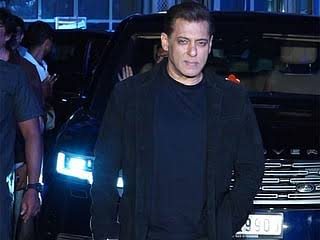
Bollywood star Salman Khan’s legal dispute with the makers of the proposed film Kala Hiran has taken another turn after the Delhi High Court sought his response to an application asking the court to stay his suit against the movie’s release.
The latest development came on Tuesday, October 6, as Justice Anup Jairam Bhambhani issued notice to Khan on an application filed by the film’s makers.
The producers argue that substantially similar issues are already being considered in an earlier personality-rights case filed by the actor.
The dispute is therefore no longer simply about whether a controversial film can eventually reach audiences. It has also developed into a procedural question about how overlapping legal claims involving the same actor, film and promotional material should be handled.
Importantly, the latest notice does not amount to a final ruling in favour of either side.
The court has asked Khan to respond, and the legal dispute remains ongoing.
What Happened in the Delhi High Court?
The latest application was filed by the makers of Kala Hiran, who want Khan’s suit concerning the proposed film to be stayed.
Producer Amit Jani has argued that the dispute substantially overlaps with an earlier case brought by Khan to protect his personality and publicity rights.
According to the producer’s position before the court, both proceedings concern many of the same issues, including the proposed film, its promotional material and the alleged unauthorised use of attributes associated with Khan.
Justice Bhambhani issued notice to Khan, allowing him an opportunity to respond to those arguments.
This is a procedural development rather than a determination of the central dispute.
The court has not, through Tuesday’s notice, declared that Khan’s claims are invalid. Nor has it granted unrestricted permission for the film to be released.
Those distinctions are important because court notices can sometimes be misinterpreted online as final judgments.
Why Salman Khan Went to Court
The dispute is connected to Khan’s broader efforts to protect his personality rights.
Personality rights generally concern an individual’s ability to control unauthorised commercial use of identifiable elements of their persona, which can include a name, photograph, likeness, voice or other distinctive characteristics.
These issues have become increasingly important for celebrities.
Digital advertising, artificial intelligence, social media and inexpensive content-production tools have made it much easier to create material that appears to involve a famous person even when that individual has not authorised it.
Khan previously approached the Delhi High Court seeking protection against unauthorised exploitation of his identity across online platforms and commercial services.
The dispute involving Kala Hiran later became connected to that broader legal battle.
Earlier Court Order Targeted the Film’s Teaser
The current dispute has a significant history.
In July, the Delhi High Court directed the removal of a teaser for Kala Hiran and related promotional material from online platforms following Khan’s objections.
The court expressed concern about the unauthorised commercial exploitation of identifiable attributes associated with the actor.
That order became an important part of the wider personality-rights case.
Khan subsequently sought further interim protection specifically concerning the proposed movie.
The filmmakers, however, have challenged the way the litigation is proceeding.
Their latest argument is effectively that substantially similar relief is being pursued through overlapping proceedings and that the newer suit should therefore be stayed.
The court will now have to consider the competing legal positions.
What Is Kala Hiran?
Kala Hiran is a proposed film that has attracted attention because of its reported connection to events surrounding the blackbuck controversy associated with Salman Khan.
The filmmakers have maintained that the movie should not simply be characterised as a Salman Khan biopic.
That distinction forms an important part of their defence.
They argue that a celebrity’s personality rights should not prevent filmmakers from addressing events that are already part of public discussion and historical record.
Khan’s position is different.
His legal arguments have raised concerns that the proposed production and its promotional campaign use his identity and the controversy surrounding him in a way that could damage his reputation while generating commercial attention.
The case therefore involves a difficult boundary between creative expression and individual personality rights.
The Film Is Not Yet Ready for Release
Another important fact is that Kala Hiran has not simply been sitting in cinemas awaiting the outcome of Tuesday’s hearing.
During earlier proceedings in September, the filmmakers told the Delhi High Court that the movie was not yet in a releasable form.
They said it had not received certification from the Central Board of Film Certification.
The makers also said at that stage that a full trailer had not been released.
This makes the current dispute partly preventative.
Khan is attempting to obtain legal protection before the proposed film can be commercially released, while the producers are challenging restrictions that could affect their ability to complete, promote and eventually distribute it.
The eventual certification process and future court orders could both influence what happens next.
Personality Rights Are Becoming a Major Bollywood Issue
The Salman Khan case is part of a wider conversation within India’s entertainment industry.
Actors spend decades building commercially valuable identities.
Their names, voices, appearance and mannerisms can become recognisable to millions of people.
In the past, unauthorised exploitation might have involved merchandise, advertisements or misleading endorsements.
Technology has dramatically expanded the problem.
A person’s face can now be digitally reproduced. Voices can be cloned. AI-generated videos can make celebrities appear to say things they never said.
Social-media accounts can distribute such material to enormous audiences within hours.
As a result, Indian celebrities have increasingly approached courts seeking stronger protection for their identities.
The legal challenge is to provide meaningful protection without creating restrictions so broad that they interfere with legitimate journalism, commentary, satire, artistic expression or discussion of public events.
Public Events and Commercial Identity Can Collide
The Kala Hiran dispute highlights that tension particularly clearly.
A celebrity does not automatically gain ownership over every public discussion involving their life.
News organisations, documentary makers, commentators and artists may have legitimate reasons to discuss matters involving public figures.
At the same time, using a celebrity’s recognisable identity primarily to market a commercial product can raise different legal questions.
The courts therefore have to examine context.
How prominently is the celebrity being used?
Is the material presented as factual, fictional or promotional?
Could audiences reasonably believe the celebrity authorised or participated in the project?
Does the work discuss a public event, or is the person's identity itself being used as the main commercial attraction?
Questions such as these demonstrate why personality-rights disputes can become complicated.
The Blackbuck Case Remains Sensitive
The proposed film also enters territory that has followed Khan for decades.
The actor was convicted by a trial court in 2018 in a blackbuck poaching case arising from events in Rajasthan in 1998. His appeal against that conviction has remained part of continuing legal proceedings.
Because of that history, any entertainment project drawing on the controversy carries obvious public interest.
But previous legal proceedings do not automatically resolve the separate question now before the Delhi High Court.
The present dispute concerns issues surrounding the proposed film, promotional content and Khan’s asserted personality and reputation rights.
Those matters have to be evaluated on their own legal basis.
Why the Case Matters Beyond Salman Khan
The eventual outcome could attract attention from producers, actors, streaming companies and digital creators throughout India.
Entertainment frequently draws inspiration from real people and real events.
At the same time, celebrities are increasingly seeking greater control over the commercial exploitation of their identity.
If courts provide very broad protection, filmmakers may become more cautious when producing works inspired by public figures.
If protections are too narrow, celebrities could find it difficult to stop businesses from using their identity to attract attention or generate revenue without permission.
Finding a workable boundary between those interests is likely to become even more important as AI-generated entertainment expands.
What Happens Next?
For now, the Delhi High Court has asked Salman Khan to respond to the filmmakers’ application.
That is the key development.
It should not be interpreted as a final victory for the producers or a defeat for Khan.
The court will need to consider whether the separate proceedings substantially overlap, whether one should be stayed and how the existing personality-rights protections affect the proposed film.
The status of Kala Hiran itself also remains important.
The film still faces questions surrounding certification, promotion and eventual release.
Until the court issues further orders, the legal battle remains unresolved.
What began as a dispute over the use of one of Bollywood’s most recognisable identities has now developed into a broader test involving cinema, public events, reputation and the expanding legal importance of personality rights in the digital age.