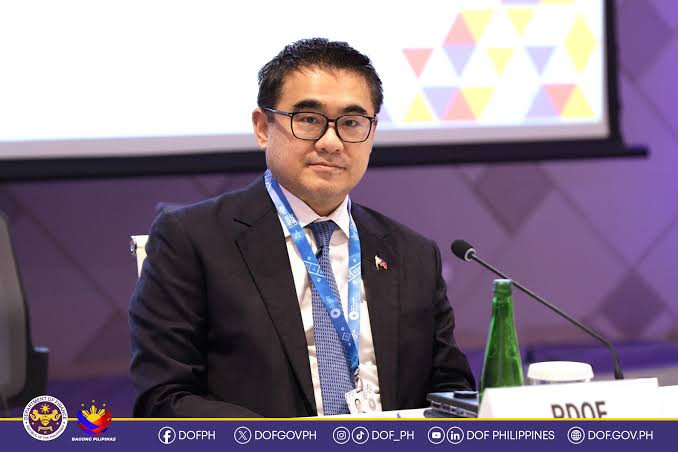
The Philippines, leading ASEAN this year, convened the first ASEAN Finance Ministers - World Bank Group dialogue on October 14, 2026 on the sidelines of the World Bank and International Monetary Fund Annual Meetings in Bangkok. The session, organized by the Department of Finance under Philippine chairship, brought finance ministers and senior officials from ASEAN together with World Bank Group President Ajay Banga to identify areas where the multilateral lender can collaborate with the region to turn development priorities into investable projects.
What ministers agreed to discuss
Participants framed the dialogue around three nearterm priorities. First, ministers emphasised mobilising private capital for quality infrastructure. Public budgets across emerging economies remain constrained, and ministers underscored the need for instruments that lower investor risk, improve project preparation, and make bankable pipelines visible to international investors.
Second, the group elevated digital transformation and artificial intelligence adoption as regional priorities. Philippine Finance Secretary Frederick D. Go, who chairs the ASEAN finance track, urged stronger cooperation on AI readiness, regulatory frameworks, and capacity building so that digital technologies can raise productivity and create higherquality jobs across the bloc.
Third, ministers pressed for expanded access to affordable, reliable, and clean energy. They discussed how World Bank guarantees, technical assistance, and blended finance structures can accelerate renewables deployment while protecting energy security and affordability for households and firms.
Why the Philippines led the initiative
The Department of Finance framed the dialogue as an outcome of the Philippines ASEAN chairship, and Secretary Go used the platform to promote policy reforms that the Philippine government says improve investment competitiveness. He highlighted recent eased foreign ownership limits in certain sectors and pointed to the Luzon Economic Corridor as a model for leveraging public investment to attract private finance for infrastructure and strategic industries.
The Philippines positioned the meeting as a practical followup to earlier regional discussions on financial cooperation, with the aim of converting shared policy priorities into financeable projects that generate jobs and economic opportunities throughout Southeast Asia.
What World Bank officials said
World Bank Group President Ajay Banga told ministers that mobilising private capital is essential to meet development objectives at a time when public resources are stretched. He stressed that private finance should complement and not substitute public spending, and that public resources should be used strategically to attract and multiply private investment.
Officials discussed World Bank tools that can reduce investment risk, including guarantee instruments, cofinancing, and technical assistance to strengthen project preparation and regulatory environments. No specific financing commitments or projects were announced at the dialogue.
What this meeting changes, and what remains to be decided
The dialogue represents a structural opening rather than an immediate funding outcome. Ministers and the World Bank agreed on areas for deeper engagement, but converting those discussions into actual investment depends on several steps: identifying bankable project pipelines, securing host government reforms and permits, arranging blended financing structures, and attracting private investors with credible risk mitigants.
Observers warned that the operational value of the dialogue will be determined by followthrough. Without concrete timelines, project lists, or financing terms, the meeting is best read as a coordination milestone that could help streamline future project development and investor outreach across ASEAN.
Practical implications for the Philippines and the region
For the Philippines, the dialogue offers a platform to pitch large, regionally replicable projects such as the Luzon Economic Corridor to multilateral and private financiers.
For ASEAN, a sustained ASEANWBG channel could reduce duplication in project preparation, unlock World Bank technical assistance, and increase the use of guarantee instruments to attract private capital for climate resilient infrastructure.
For private investors and developers, the initiative signals a clearer regional interest in blended finance and project pipelines tied to climate, digital and energy transitions that may yield new deal flow if followup work produces bankable projects.
Ministers and the World Bank closed the session with shared intent to pursue concrete next steps, while withholding immediate project approvals or funding packages. The meeting therefore marks a diplomatic and technical step to align ASEAN priorities with the World Bank Group’s financing instruments, leaving implementation and measurable investment mobilization to subsequent technical workstreams.
###