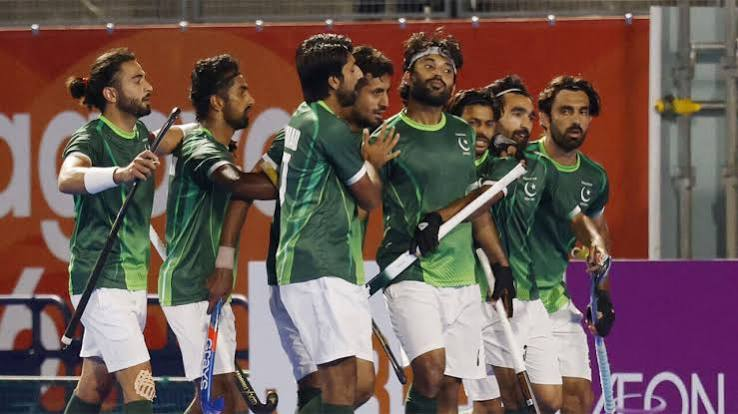
KUALA LUMPUR , Pakistan will not take part in the Men’s Asian Champions Trophy set to be played in the Indian state of Punjab from October 27 to November 5, the continental body confirmed this week. The Pakistan Hockey Federation formally declined participation after raising concerns about the venue and security, and the Asian Hockey Federation has invited Bangladesh to replace Pakistan in the six-team event.
How the decision unfolded
The Pakistan Hockey Federation had earlier asked the Asian Hockey Federation to shift the tournament out of India or to move Pakistan’s matches to a neutral venue. That request was made after discussions inside Pakistan about the feasibility of a safe and dignified environment for the players and officials amid a sensitive bilateral situation between Pakistan and India.
The AHF subsequently confirmed that Bangladesh accepted an invitation to join the tournament. The revised participant list now comprises India, Japan, China, Malaysia, South Korea and Bangladesh. Tournament organisers will stage matches in Jalandhar and Mohali in Punjab, with India set to open the campaign against Bangladesh on October 27.
Why Pakistan pulled out
Officials in Pakistan pointed to the prevailing political and security environment as the key reasons behind the withdrawal. Public statements from Pakistan sports authorities emphasised the desire to ensure players and staff could compete without facing security risks or restrictions that might affect team preparation and dignity. Pakistan had asked for either a venue move or for its fixtures to be played at a neutral site as an alternative to travel to India, but the request was not accepted in time to keep Pakistan in the draw.
The decision follows a pattern in recent years where cross border tensions have complicated scheduling and participation for teams from the two countries across several sports. Pakistan has previously sought neutral arrangements for international fixtures when the host was India, citing similar concerns.
Immediate sporting consequences
For the tournament, the replacement ensures the competition will still proceed with six teams. India, the defending Asian Champions Trophy winners, will now face Bangladesh in the opener. For Pakistan, the withdrawal means missed opportunities for competitive match practice ahead of other international assignments and for building momentum after their campaign at the Asian Games earlier this year.
For Bangladesh, accepting the late invitation secures a high profile continental engagement and exposure against Asia’s top sides in the run up to other international calendar events. The involvement of Bangladesh also alters the competitive balance in the pool and the schedule the organisers must finalise in the coming days.
Reaction and broader context
Sport administrators and observers noted the decision is political in its origin but has a direct sporting impact. Coaches and players are often affected by abrupt fixture changes, which complicate travel plans, training cycles and selection. National federations must balance assurances about competitor safety with their desire to participate in high level events that offer ranking points, experience and visibility.
The Asian Champions Trophy is a significant continental tournament, contested by leading Asian hockey nations and used by teams as preparation for global events and ranking maintenance. Pakistan are historically one of Asia’s most successful hockey nations, and their absence removes a traditional contender from the field. That absence also feeds into wider debate about the interplay of geopolitics and sport in South Asia.
What happens next
Organisers have said they will publish the updated match schedule reflecting Bangladesh as Pakistan’s replacement. National federations and participating teams will now finalise travel and accreditation details for the venues in Jalandhar and Mohali. The Pakistan Hockey Federation indicated the decision was intended to protect players and staff, and it did not rule out future participation if arrangements can be reached that address its concerns.
For fans and stakeholders, the immediate questions are logistical. Tournament fixtures and ticketing information will be adjusted in the coming days. For Pakistan, the focus will shift to alternative preparations for the national team in the absence of this continental competition.
While the replacement resolves the immediate vacancy in the tournament lineup, the episode underscores how political tensions continue to influence sporting calendars in the region. Federations, organisers and continental bodies are likely to confront similar issues in future events unless there is a durable mechanism to manage cross border participation and security arrangements for visiting teams.