Beijing robotics group goes public amid high expectations for embodied AI
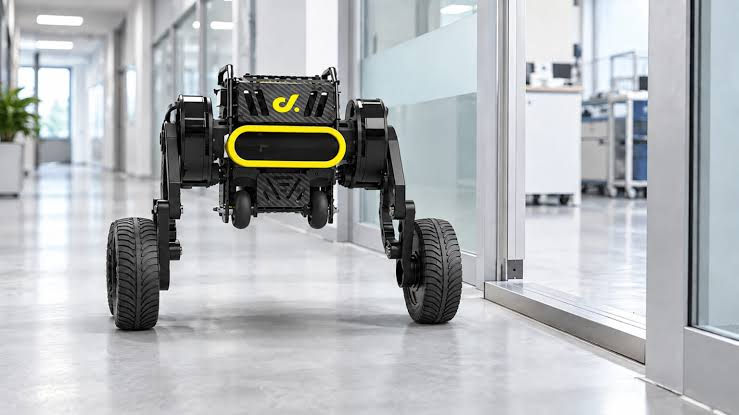
Direct Drive Tech, a Beijing company that makes direct drive motor modules for consumer robots and other embodied systems, began trading on the Hong Kong Stock Exchange on September 29, 2026. The listing, under stock code 06731, marks one of the most visible debuts this month for China’s technology manufacturers and underlines how investors are pricing the country’s push into robotics and agentic hardware.
What the IPO delivered
The company offered 50 million H shares in a global offering, priced at HK$21.60 per share. At that level the company’s market capitalisation at listing was roughly HK$7.98 billion, reflecting a steep multiple on recent revenues. The public filing shows the global placing was anchored by two cornerstone investors with government related backgrounds that together subscribed for about 43.5 percent of the sale, a level that provides short term ownership stability but constrains free float.
Market reaction and valuation questions
Analysts and brokerage research that tracked the issue point to two connected themes. First, Direct Drive is a niche leader for direct drive power modules in China, claiming a dominant share of that small but fast growing market. Second, the company’s listing price embeds ambitious assumptions about future expansion into higher margin robot subsystems and whole machines, areas where current revenues remain limited.
Public disclosures show high revenue growth in recent years, but also concentration of sales. A large single customer supplied more than half of revenue in the most recent reporting period, and the top five customers together accounted for over 80 percent. Those characteristics increase the execution risk for investors who expect that the company can scale beyond its dominant position in a narrow subsegment.
Why this matters for China’s AI and robotics landscape
The listing is notable for technology watchers because it brings a specialist hardware supplier into a public market that is increasingly being seen as the financing venue for China’s AI adjacent infrastructure. Direct drive motors and embodied joints are fundamental components for mobile robots, consumer robots and other devices that pair mechanical systems with local intelligence. As algorithmic models proliferate, a parallel commercial ecosystem for actuators, sensors and real world agentic interfaces is required to translate those models into deployed systems.
Investors have shown a willingness to pay premiums for what they see as strategic positioning in robotics and embodied intelligence. That dynamic reflects broader capital flows into China technology plays this year, where chip makers, cloud vendors and model developers all compete for a narrative that links hardware, software and data into product platforms. For Direct Drive, the case is that a leadership position in a component category can be leveraged into higher value subsystems and integrated robots as demand and unit economics evolve.
Risks remain prominent
Despite the momentum behind robotics and AI in China, the listing highlights concrete risks. High customer concentration leaves the company exposed to procurement shifts. Reported operating cash flow showed pressure in the most recent reporting period, and the firm retains debt levels that analysts say will require steady margin improvement to manage. In addition, the sizeable proportion of shares held by cornerstone backers means early trading liquidity may be muted, which could amplify price swings if market sentiment changes.
Regulatory and geopolitical dynamics also shape the outlook. China’s industrial policies continue to favour domestic supply chains for advanced manufacturing and AI infrastructure, which can benefit local suppliers. At the same time, international trade frictions and export controls on advanced components can change partners and markets for Chinese manufacturers, complicating long term planning for companies that sell into global supply chains.
What to watch next
Market participants will be watching three things closely in the weeks after the listing. First, secondary market trading and volume will indicate whether institutions and retail investors accept the IPO price that factors in future product rollouts. Second, company disclosures on progress commercialising articulated joints and whole robot assemblies will be a litmus test for the higher margin case. Third, any material changes in major customer relationships or order cadence will be read as signs of either traction or concentration risk.
For Chinese technology watchers, the Direct Drive listing is a reminder that the AI era requires more than models. Turning generative and agentic software into physical capability will depend on a network of hardware specialists, from chips to motors, and investors are willing to fund that industrial layer. Whether the premium paid at listing proves justified will depend on execution, diversification of customers, and the rate at which embodied AI use cases move from pilot to scale.