Hardware, software and cloud rolled into one
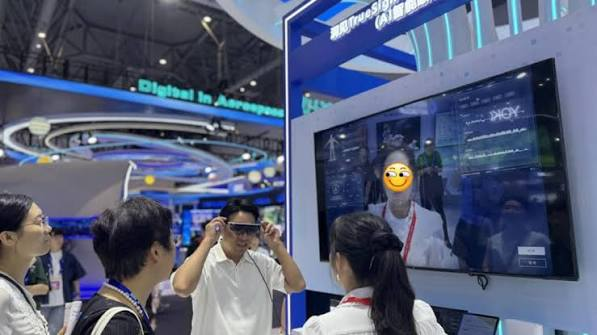
China on Sunday used a major trade and technology fair in Hangzhou to present what organizers described as the country’s first full stack, integrated large scale neutral atom quantum computer, together with a companion quantum cloud platform intended to let outside users run experiments and pilot applications. The demonstration, staged at the fifth Global Digital Trade Expo, represents a visible push by Chinese researchers and startups to move neutral atom systems from laboratory prototypes into engineering and service environments.
What was unveiled
The company behind the system said the installation can build and operate defect free arrays at physical qubit counts in the low thousands. The vendor paired the device with a MatriQ quantum cloud platform that the firm said will expose the machine to enterprise users, researchers and potential industry partners. Organizers and local authorities framed the unveiling as a “first” for China’s quantum industry to present an end to end stack at a national level expo.
Why neutral atom matters
Neutral atom platforms trap and manipulate single atoms using focused laser light, arranging them into configurable arrays that can act as qubits. The architecture has attracted attention because it can scale to larger qubit counts using well understood optical techniques, and it supports native connectivity patterns useful for quantum simulation and certain classes of chemistry and materials problems. For nations and companies preparing commercial quantum services, neutral atom systems are one of several promising hardware approaches alongside superconducting and trapped ion technologies.
Commercialisation is the central message
What distinguished the Hangzhou presentation was its emphasis on industrial readiness. Exhibitors described the system as a “full stack” product, meaning the hardware, control electronics, software toolchain and the cloud access layer were integrated and packaged for external users. That emphasis mirrors a broader move across China’s quantum ecosystem from publishing laboratory results to building products and cloud services that nonexpert customers can access for pilots in drug discovery, materials design and optimization problems where modest quantum advantage may be achievable.
Context inside China’s tech strategy
The demonstration at a high profile trade expo aligns with national priorities to translate advanced science into industry scale capability. Chinese government and provincial organisers have framed the expo as a showcase for AI, space compute and quantum technologies, and the neutral atom system appeared alongside other displays touting in orbit compute constellations, native inference GPUs and industry specific large language models. Officials and company statements at the event emphasized cross sector partnerships, exportable services for digital trade partners and building domestic supply chains for critical components.
Opportunities and technical hurdles
Neutral atom systems can in principle host larger numbers of qubits, but several engineering challenges remain before large arrays deliver reliable, error corrected quantum computation. Key hurdles include improving gate fidelities, extending coherence times under operational conditions, automating calibration for many thousands of trapping sites and integrating cryogenic free, high bandwidth control systems for real world use. Industry observers note that packaging a laboratory scale demonstrator into a stable cloud service is a nontrivial step and often reveals gaps in reliability that have to be closed before paying customers are onboarded.
International reaction and commercial implications
China’s move to present a complete neutral atom stack at a trade expo may accelerate partnerships and procurement conversations with industry customers that are already experimenting with hybrid classical quantum workflows. For international firms and academic groups, the key questions will be access, standards and interoperability. Nations and companies pursuing sovereign compute and secure communications will watch whether the new platform is offered as a domestic cloud service only, or whether it will be made available to global customers under cross border data and export rules.
What happens next
Exhibitors said they plan to ramp the cloud platform for external pilots and to refine hardware and software based on early user feedback. The coming months should reveal whether customers can run extended application workloads reliably and whether the platform delivers the hoped for advantages on real world problems. Analysts expect incremental deployments, expanded partnerships and focused pilots in chemistry, materials and logistics over the next year, with full scale commercial rollouts dependent on continued engineering progress.
As China pushes to industrialize quantum science, the Hangzhou showcase underscores a broader trend in which advanced physics research is being packaged for market consumption, with the first demonstrations intended to attract partners who can help the technology cross the valley from lab novelty to practical service.