Beijing event crystallizes a shift toward device-level AI
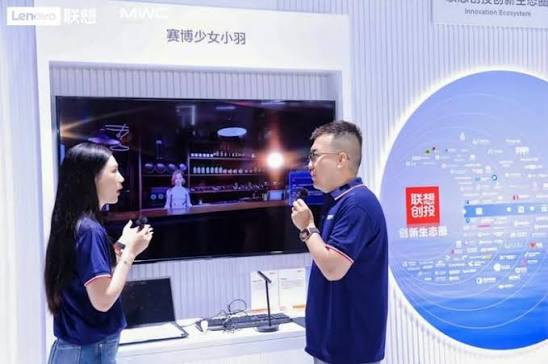
China staged a high profile industry push this week as the first Immersive Consumption Carnival and the 2026 AI Terminal Innovation Development Conference opened in the Beijing Economic and Technological Development Area. Organizers assembled more than 120 companies to display more than 400 AI terminal products, including what they called the nation’s first group of L3 level AI terminals, a classification aimed at distinguishing devices that run advanced local intelligence from simpler cloud-reliant gadgets.
From prototypes to production lines
The exhibition clustered products across several categories, with mass market AI glasses, extended reality headsets, embodied robots and AI PCs appearing side by side. Several vendors used the showcase to move beyond prototype demos and present items intended for immediate commercialization: lightweight AR glasses optimized for daylong wear, XR headsets offering lower-latency video stacks, and assistants that couple on-device neural acceleration with modest cloud fallbacks for heavy tasks.
Local authorities positioned the event as more than a trade fair. Beijing Economic and Information Technology bureaus and the development zone management emphasized an intent to build a full value chain on site: product definition, prototyping, pilot manufacturing and scenario validation. The stated aim is to shorten the timeline between laboratory breakthroughs and consumer-ready units so China can capture a larger share of global AI terminal production.
Standardization and graded intelligence
Alongside the hardware showcase, the conference hosted policy and standards forums that wrestled with interoperability, safety and grading systems for intelligent endpoints. Developers and academics discussed the adoption of tiered classifications, with L3 used at the event to denote devices that can independently perceive, reason and act in many everyday scenarios without constant cloud support.
Speakers at the forums argued graded standards could reduce fragmentation and give manufacturers a clearer roadmap for certification and market entry. Advocates say a common taxonomy will help enterprise buyers and consumers compare capability claims, and it will make compliance checks simpler for regulators concerned with privacy, data flows and operational safety.
Products and public interest: AR glasses and embodied agents
Several Chinese vendors highlighted AR glasses designed for real world utility rather than novelty. Exhibitors showed translation eyewear with millisecond-level subtitle rendering, low-weight frames aimed at long-term wear, and assistive devices for users with sensory impairments that blend environment sensing and local inference.
Manufacturers of embodied robots and XR devices framed their offerings around vertical use cases, including retail, inspection, education and accessible touring in cultural venues. The trade show also included a developer track and a hardware contest, where entrants competed to demonstrate practical deployments rather than flashy technical demos.
Why Beijing wants an AI terminal cluster
China’s strategy reflects two converging pressures. First, global export controls and geopolitical friction have accelerated efforts to indigenous the AI stack, from silicon and toolchains to the devices that host models. Second, advances in compact models and specialized accelerators have made plausible a future in which much of AI inference happens at the edge, reducing latency and protecting certain kinds of sensitive data.
By encouraging local supply chains and concentrating talent and factories in designated development zones, Beijing aims to capture downstream value that previously flowed to overseas OEMs and to create domestic certification pathways that reflect national security and privacy priorities.
What this means for the market and users
For Chinese consumers the near term effect will be a faster cadence of product launches and more device choices across price points. For enterprises the emergence of graded AI terminal standards could simplify procurement for applications that require predictable on-device capability, like medical assistants, factory inspection robots and offline translation tools.
Internationally, a more vibrant Chinese AI terminal sector complicates the global competitive picture. Countries and companies negotiating supply chains and standards will need to account for devices designed to operate with different regulatory assumptions and localized cloud ecosystems.
Limits and the road ahead
Organizers and participants acknowledge work remains on energy efficiency, safety testing and cross-vendor interoperability. The push to classify devices with terms such as L3 will only be useful if independent test regimes and measurable benchmarks follow. Industry panels at the conference repeatedly called for clearer measurement standards and for more third party labs to validate manufacturers claims.
Still, the concentration of product releases, standardization talks and manufacturing commitments at the development zone indicates a decisive push to make China a leading producer of AI terminals. The next year will show whether the cluster can translate prototypes into high volume, reliable products that meet both domestic regulatory demands and global market expectations.
As China accelerates the move from cloud-first models to device-centric intelligence, the balance between local autonomy, safety and international interoperability will shape the next phase of the global AI hardware market.