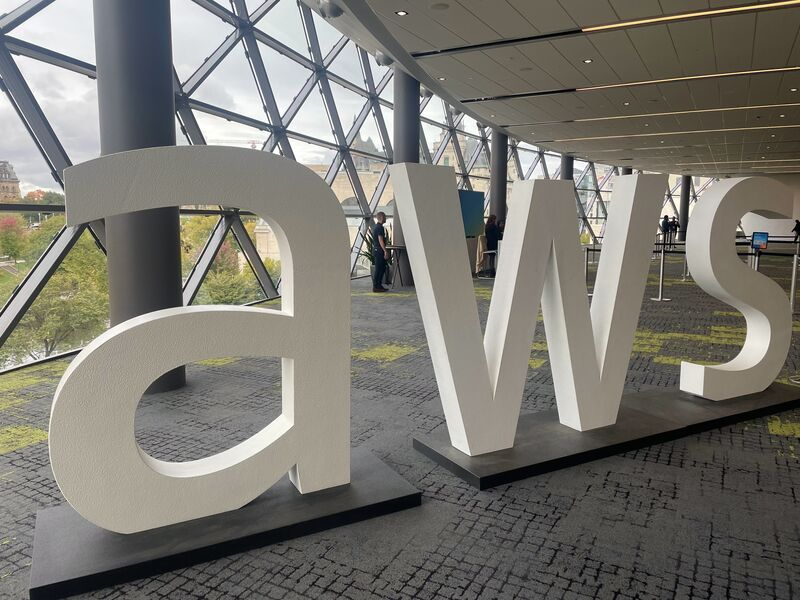
Ottawa, Canada , Today, September 29, 2026, Amazon Web Services is hosting its Public Sector AI Symposium in Ottawa, bringing together federal and provincial technology leaders, public sector procurement officials, and Canadian partners to spotlight how cloud and artificial intelligence are being used to modernize public services while keeping data under Canadian control.
Event frames AI adoption around sovereignty and real world use
The symposium, held at the Rogers Centre in Ottawa, foregrounds two issues that have shaped federal AI policy this year: how to deploy advanced AI tools to improve citizen services, and how to maintain data sovereignty and security when doing so. Sessions across the day examine practical topics such as migrating legacy systems, applying machine learning for program delivery, protecting sensitive citizen data, and enabling responsible AI operations inside government environments.
Speakers include senior AWS public sector leaders and representatives from provincial and federal technology offices. AWS has structured the agenda to highlight hands on case studies and architectures that Canada’s public servants can adopt, including sessions on producing trusted machine learning pipelines, managing hybrid cloud deployments, and running agentic AI safely at scale.
Imagine Grant Canada winners to be recognised
The symposium closes with the announcement of the 2026 AWS Imagine Grant Canada recipients, the company says. The Imagine Grant program provides unrestricted cash, cloud credits, and technical support to nonprofit organisations using cloud technology and AI to advance mission outcomes. AWS launched the Canada edition of the Imagine Grant to accelerate digital transformation in Canadian charities and community groups that work with vulnerable populations, health services, education and resettlement programs.
AWS has previously named Canadian recipients in its inaugural Canadian Imagine Grant round, and the company has confirmed the symposium will be the venue for this year’s Canadian awards announcement. The win for grantees can include material funding and technical mentorship that helps translate early prototypes into scalable production systems running on Canadian cloud regions, a key detail for organisations operating under privacy and data residency constraints.
Why this matters for Canada
The timing of the symposium follows Ottawa’s broader AI for All strategy rollout earlier this year, which prioritises building Canadian AI capacity, worker training, and clearer rules for transparency and safety. Public sector interest in procuring AI services has risen sharply across provinces and federal agencies, yet governments still face practical obstacles such as constrained procurement timelines, legacy system complexity, and the need for compute and electricity to support large models and high performance workloads.
Private sector events like the AWS symposium are consequential because they shape which technologies and implementation patterns become familiar to procurement teams and CIO offices. When cloud providers highlight architectures that keep data within national boundaries and demonstrate how to integrate security controls with advanced AI services, they reduce one barrier to public sector adoption. That in turn can accelerate pilot programs that touch health, social services, and accessibility tools for Canadians.
Data sovereignty, power use and public trust
Speakers at the symposium are expected to address practical constraints around data residency and energy use for AI infrastructure. Canadian jurisdictions are sensitive to where citizen data is stored, processed and governed. The symposium’s sessions on hybrid cloud blueprints and sovereign computing aim to show how government agencies can combine onshore compute, regional cloud regions, and robust encryption and governance to manage risk.
Energy and footprint questions also persist as more compute capacity is brought online to support AI workloads. Several presentations will explore how organisations can balance performance needs with operational carbon and electricity availability, an issue provinces with abundant energy resources have flagged as central to attracting data centres and compute projects.
What to watch next
Watch for the official list of the AWS Imagine Grant Canada recipients and short descriptions of their projects after the symposium keynote closes. Those announcements will provide a practical signal about the kinds of AI applications AWS and its partners expect to scale in Canada’s charitable and social sectors. Beyond the grant recipients, the day’s technical sessions and panel discussions will be important for public sector leaders seeking repeatable patterns for procuring and running AI while preserving control over data.
For Canadian policy makers and technology leaders, the symposium is a reminder that practical deployments, vendor partnerships, and non profit projects are becoming the leading edge of AI adoption. How those projects handle data residency, transparency, and governance will influence both public trust and the speed at which government services adopt AI in the coming year.
News organisations and public sector observers will likely publish detailed coverage and reaction to the Imagine Grant winners and the symposium takeaways later today. For technology teams, the event offers implementation sessions they can adapt to local procurement and security constraints, while nonprofits can find examples of how cloud credits and technical partnerships can amplify social impact projects that rely on AI.
Editors note: This article was prepared to reflect the developments and program elements scheduled for the AWS Public Sector AI Symposium taking place in Ottawa on September 29, 2026.